
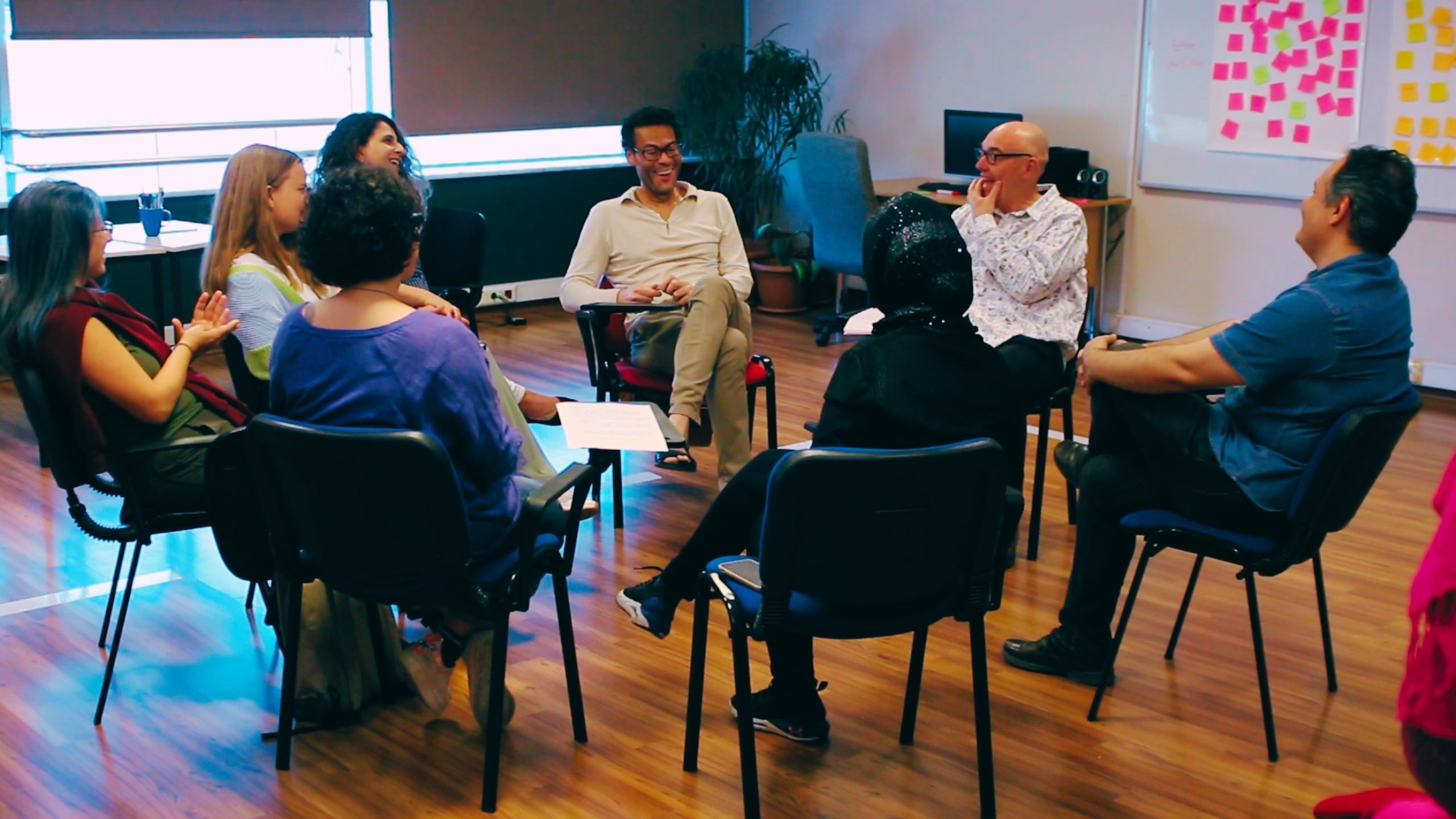
What Do You Do While Learners Are Talking?
The hidden craft of facilitating discussion
Facilitation doesn’t reveal itself in the lesson plan.
It reveals itself after the activity has started.
Once learners begin speaking freely—really speaking—the facilitator faces a very different challenge:
What do I do now?
Do I step in?
Do I correct?
Do I wait?
This is the moment where facilitation stops being theoretical and becomes visible.
Discussion is not a task. It’s an event.
Free discussion is unpredictable by nature.
Once learners start talking, outcomes can’t be fully planned or controlled.
From a facilitation perspective, discussion is:
- emergent, not scripted
- social, not individual
- shaped moment by moment, not line by line
This unpredictability is exactly what makes discussion pedagogically powerful.
And exactly what makes it uncomfortable.
The hardest facilitation skill? Doing nothing.
During discussion, many facilitators feel an almost physical urge to intervene.
To:
- correct language immediately
- redirect ideas
- summarise too early
- fill silence
But effective facilitation doesn’t start with speaking.
It starts with watching.
Skilled facilitators attend to:
- who is speaking—and who isn’t
- how turns are taken
- shifts in energy and engagement
- moments of hesitation, excitement, or withdrawal
This observational stance isn’t passive.
It’s what makes principled feedback possible later.
The real question isn’t “Can I give feedback?”
It’s:
Why would I give feedback now?
After free discussion, feedback can serve many purposes:
- helping learners notice effective communication
- reinforcing confidence and risk-taking
- drawing attention to interaction strategies
- addressing patterns that genuinely matter
Facilitation is the art of choice.
Not everything you notice needs to be said.
Feedback should continue the discussion—not end it
Poorly handled feedback can:
- shut down participation
- recentre the teacher
- turn discussion into evaluation
Well-facilitated feedback does the opposite. It:
- extends learning
- keeps learner voice central
- validates participation rather than punishing it
One powerful move is to begin with learners’ perceptions:
- What did you notice about the discussion?
- What helped it keep going?
- Where did communication break down?
Now feedback becomes shared inquiry, not judgement.
Five lenses facilitators can choose from
Feedback doesn’t have to mean “language correction”.
It can focus on different lenses:
- Content – ideas, opinions, experiences
- Interaction – turn-taking, listening, responding
- Language – accuracy, range, pronunciation
- Strategy – how learners managed the discussion
- Affective factors – confidence, engagement, risk
The facilitation question is always the same:
Which lens best serves learning right now?
Why over-feedback kills discussion
One of the most common facilitation mistakes is saying too much.
When everything is commented on:
- learners struggle to prioritise
- confidence drops
- discussion becomes performative rather than exploratory
Selective feedback isn’t withholding.
It’s protective.
Why this matters more than we admit
Discussion is one of the few classroom moments where:
- learners experience real agency
- meaning is negotiated socially
- learning feels alive
How facilitators respond afterwards determines whether learners experience discussion as:
- a space for growth
- or a space for exposure
That difference shapes participation far beyond a single lesson.
A final reflection for facilitators
- What do you notice first during discussion?
- What do you feel compelled to comment on—and why?
- How might selective feedback support confidence rather than control?
- What would change if feedback were treated as part of the discussion itself?
Facilitation isn’t about saying the right thing.
Sometimes, it’s about knowing when not to speak.

 Teaching Artistry