Cheating Lale: A Psychological Dilemma.

Using ‘Storydrama’ in ELT.

Introduction.

This is one of my favourite lesson plans. ‘Cheating Lale is about a young  girl who cheats in her University final examinations and the lesson explores learners’ reactions and interpretations of  the events and characters that are involved. The lesson works on several levels: it is an integrated skills lesson that practises the receptive skills of reading and listening but primarily focuses on developing speaking skills, discussion, and turn-taking techniques. On a psychological level the lesson demonstrates how we all interpret events in our own way according to our own value system. The lesson incorporates a psychological test, in which learners can evaluate their own ‘value’ system by discussing  how they interpret the characters and events in the story.

The lesson consists of 5 stages although as with any lesson these are a flexible outline and need to be adapted to the level and needs of the group.

  • Setting the scene: arousing learners interest and personalising the topic of ‘cheating’.
  • Prediction: introducing the characters and some lines of dialogue to allow learners to predict and create their own story.
  • Reception: learners listen to the story comparing their story to the real one.
  • Analysis and dramatisation: learners use the story to focus on the language (lexical collocations) and to improvise scenes to ‘bring the story to life’.
  • Psychological test and discussion: learners evaluate the characters and events discussing their behaviour and conduct a psychological test exploring their own values.

Methodology

The lesson methodology is strongly influenced by David Booth (1994) and his work using ‘storydrama’. Essentially storydrama uses a story as a stimulus to allow learners to bring their minds and bodies together to co-construct through mutual agreement and re-create a fictitious event: to bring the story to life. The principal features of storydrama are:

  • Learners focus on issues, characters, mood, conflict and dilemmas in a story as a stimulus for learning.
  • Learners respond personally drawing on their own psychology and values.
  • Learning occurs as learners explore the issues and dilemmas symbolised in the story
  • Learners bring the story to life through improvisation and discussion

I was first introduced to Lucy’s Story by Graham Workman at IH London in 1985 (almost 30 years ago) and I have since taught it countless times in a storydrama format. It has cropped up in many forms (usually referred to as Gary’s or Kate’s etc lesson) and appears to have achieved a ‘urban legend’ status in the ELT world.  This lesson is directly adapted from a lesson that has achieved folklore status in the ELT world and is a lesson I know as Lucy’s Story. It is the story of a young girl (Lucy) who meets and falls in love with a notorious young  philanderer (Peter) and despite warnings from friends and family (Uncle William) rashly pursues Peter across the river in a boat (rowed by David). Lucy is seduced by Peter and realises that her feelings of love are not mutual. Distraught, she seeks help from potential fiance (Michael) who throws her out appalled by her debauchery. She drowns in the river. Simulating  a psychological test the learners have to order the characters according to who they like from most to least and then compare their results with the values the characters represent.

  • Lucy = Love
  • Peter = Passion
  • William = Wisdom
  • David = Duty
  • Michael = Moralty

As I teach in Istanbul my main character is Lale in deference to the influence of Lucy. As in many educational contexts,  cheating is an issue where I teach.  When I devised the lesson, I needed a vehicle that allowed learners to reflect on their attitudes and behaviour , particularly as plagiarism seemed to be commonplace and almost acceptable. This particular story adolescent students find particularly memorable and fun. Many students have innovative methods of cheating they are willing, often eager, to discuss.

The power of storydrama.

Stories have been exploited for educational purposes and used to stimulate  language acquisition for centuries – and with good reason! Stories stimulate imagination, develop intellect, clarify emotions, identify anxieties, problems and aspirations, and fulfill the need for ‘magic’ in a world that often seems to lack it. I create stories for the language class for three reasons: psychological, linguistic and pedagogic.

Psychologically stories can represent a part of human consciousness that exists in all cultures. They fulfill a human need to listen to and tell stories and invariably evoke a personal response. This story of Cheating Lale was written in order to get my students to consider the importance of taking responsibility for their learning and to discuss issues related to cheating. Each learner will respond differently as their relationship with the story depends on their own interpretation of the world. Not only does the cultural, social, sexual and physiological make up of the classroom impact on learners’ responses, but also each individual learners struggle with contradictory viewpoints of the world. Paulo Freire (1970) claims that at the heart of education is an ability to help learners (and teachers) to reflect and act upon the world, and through that transform it into a better place.

Linguistically the language of stories can be manipulated to include language aimed at the comprehension level of your students. If this story is told by the teacher the language can be graded appropriately to fit the level. Equally the teacher can elicit questions and responses from the students as the story is told. Lale’s Story  is simple in basic structure but the meanings generated by the learners’ imaginations are evocative and many layered. This is an integrated skills lesson practicing receptive skills and speaking discussion skills based on a story about a young student teacher called Lale. By the end of the lesson students will have had the opportunity to practice their receptive skills and practiced controlled and less guided speaking practice leading into a discussion and then a dramatization of scenes of the story for presentation.

LANGUAGE AIM(S):

Sts will have been introduced to and practiced the target lexis related to the story of ‘Cheating Lale’. Particularly they will be exposed to the following common collocations: to go / come out with someone; to make a sacrifice for something; to look after; to pass an exam; to catch someone cheating; to expel someone from college; to refuse to have anything to do with someone.

In addition they practise language of discussion:

Stating opinions: I think that ….. is the best character…. because…

Agreeing / disagreeing: I agree / disagree and supporting opinions with reasons.. because…

As in any activity developing oral fluency learners need to have the ability to effectively manage an interaction. There are many features of oral interaction that a teacher can focus on but one useful area is that of turn-taking as highlighted in the table:

Strategies to be taught Example
1.      Taking a turn ·        I agree with you but….·        You are right but….·        I would like to add something here

·        Sorry to interrupt but….

2.      Keeping a turn ·        If you could just let me finish,·        If I could just finish,·        Let me finish please before you interrupt.
3.      Inviting someone to take a turn ·        What do you think about that?·        Do you agree with me?

The teacher can introduce these exponents in a previous lesson and monitor how effectively learners use them in this lesson. Alternatively at the end of this lesson (especially if the discussion can be video recorded) learners can reflect on their turn-taking strategies and self evaluate.

Pedagogically, stories provide an opportunity to develop and practice receptive skills (listening) as well as provide a rich context for language input. Once students are familiar with the story outline and content, the story provides a model to focus on structure, lexis and phonology and provides a ready context for follow-up writing and speaking activities. Most importantly for me, a story with a variety of characters can be dramatized within a double lesson period! Stories are a powerful stimulus when they raise questions or moral dilemmas. Learners explore issues, events and relationships through improvised exploration and discussion. Typically texts are presented in course materials in a static and lifeless manner, as content to be absorbed; however every effective teacher understands that  real learning is not generated by the materials but is generated by co-construction and negotiation between teachers and learners in a lived experience which is why every lesson is unique and learning outcomes unpredictable.

The advantages of storydrama.

  1. Driven by inquiry. Stories create an imaginary fictitious world but at the same time they can explore authentic and emotive dilemmas. Stories arouse genuine passion and strong and emotive learner responses.
  2. Meaning is ‘learner generated’ through their responses to the story and not transmitted from an external source.
  3. The lesson stages are logically sequenced and yet the structure is flexible as it depends on unpredictable learner responses. The method is powered by risk-taking as the process relies on challenging learners to respond and engage with the materials and issues raised

Lale’s Story_LESSON PLAN

Posted in My favourite lessons | Tagged , , , , , , , , , , , , , , , , , | 1 Comment

Let’s RAP Bro. Respect!

A learner-centred lesson.

Many teachers claim to follow a learner-centred approach but what does a learner-centred approach actually mean in practice? I hope to show what it means by describing a lesson that contains, in my opinion, 12 key principles of a learner-centred lesson. The lesson plan and materials are included at the end.

This is one of my favourite lessons. The task is for learners to write and perform a Rap Song. The lesson focuses on how a sound (phonemes such as the monophthongs/u:/ /I:/ /ɑ:/ and diphthongs /eı/ /ɔı/ /ɑı/ /əʊ/) can be used as a stimulus to build the foundations for a poem or song. The lesson starts by eliciting single phonemes and then builds to create words with those sounds for example from /u:/ we can make blue, shoe, true (rhyming words) and then sentences (‘I’m feeling blue’) and finally students write and perform a rap song.

  1. Learners generate the language.

The language generated in the lesson comes from the learners knowledge and imagination. The teacher inputs sounds for example /ɔı/  but the learners generate the actual language of the lesson: first brainstorming words with this vowel sound (boy, toy, joy) and then creating sentences with these words (I want joy). The great advantage of language input coming from the learners is that the language is graded to the learners’ level naturally. This means that a lesson  can be adapted to any level (beginners to advanced) as the learners’ themselves generate the target language.

  1. Authentic task.

The lesson has an authentic task: to write and perform a Rap Song. This is a real-life task, people do write songs. Admittedly learners may  protest that they are unlikely  to ever write a Rap Song. However it is a far more authentic writing task than multiple choice or gap-filling exercises which learners do frequently in a classroom context but would never do in real-life. Besides Rap Songs are essentially speaking sentences in a rhythmical manner ( etymologically ‘to rap’  means ‘to say)’. The advantage of Rap songs is that aside from having a definite rhythm,  there are no specific rules of structure, anything goes!

  1. Scaffolded.

The lesson follows a logical order that is transparent for the learners and provides effective scaffolding as each stage needs to be effectively completed and checked before proceeding to the next stage. This ensures both understanding and a successful outcome. The lesson consists of 3 main stages:

  1. Introduction and setting the scene. This stage needs to arouse interest in the topic by the use of visuals, brainstorming what students know about rapping and rappers and to personalise the topic: Do you like rap? Teachers could play samples of Rap music but the disadvantage of this can be that it sets an ambitious target (model) at the beginning of the lesson when we are more interested in the writing processes than a polished final performance.
  2. Input and practice. There are three stages that build on each other: 1) Introduction and practice of sounds; 2) Sounds used to create words; 3) Words used to create sentences.
  3. Creation, performance and reflection. Learners collaboratively write and perform their rap songs while other learners (replicating the X factor judges panel) reflect and provide feedback.
  1. Sense of achievement.

The performance of the rap songs provides a sense of success and task achievement. The teacher can encourage applause after each short performance giving learners a sense of well-being and heightened self-esteem while promoting a positive group dynamic.

  1. Learners are the main resource.

Apart from an optional visual of a Rapper and strips of paper with a phoneme at the top, there are no materials for the teacher to prepare. The main resource is the learners: they provide the language, the creativity and imagination. A learner-centred approach necessitates that the lesson is not ‘content driven’, in other words the course book or syllabus should not dictate the target language but in contrast the language is emergent through the lesson activities.

  1. Collaborative learning.

The majority of the lesson (70%) involves learners working collaboratively in pairs or groups. This collaboration and interaction between learners provides an acquisition rich environment for learners to practise the target language. It also provides opportunities for peer teaching of lexis, for example a learner may come up with the word ‘joy’ (or at a higher level ‘coy’) as a rhyming word for /ɔı/ and other learners ask what it means. In the learner centred classroom the teacher recognises that learners, in contrast to the teacher or course book, are an important source of input and this can only be accessed when learners are interacting and communicating with each other.

  1. Appropriate aims and integrated skills.

SKILL AIM:

This is an integrated skills lesson focus. There is intensive listening to individual sounds and rhyming words as well as public speaking practice in the performance of the rap songs and a high degree of collaborative speaking in pairs and groups as learners work on the lesson tasks. The main skill aim is to collaboratively write and perform a ‘rap’ song. Many learners find writing activities boring, lonely, difficult and time-consuming. Often learners are not effective writers in their L1 and are unaware of effective writing processes. For this reason this lesson aims to provide a fun, collaborative task that is scaffolded to ensure that students are sufficiently challenged but also achieve success and a sense of achievement.

LANGUAGE AIM:

Learners are introduced to and practise specific sounds (i.e. /i:/, /U:/). In addition they raise their awareness of the sound – spelling relationship in English. The lesson also aims to raise awareness of words that rhyme and to practice the features of sentence stress and rhythm in a song.

  1. Movement and energy

Learners stand in a circle and produce the sounds chorally, then they mingle around the classroom writing words, finally in groups they write their rap songs before the class becomes a studio and songs are performed. Each stage involves movement which generates energy. The learners are physically active in the lesson and involvement and engagement is high.

  1. Novelty and fun.

Writing a rap song is novel. It represents a break from routine. The focus on sounds, rhythm and rhyme highlights pronunciation which is typically an area learners prioritize but teachers neglect. A learner centred approach depends on active and enthusiastic participation of the learners in a stress-free environment which encourages  laughter, spontaneity, a large quantity and variety of learner to learner interaction and a sense of fun.

  1. Risk

As the teacher, we cannot know the content or quality of the final rap songs nor the learners response to the topic or activities, there is therefore an element of risk. However a teacher locked into a risk free routine will not develop as a teacher and will not find rewards in his lessons or the learners’ progress. Without taking risks the teacher and learners never expose themselves to the possibility of failure nor to the rich learning opportunities that imagination and creativity can offer.

  1. Creativity.

Writing a rap song provides learners with the opportunity to be creative and express themselves freely. This encourages learners to experiment with the language, to be creative and to challenge themselves to express themselves imaginatively.  Learners need the freedom to experiment with the language. They need opportunities to be creative with their production and the time and space to make errors. The aim is to challenge and encourage learners to produce language rather than structuring in advance what will be achieved.

  1. Whole person learning.

The most important principle is to remember that a learner is a thinking, feeling and acting person. Learning is a process internal to the learner, it can not be transmitted from an external source (no matter how good the coursebook or teacher). Put in another way we can say that all learning has a mental, emotional or physical manifestation and in the context of this lesson a combination of all three.

Conclusion.

The vast majority of lessons are not learner centred. Opportunities for learners to participate are structured and freedom  for learner creativity limited. The majority of teachers are compelled to follow a traditional approach driven by content prescribed by the syllabus or course book (whether this is grammar based, lexical or a communicative approach). This contrasts with widely accepted beliefs that for effective learning to occur a learner needs the freedom to experiment with the language, to be creative with their production and to have the space to express themselves and make errors. In a learner centred approach language is learner generated. The primary concern is based on what the learners do in the lesson such as decision-making, discussion, critical thinking, co-operating and negotiating their needs with the teacher. A learner centred approach therefore prioritizes learning over content knowledge. The syllabus and lesson aims in this scenario derive from the learning and teaching process and the negotiating of individual learner needs rather than being prescribed or pre-determined in a content driven syllabus. The main source of language is the learner, their experiences, ideas and feelings.

Rap Song LESSON PLAN front page

Rap Song Lesson plan


If you try this lesson or adapt the ideas to your context, I would really appreciate feedback on how it went for you.

← Back

Thank you for your response. ✨

Posted in My favourite lessons | Tagged , , , , , , , , | Leave a comment

THE NEW WAY

THE NEW WAY: ‘HOLISM’ a paradigm to replace orthodoxy.

Humanity is marching off the edge of precipice. Can teachers do anything about it?


Are you as frustrated as I am when, attempting to relax in front of the TV evening news, the somber reporters incessantly exhort imminent calamity? Last night for example, there was the financial collapse of Europe, the extinction of the Black rhino (yet another species eliminated by human greed and lack of responsibility) and natural disasters as Mother Earth’s tears flood parts of Europe and Asia while her uncontrollable sobbing causes more earthquakes and hurricanes around the world. One crisis after another and yet here I am sitting apathetically in my armchair sipping tea as humankind relentlessly marches forward banging the same old drumbeat to the edge of the precipice. On the television the economic analyst is reinforcing the mantra that the only way out of the economic crisis is ‘growth’. I nod sagely but know in my heart, as we all do, that unremitting growth, chronic rape of Mother Earth’s resources and unrelenting consumption is precisely what has brought us to the brink and continuing this orthodoxy will push us over the edge. Economic growth is a dead-end street. We know more medicine does not make us healthier, more weapons do not lead to peace, and greater consumption does not lead to happiness: in fact the opposite. We desperately need a new paradigm, a change from the fundamental beliefs of scientific orthodoxy if we are not to plunge into the abyss. I believe teachers and educators have to lead the way.

Our fate need not be inevitable destruction if we are able to expose the falsehoods of orthodox beliefs and open our minds to a more holistic perspective of human development and learning. Conventional wisdom is largely based on the three main principles of materialism, reductionism and determinism. These principles in various forms have been ingrained into our subconscious over the last 300 years. We need to expose their limitations and be open to new beliefs and perspectives.

Materialism

Materialism is based on the premise that ‘only matter matters’ and implies that life is a constant battle of survival of the fittest and the only way to progress is by exploiting and consuming resources provided by nature. Quantum physics refutes this perception stating that the fundamental building blocks of the universe are not physical ‘matter’ at all but an invisible energy field that shapes and connects ‘matter’. While the principle of survival of the fittest has enabled a small percentage of business entrepreneurs, bankers and the corporate elite to do very well, survival of the individual at the expense of the whole now threatens humanity. A holistic paradigm advocates living in balance and harmony with nature and recognizing the interconnectedness of all things. As teachers we already recognize that focusing solely on the high achievers is not conducive to a coherent classroom and fulfillment in our own lives synergies with the achievement and aspirations of others.

Reductionism

The dominant Western world view of reductionism is based on making distinctions and seeing differences, and advocates that entities are a sum of their parts. This has led to a pattern of thinking that assumes that the best way to see if something works is to try it. We live in a culture where evidence or so-called ‘scientific proof’ has acquired supremacy. Logic is given precedence over intuition, rational argument defeats opinion and academic research out-weighs experience. However as teachers our skepticism of reductionism is justified, as we know that when something ‘works’ in class this rarely means it will always ‘work’ in the same way in future classes. A holistic view of learning, on the other hand, recognizes the interconnectedness and synergy of our physical, mental and spiritual dimensions. Only by adopting a whole person perspective to learning and development can we truly comprehend reality and achieve our potentials.

Determinism

Finally the orthodox doctrine of determinism stipulates the role of causality. Knowledge is seen as a commodity that can be categorized and boxed and then transmitted from teachers to learners, doctors to patients and so on. Medical science is a process for example that looks for physical symptoms as evidence of an illness and then seeks to intervene to administer a cure. Teaching however questions assumptions of causality, apart from the obvious fact that the condition of being a learner is quite different from being a patient; teaching is not an intervention (like medicine) but a process of symbolically mediated interaction. If teaching is to have any effect on learning, it is because of the fact that learners interpret and try to make sense of what they are being taught on a range of levels. Far from being a causal technology, a push-pull process, teaching is an open and recursive exploration and indeed, ironically, it is the very impossibility of limiting teaching to a definable box that makes learning possible.


THE NEW WAY

Orthodoxy has created a top-down perception of reality that dictates basic principles that have been ingrained into our subconscious through the hierarchy of science. Holism advocates a more bottom-up created view of creation; a view in which we learn and create our reality through the way we engage with our environment and interconnect with experience.

The process of teaching challenges many orthodox principles and can lead to a new, more inclusive and interconnected perception of existence. I believe teachers have an important role in exposing the limitations of current doctrine and leading the way forward to new holistic beliefs and perspectives.

Posted in THE NEW WAY | Tagged , , | Leave a comment

The Economic Crisis: A poem

The Crisis.

Economic growth

Increased production

Higher consumption

Rising employment


The relentless drumbeat of humanity

As it marches to the precipice


More medicine means less illness

More weapons means fewer wars

More prisons means less crime

More production means greater prosperity

More information means greater wisdom

More consumption means greater happiness


The mantra is repeated relentlessly

As we march forward

Convinced of the truth

Confident in the knowledge

Over the precipice

Into the abyss.

Posted in Uncategorized | 4 Comments

Inspiring Teachers in Khartoum

On 26 July 2011 11:14, Gray, Ben (Sudan) <ben.gray@sd.britishcouncil.org> wrote:
Inspiring Teachers in Khartoum
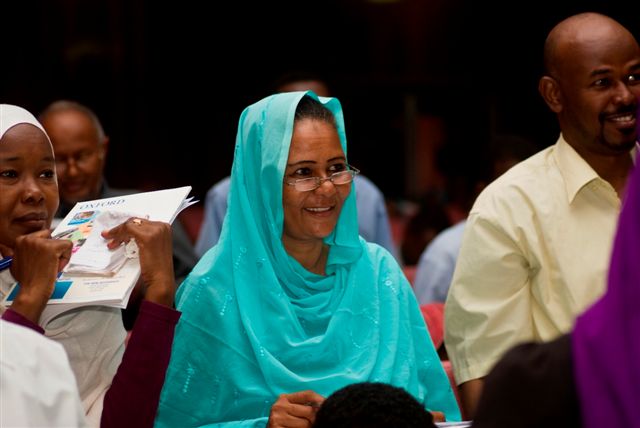
Building on links made across the education sector in Sudan, the British Council is celebrating a recent forum held for English language teachers in Khartoum.  Titled ‘Inspiring our Students, How to Make them REALLY Want to Learn!’  the event was met with great acclaim from all who attended and has set the bar by which future events will be judged.  One attendee, Hala Mohammed, a teacher from a local high school said “I’m taking away some ideas on how to inspire my classes, and I’ve made some great contacts for the future”.  English lessons at both school and university in Sudan often have over 100 students in a single classroom.
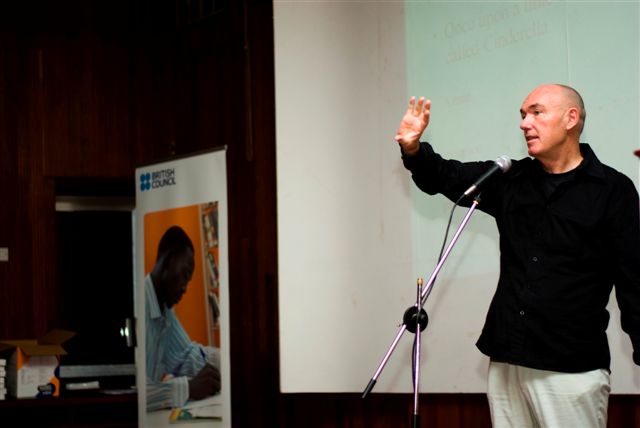
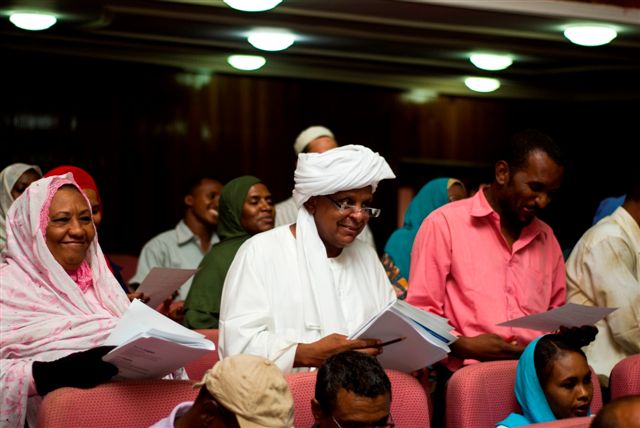
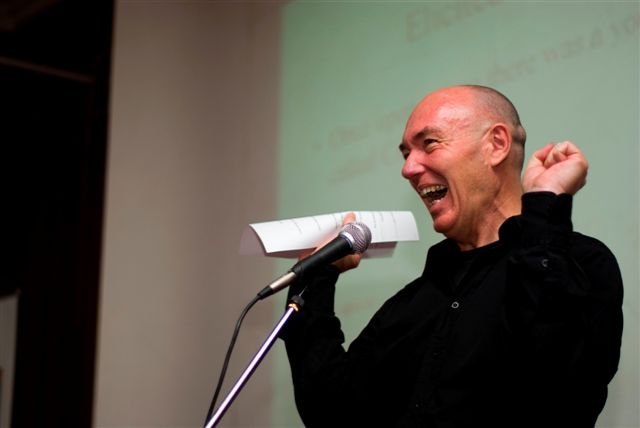
So, what made this forum so different from the numerous other education events that occur each year?  As organiser for the British Council, Ben Gray, English Language Advisor, said prior to the event, “We want teachers to be inspired at the forum; not just to hear how they should be doing it”.    A choice was made to invite Dr. Tom Godfrey, a leading teacher training consultant with a reputation for involving the audience and demonstrating practical advice, whose all-involved activities and unconventional style had the 250+ audience up out of their seats clapping, dancing and moving around the University of Khartoum hall.  Nobody had expected an impromptu performance of Cinderella, but to the observers the usually reserved audience embraced the activity with gusto!


The break from the norm didn’t stop there.  
Local English teacher Maie Hassan stated after “The event was different from anything I’ve been to before” and referring to the decidedly different approach “It left me with a real sense of connection to other teachers and a practical way to communicate with them in future”.
Most important to the organisers – the University of Khartoum English Language Institute, the Association of Sudanese Teachers of English Language, TESOL Sudan and the British Council English Team – is that the forum will have a lasting positive effect on English language teaching in Sudan.  
Three similar forums are planned between now and the end of March 2012, and Ben is keen both to increase the future number of participants and to use the forums as a platform to other professional development activities, and in particular linking with the large-scale teacher training programme the Council is currently planning with the Sudan Ministry of Education.

Posted in Uncategorized | Leave a comment

Doing the DELTA on-line: is it effective?

 Ever wanted to get going on DELTA but felt you were working in a place too inaccessible to get started? Well, you can not possibly be in a more remote part of the world than the Falkland Islands. This is where Lesley lived when she applied to do our on-line DELTA Module One. 

Nowhere is as remote as the Falkland Islands

Since Cambridge introduced the Modular DELTA more centres are offering on-line options but are these effective? This is Lesley’s story of her on-line DELTA Module One.

Penguins and DELTA Module One

The Falkland Islands are more than 8000 miles from my home in England and from  Istanbul where I had very positive memories of doing my CELTA.  One day an online update about the DELTA Module One just starting at ITI, Istanbul arrived  and  I decided to enquire further.  A pre-course task and an interview later, I was on the course.

Feeling lonely?

A major worry was accessing research material since, in the Falklands, the internet  is frustratingly slow, expensive and unreliable.  As to  reading,   the Islands are great for books if you want to know about penguins or the South Pole but there are no others – indeed there is no bookshop. My solution was to order on-line from the bibliography, aware however,  that post is often very slow and that they might arrive after the assignments for which I needed them.  As it turned out, I was right!

Signing on to the Moodle for the first time, I was awed by how many people were on the course and the different cities or countries from which they were accessing it. This was reassuring, if they could do it, I could too.

It took a bit of time to get used to the way the course worked with input sessions a solitary affair via the internet,  weekly tests to upload, and tasks accomplished by group work via the Moodle.   Every week, brought a new task and different CP’s (course participants) to work with.  Some were proactive, dividing the task so we took on different parts of it and shared afterwards, other CPs were rarely heard from after the initial “Hello”.  I enjoyed my inbox filling up with enquiries, thoughts and additions over the week ready for the Friday morning assignment-upload.  It was helpful to read the research presented by all  the other groups.  This reduced the isolation factor of the Falkland Islands enormously.

After a while I got into the rhythm of the course.  Friday was the day for uploading assignments and downloading session notes, following links and saving any helpful articles .  Sunday was ‘test day’ when I timed and uploaded my test, wondering how important the midnight deadline was and indeed whose midnight – mine was 7  hours behind!  From the start I was impressed by my tutors Sally and Liz and reassured by their quick and positive  feedback.  Though my initial test results were low, I followed their recommendations and slowly things began to improve.

The downside of an online course is lack of human contact.  Sessions are so much more than just the taught material – which is dry in print – no asides, no fillers that help illustrate a point,  indeed, no body language or expression that makes a statement funny or memorable.  In a  taught session  CPs share activities, ask questions and add thoughts. I missed this.

An unexpected problem with my isolation was physically sitting the exam.  I was half the globe away from my exam centre in Istanbul.  Thanks to everyone at ITI who stepped in at this point and organised permission for my papers to be flown to Istanbul then on to the Falkland Islands (via Britain again, of course!).   However, an error in Cambridge at the last moment meant that the papers  were forgotten.  After much to-ing and fro-ing, the exams were faxed to my invigilator  at the Falkland Islands Community School just minutes  before I was due to sit them.  Whilst this added to my anxiety-factor at the time, it shows that anything is possible.

DELTA is hard work but in the long run, the major ingredients required to pass Module One are a lot of determination, a little diligence and a good on-line course like ITI Istanbul’s and these far outweigh the need for books and face to face contact.  If you think you are too far away – then think again!

Do you have experiences of studying on-line? Is it effective? Please send you comments.

Posted in DELTA | 3 Comments

ITI Master Classes in Samara, Russia.


7, 13, 3, 2 and infinity. All this seems to be just a random set of numbers, but actually it makes an event.
So, in order…
7th – largest city in Russia, Samara.

13 – the number of teachers who do care about their career, their development and their students.

3 – the number of unforgettable days, which we went towards coping with all the stumbling stones driven by a motto that everything impossible is possible. The days of intensive training, the days of expanding the frontiers.

2- fabulous tutors, the guides who inspired us with discovery.

Infinity – the number of emotions and experience that we all have had.

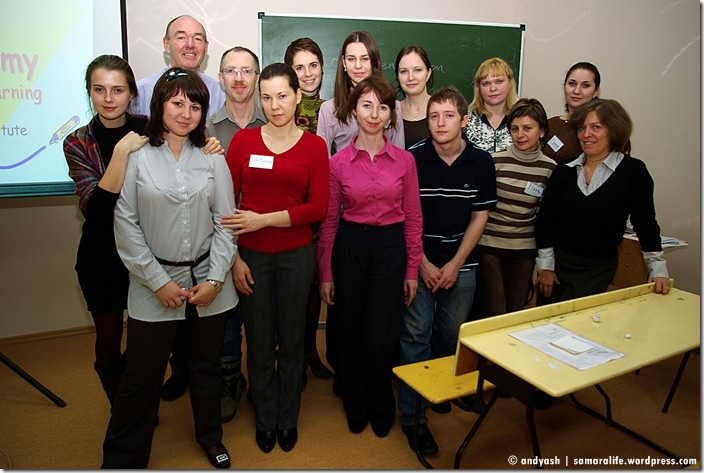
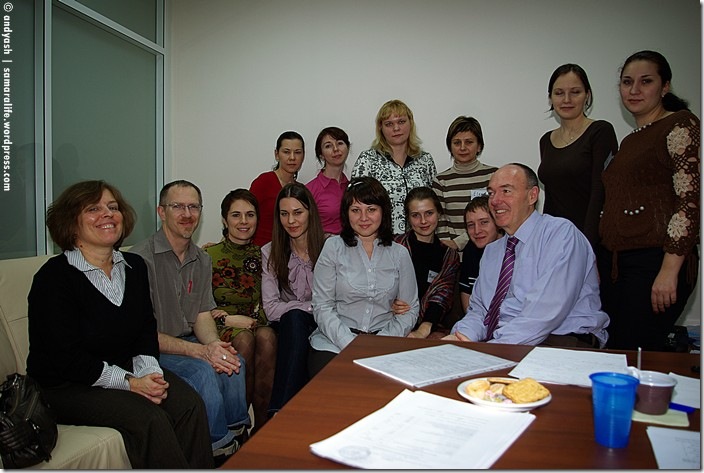
These figures relate to the significant event that took place in my hometown, Samara. On the 17th – 19th of December Samara State University of Architecture and Civil Engineering hosted master classes for EFL teachers. The tutors of International Training Institute (Istanbul), Liz Aykanat and Tom Godfrey were invited.

 
During the three-day master classes Samara teachers got acquainted with state-of-the-art methods and approaches to teaching English as well as improving teaching skills. They took a fresh look at their profession and learned what stands for such concepts as potential, creativity, teamwork, prospects.

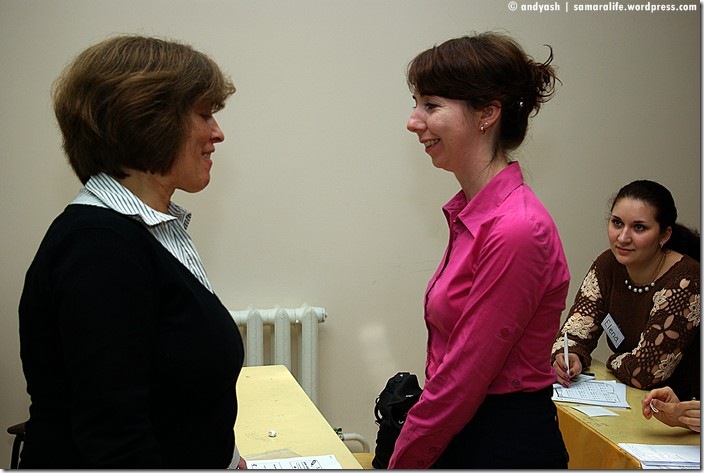
Topics for the master classes were chosen according to the needs of the participants (e.g. how to teach reading effectively) as well as new trends (CLIL). The master-class on drama brought about lively discussion and sharing of impressions.


Master classes were really international because the participants were not only Russian teachers, but also Canadian and American ones. Experience exchange, knowledge and plans sharing were outstanding. According to the participants, such workshops should be regular and ongoing as they lead to out-of-box thinking.
As for me personally, these master classes have become significant. For many reasons. I have got my team, the people who are able to support, to be optimistic and do everything possible to make the event happen. I met my tutors, the people who had helped me to take a step forward in my career, the professionals and very nice people. There were many of my friends who took part in the master classes and I’m happy that the number of people who want to be aware of trends is growing. And one more thing. I have realized that it was only a first step. The first master-classes, followed by the second, the third, the fourth ones… and tutors of International Training Institute will be frequent and welcomed guests in my town.

Galina Sharonova.

Posted in Uncategorized | Leave a comment

Shaking Hands with Death

How can I survive terminal cancer?   

In this blog I describe my experiences living with cancer and my reflections on being just a few moments from death. Since being diagnosed with terminal cancer I have realised that I am far from alone and many people have confronted ‘near death’ experiences. As a teacher and educator I believe we learn much by sharing ideas and experiences and it is in this spirit of sharing that I offer my story, hoping that it will prompt comments and the sharing of experiences and opinions.   

As a language teacher I often do an activity with my students in which I write significant dates from my life on the whiteboard and invite students to guess their significance: for example,  12th September 1959, September 1980, 30th June 2009. The activity practices question forms and proceeds like this:   

            “Were you born on 12th September 1959?”   

            “Yes, I was”   

“Did you start teaching in 1980?”   

“Yes, I did”   

“Did you get married on 30th June 2009?”   

“No, I didn’t. I got married much earlier in 1997.”   

Students can never guess the significance of this last date. In fact 30th June 2009 is the date I was confirmed as dying. My surgeon declared me inoperable, terminally ill  (riddled with cancer) and with at most six months to live. It is on this day my story starts.   

I felt very cold, I was shivering and I had a burning sensation in my bowels.   

“Toilet! I need to go to the toilet.” I stammered incoherently (although I realize in hindsight, given the circumstances, this must have sounded a most bizarre thing to say). A green masked face loomed into my vision and a torrent of words I barely recognized as Turkish snapped in my direction. I was briskly wheeled to the surgical ward of a private hospital in Istanbul.   

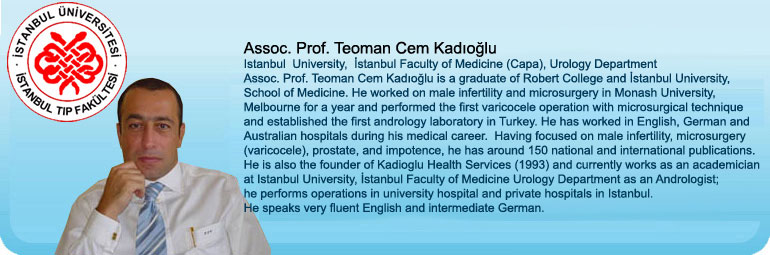
Gradually I was coming round from the anesthetic and recalling the events that had brought me to this painful prostrate position in a Turkish hospital. Three months earlier, March 2009, I was enduring my overloaded existence trying to make ends meet as the owner of a teacher training center in Istanbul, desperately struggling with piles of marking, reports and other administrative forms for numerous training courses while trying to optimistically find time to complete my Doctorate by the fast approaching summer deadline. My life was a mess! It was only when I was elbowing myself into position to relieve myself at the toilet urinals of a busy bar in Beyoglu that I realized something was really seriously wrong. Furtive glances triggered me to gaze down and see bright red urine splashing into the toilet bowl. A scan the following day revealed a suspicious lesion in my bladder that was pronounced, a few days later, to be a cancerous tumor by Teoman Bey, a rather short stocky urologist who wore a shiny suit several sizes too small and slicked back gelled hair giving him the appearance of a cross between a 1950s Chicago gangster and Count Dracula. A series of ultimately futile cystoscopies eventually revealed that the cancer had spread from another part of my body to the bladder. I was transferred to a surgeon, Turker Bey, who conducted an operation to surgically remove the tumors. It was the effects of this operation that were slowly beginning to wear off.      

I knew immediately, as I caught my sister’s worried gaze, that the operation had not been a success. There were whispered conversations behind the door between my wife Cheryl and the surgeon. The cancer had spread throughout my body and was inoperable. I knew my condition was terminal before the oncologist confirmed I had stage 4 colon cancer and had maybe six months to live. As far as the medical profession was concerned and indeed everyone else, I was dying.   

FACING DEATH   

When told that I had six months to live, I was naturally overcome with fear. I was afraid of death but also afraid of life with a terminal illness. There were only two responses: either fatalistically accept my fate and make plans for a graceful exit or convince myself that as an individual with ‘free will’ I have the power to control and change my destiny and actively set about healing myself. The weight of medical opinion, logic and society dictated the first course of action and I diligently wrote my will, applied to liquidate my life insurance policy on the grounds that I was dying, told my business partner I wanted to sell my share of our expanding business and half-heartedly discussed the possibilities of buying medicinal opium and booking a hospice for my final moments. However while doing these tasks I also strongly believed that my life journey had got seriously confused and that the plot definitely did not end in this manner. I had too much to learn and too much to give. Surely there were many episodes and experiences yet to come. So I also actively tried to change my life, my attitude, and to learn to live with cancer.   

I began to realize that having cancer, surprisingly, had some positive aspects. On a practical level it gave me much-needed time. As I was recuperating from the operation. I completed writing my Doctorate thesis. It also gave me a day every fortnight to lie down while having chemotherapy to talk to my wife. I realized that we hadn’t really talked for a long time and that we still loved each other. Having cancer made me feel special, after all not everyone has cancer and when employees are moaning about lack of time, work pressures and so on, a simple put down along the lines of, ‘I wish I still could worry about such crucial things.. but with only a few months to live…’. This would tend to have the desired effect.   

THE TREATMENT.   

I began to conceive my treatment as being conducted on three levels: physical, mental and spiritual. Physically I was paying attention to my body. Initially my body was racked with pain and fear, especially before the operation. My wife gave me massages with oils and guided me through breathing exercises that helped reduce the pain and panic attacks. Later I was swimming and walking regularly. I was also eating more natural foods especially fruit and vegetables and the so-called “wonder food’ dried apricot seeds that reputedly combats cancer naturally (fortunately available in Turkey but not widespread in the West!). I briefly researched special diets. These typically proclaimed banning staples such as sugar and salt but in the end I just ate what I felt like. The rational treatment (mental) was provided by medical science. I was prescribed intensive chemotherapy over two days every two weeks over a six-month period: a cocktail of Avastin and FOLFOX 6. Being aware of the horror stories of chemotherapy involving hair loss and gradual disintegration of the body, I was relieved to merely experience bouts of tiredness, diarrhea and a tingling sensation in the hands and feet which were not severe enough to stop me from continuing to go to work. It was on the spiritual level that I believe much of the important healing occurred. Even the medical profession, the paragons of empirical science, accepts that a ‘positive attitude’ to treatment is an important factor in a patient’s recovery. How can you have a ‘positive attitude’ to terminal cancer and chemotherapy? And more worryingly, if I accept that I have the power to influence my healing process and the course of my life, then by extension I also have to accept the horrifying thought that I am also, in some way, responsible for the cancer being allowed into my body in the first place. I meditated once a week, with the help of an instrument called a Zapper, which gives off an electric pulse for 7 minutes three times in twenty-minute intervals. The theory is that the cancer is a parasite that clings on to the cell tissue; the vibration causes them to dislodge from the cells and disappear. I did not find this explanation very convincing but the discipline of sitting still for an hour and grasping electrodes became part of my meditative routine. I also used a technique I refer to as ‘affirmations’. When I was swimming I would mentally chant the following affirmation to myself:   

“My body is healthy and clear of cancer   

Cancer cells go to the light   

I am starting a new life free of cancer”      

Later I discovered a technique called EFT (Emotional Freedom Technique) which is reputedly related to acupuncture. You tap certain pressure points on your body while chanting positive affirmations. While swimming and meditating I also used visualization. I would visualize my cancer as black flies clambering around my colon and throughout my body, then I would visualize them forming a swarm and flying down my arm and out of my body and through a nearby window. Undoubtedly the greatest influence on my health and well-being was the incredible love and support of family and friends. I remember tears of gratitude at the amazing response when friends (and also complete strangers who had heard of my condition through the grapevine) filled the hospital’s blood bank with their donations of blood. Unquestionably the greatest positive influence on my health was Cheryl, my wife, who supported me with love and energy at every stage along the journey. Fortunately, for me, Cheryl is a holistic health practitioner who was able to introduce and guide me through the healing processes.   

THE MIRACLE   

On 17th February 2010, eight months after the aborted operation where I was declared clinically inoperable and terminally ill, I was admitted into Capa, a Turkish University teaching hospital, and anxiously operated on by the same surgeon, Turker Bey. This time after the operation it was smiles all round.   

Smiles all round


The main primary cancer tumors in the colon and the tumour in the bladder were successfully removed along with 30% of my intestines. Subsequent analysis of the intestines in pathology revealed, to the incredulity of the medical team, that they contained 0% cancer cells. The cancer had gone! The surgeon admitted that in the space of 8 months I had gone from terminally ill to cured and was at a loss to explain how it was possible! Other doctors, who I have spoken to subsequently, either do not believe my account or question the accuracy of the original diagnosis. However I have all the medical reports and radiology scans to verify my experiences.   

REFLECTIONS ON THE MEANING OF LIFE   

I do not know which, if any, of the treatments I conducted had any effect. I cannot explain what happened. Explanation is not the point. The meaning of my experience is not how the journey ended but the lessons learned on the way. Reflecting on my experiences of living with cancer I realize that there are many parallels with the learning processes I am familiar with as a language teacher and teacher trainer and that these processes can also be encapsulated into the same three levels: physical, mental and spiritual. Taking the physical level first, the human body is a highly effective learning organism that can frequently operate autonomously without conscious effort: performing complex tasks such as driving or teaching. Indeed not consciously considering every word I utter when teaching allows me to conduct the lesson effectively. Second, mentally humans are distinguished from other beings on earth by their capacity to think about their own existence. I am aware for example, as my pet cat presumably is not, that my existence is finite and my life is perpetually in the shadow of death. Equally, because I have language, I am capable of abstract thought. We can distance ourselves from our immediate contexts, free ourselves from our bodies, and speculate on life in its totality. Like fire, however, the power of abstract thought is an ambiguous gift, at once creative and destructive. It allows us to conceive of joy and health as well as fear and death.   

Finally there is no doubt that humans are spiritual creatures who strive to make sense of their individual and collective existence. Indeed inquiring after our meaning, is part, indeed, of what makes us the kind of creatures we are. Self-reflection is integral to the business of living. It is no coincidence that in all cultures the first enquiry when greeting someone is; “How are you?” Being aware of the fact that you are doing fine enhances our sense of well-being. Awareness of physical, mental and spiritual well-being is an aid to health and happiness.   

THEORIES OF LEARNING   

I now believe after my experiences, that Nature has homeopathically and considerately provided us with both the cure along with the poison. We can consciously focus on the cancer cells on a physical, biological level as a malignant neoplasm. Alternatively we can focus our thoughts on a spiritual level assigning our cancer cells and our life with significance, value and purpose considering spiritual and life-giving issues such as why the cancer has appeared in relation to our sense of self and life purpose. These ‘spiritual thoughts’ can too easily be dismissed as mythology and not true from a scientific viewpoint. However I believe, and my experience suggests, we have bowed too readily to an omnipotent concept of scientific truth, assuming it is the only brand of truth available. Fact is not always more valid than opinion. The human spirit contains its own truth, one which perhaps lies more in the experiences encountered on life’s journey than in the propositions scientists’ advance about the features along the way. Spirituality provides value and purpose without which a life journey would flounder. If life has any meaning then it is not solely a proposition but also a practice. It is not solely a scientific truth but also an experience. As such, it can not be articulated in language alone but can only really be known by living and experiencing through body, mind and spirit.   

A holistic approach to my health experiences with cancer has many parallels to my professional experience as a language teacher and teacher trainer. Language teaching too has experienced epistemological shifts that have panned through a focus on the physical body (Behaviourism); the mind (Cognitivism) and the spirit (Humanism). Each approach has had its camp of followers and positive influences and effective methodologies can be identified in each approach. However, now surely it is the time to raise the standard for a holistic approach to education (and medicine) incorporating and encompassing all of these levels of learning to fully maximise our potentials; indeed A Whole Person Learning Approach.

Posted in Whole Person Learning | 40 Comments

DRAMA in ENGLISH LANGUAGE TEACHING: A WHOLE-PERSON LEARNING APPROACH

Introduction
What is Drama in ELT?
Most ELT teachers nowadays advocate some elements of a ‘Communicative Approach’ and therefore recognise and appreciate the value of Drama in ELT. Drama can be defined as activity involving people in a social context and there is no doubt that effective communication in social situations involves other forms of communication that go beyond language competence and includes the use of gesture, body posture, intonation and other prosodic features. However the inclusion of drama based activities is not so evident in current ELT course books, resource books, supplementary materials and teacher training courses. Teachers clearly need practical step by step guidance on how to incorporate drama more comprehensively and cohesively into their teaching.

Why Use Drama?
Drama is an active approach to learning where participants identify with roles and situations to be able to engage with, explore and understand the world they live in. This goes beyond language, as social interaction involves communication on multiple levels that cross cultural and language boundaries. By being part of a drama ensemble and participating in a fictitious context, the class is experiencing a shared moment of intensity that involves emotions, facial expressions, gesture, movement and a heightened awareness of others, that would not necessarily be experienced outside the drama environment. Students are thus freed from the constraints of precision of language, that may be required in the conventional language classroom, and are equipped with many other tools with which to communicate meaning.

Humans are physical, mental and psychological beings. When encouraging our students to learn another language we need to recognise and satisfy their ‘whole person’ needs and abilities. In other words we need to address physical, mental and psychological as well as purely linguistic needs. Typically language learning is confined to the mental world of problem-solving, rule application and artificial contexts. Drama is a way of unlocking the ‘whole-person’ and developing physical, creative, imaginative and emotional responses to learning contexts.

Essentially drama liberates the student from the confines of the conventional classroom environment and structure and gives the student the opportunity to draw on their own experiences and imagination, in creating the material on which part of the language class is based. These activities draw on the natural ability of every person to imitate, mimic and express him or herself physically. They are dramatic because they arouse interest by drawing on the unpredictable emotional power generated when emotional memory is triggered by a stimulus and when a person is brought together with others.

As an ensemble the class can learn and discover together, all the while feeling part of something larger than themselves and experiencing the support of the group. By being part of this safe environment students are able to take risks, build on the strengths of others and grow in confidence, making decisions and taking actions on behalf of the group. The Drama context also allows participants to be distanced or liberated from themselves to speak and behave in role, allowing their character to voice truths and opinions that the individual may not express in daily life.

Drama takes as its starting point ‘life’ not language and by so reversing the learning process, that is, by beginning with meaning and then moving to language later we are able to draw on the full range of a learners’ multiple intelligences and exploit learning as a ‘whole-person’ approach. The Drama environment builds on the personalities, energy and ideas of the participants, so is alive and always changing and evolving. Because of this no two Drama lessons are the same, and the level of the work is determined by the nature of the group. One Drama idea or plan is therefore very versatile and can be used and adapted for multiple levels and ages.

The advantages of using drama.

One of the main aims of using drama in a language course is to provide an active, stimulating, fun and creative environment in which to develop the student’s language learning potential. Students are encouraged to explore English through their imagination and creativity and to express this through language, and other forms of communication, that may include: movement, action, dance, and role-play.

These activities aim to develop:
· Confidence, motivation, trust and participation
· Oral and written communication skills
· Awareness of interpersonal and sociocultural communication skills
· Accuracy and fluency of expression
· Rhythm and pronunciation
· Linguistic intelligence
· Social interactive skills

The methodology.
Language in ELT course books is typically presented without the need for learners to be actively engaged. In other words traditional classroom activities have only a surface reality and fail to appeal to, and draw on the learners’ emotional reactions and direct experience. There is a need for learners to empathize with and to be emotionally involved in the creation of language. Drama incorporates the following principles:
· Interactive Learning: The concept of interactive learning necessarily entails a lot of pair and group work in the classroom, as well as genuine language input from the “real world” for meaningful communication.
· Learner-centered Learning: This kind of instruction involves the giving over of “power” in the language learning process to the learners themselves. It also strives to allow for personal creativity and input from the students, as well as taking into account their learning needs and objectives.
· Cooperative Learning: This concept stresses the “ensemble” like nature of the classroom and emphasizes cooperation. Students share information and help, and achieve their learning goals as a group.
· Whole language approach:. The philosophy of whole language is based on the concept that students need to experience language as an integrated whole. It focuses on the need for an integrated approach to language instruction within a context that is meaningful to students.

What are the problems?

There are many problems that can emerge for the teacher inexperienced in using drama activities in the classroom. Teachers who work in a traditional environment and follow a very structured syllabus are often afraid to experiment with more student centred activities. These fears are usually based around the apprehension that the class will become noisy, unfocused and the teacher will lose control. The reality is in fact the opposite: a learner-centred class where students are working collaboratively in groups, if carefully organized and well set up, is easily managed and apart from monitoring then groups the teacher is free. This contrasts with the teacher centred class where the teacher has to monitor an motivate 20 –30 individuals continuously without a minute’s respite. There are however problems that arise in drama based classrooms.  These include:

  • Learners use L1 persistently
  • Learners don’t participate
  • Learners make lots of errors
  • Dominant / shy students
  • Learners get confused and do not know what to do
  • Noise
  • Chaos

These problems may occur in many learner-centred communicative activities and can be remedied by the following solutions:

 Explain the rationale. Tell your students why you are doing these activities. If the aim is to develop oral fluency then explain to your learners that it is important for them to try to speak in English and not their L1. Only by practicing speaking in English will their oral fluency improve. This explanation of the rationale can be reinforced in many activities by having a penalty for L1 use. One way is to nominate a student as a language policeman who reports infringements of the rule.

 Prepare students thoroughly. Prior to any communicative activity learners need to have sufficient controlled practice of the language they need to perform the tasks. This will include relevant lexis, language structures and pronunciation practise. Many weaker students are reluctant to participate in freer activities because they feel under prepared and lacking in confidence.

 Give clear instructions. Communicative activities are often complex to set up. You need to have clear instructions and stage the instructions carefully. This typically involves the following stages:

  1. Introduce the topic / aim of the activity
  2. Show any relevant materials
  3. Give clear instructions
  4. Check instructions by asking checking questions
  5. Briefly demonstrate the activity with a student / or get students to do an example / model.
  6. Put students into relevant pairs / groups
  7. Monitor students and help them as necessary.

 Allow plenty of preparation time. Students need time to prepare both their ideas and rehearse the language before they can perform a complex communicative task. Indeed the more time they have to prepare the better they will perform the task. A lack of preparation time will produce a poor quality performance and this leads to feelings of frustration and disappointment. The opposite of what we are aiming to achieve. Students also need time to think. In a communicative / drama language class some of the most productive work is processed during periods of complete silence. Language teachers are often afraid of silence, as they believe silence means incomprehension. Teachers should avoid filling silence with their own voice but instead exploit the silence as necessary learner thinking time.

 Prepare the formation of groups careful. The composition of groups is important. Learners should have a variety of focus and interact with as many different learners as possible. You need to consider balancing strong / weak learners, as well as considering personalities, gender etc. If you do not plan groups carefully it is likely that the strong learners will dominate and the weaker learners soon lose motivation and interest.

 Feedback. After every communicative / drama task there should be a feedback stage where the learners reflect on their performance. The focus should be on how effectively they performed the activity in terms of their communicative competence. It should not be a stage where the teacher focuses on errors or language accuracy as the aim of drama based activities is to develop fluency. It is of course an opportunity to highlight effective language use and introduce language that could have improved the effectiveness of the communication. The feedback stage should also be an opportunity to praise the learners on their performance and highlight the progress and development they are making in their communicative competence. The lesson should end on a high note with students leaving the class with a smile of accomplishment on their faces and the ringing of loud applause in their ears.

Works cited

Carroll, J (2006) ‘Real Players?: drama, technology and education’, London: Trentham

Crinson, J & Leake, L (Eds) (1993) ‘Move back the desks’, Sheffield: NATE

Halliday, M.A.K (1978) ‘Language as Social Semiotic’, London: Arnold

Kempe, A & Holroyd, J (2004) ‘Speaking, Listening and Drama’, London: David Fulton

Wagner, B.J (1998) ‘Drama and Language Arts: What research shows’, Portsmouth: Heinemann

Posted in Uncategorized | 28 Comments

Hello world!


Welcome to Teacher Talking Time.

This is a blog for teachers interested in teacher education, teacher training and development, teaching and learning and related topics. We will be inviting a variety of  people to share their experiences on a regular basis – so keep coming back!.

The latest post is by Galina an ITI DELTA student working in Samara, Russia. She describes the three-day ITI Master Classes held at her University. Liz and I had a wonderful time and thank Galina for inviting us and also writing it up for our blog. 

I have written the first two posts to get the ball rolling. My first post is about ‘whole person learning’ and explains my personal philosophy that learning should utilise the whole person in terms of stimulating the mind, body and emotions.

My second post is also personal and describes my experiences over the last two years facing cancer. Like staring down from a precipice, confronting our fragile mortality is terrifying, and yet, at the same time by confronting the inevitable, it provides a unique opportunity to perceive from a new and sharper perspective and to learn valuable lessons about the nature of learning and life.

I hope you enjoy these postings and future ones.

Best wishes

Tom Godfrey (Director of ITI)

Posted in Uncategorized | 2 Comments