“Transforming Teacher Education Through Applied Theatre: Embracing Boal’s Forum Theatre”

I am convinced that in educational and training contexts there is vast scope in exploring how human experience and emotions accord with Teacher Education. Applied Theatre encourages participants to ‘feel’ and express emotions, not necessarily as ‘raw’ felt emotions but rather to re-enact experiences to stimulate learning. I determined that I need to run some diagnostic workshops with teachers to explore how teacher education can utilise Applied Theatre to stimulate reflection on one’s teacher identity and raise awareness of self and others while activating transformative learning.

In my quest for a framework and methodology that fosters participant-led, solution-oriented teacher professional development, the work of Augusto Boal, the esteemed Brazilian dramatist, emerged as a promising resolution. At the core of Boal’s educational philosophy is the conviction that learning starts with an awareness and analysis of the present context and involves reflection and action (praxis) to promote change. Although Boal uses the medium of theatre to wield this change, the underlying sentiment mirrors my conception of teacher development.
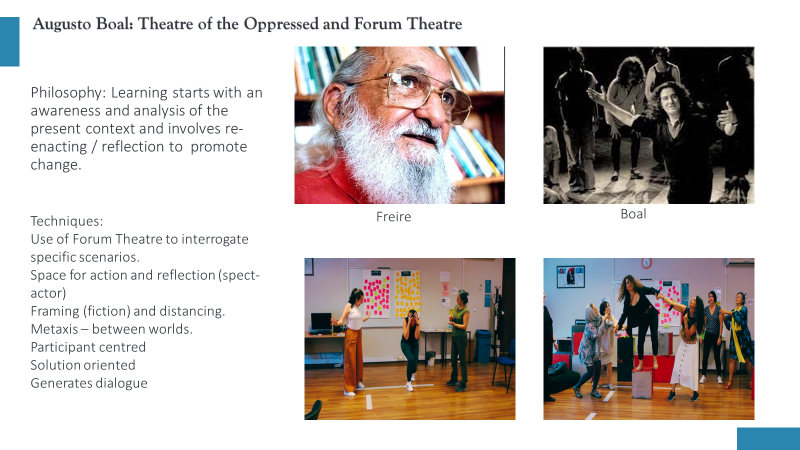
A cornerstone of Boal’s philosophy is the concept of “forum theatre,” a practice where participants grapple with real-life challenges by intervening in scenes and proposing alternative courses of action. Boal was influenced by the pedagogue Paolo Freire who sought to liberate individuals from the constraints of ignorance, empowering them to become agents of change in their own lives. Freire believed in the importance of dialogue and critical thinking in the learning process. He viewed learners as active participants in the co-creation of knowledge (rather than passive recipients) and encouraged learners to question, analyse and reflect upon their reality. This is a philosophy that undoubtedly resonates with teacher educators.

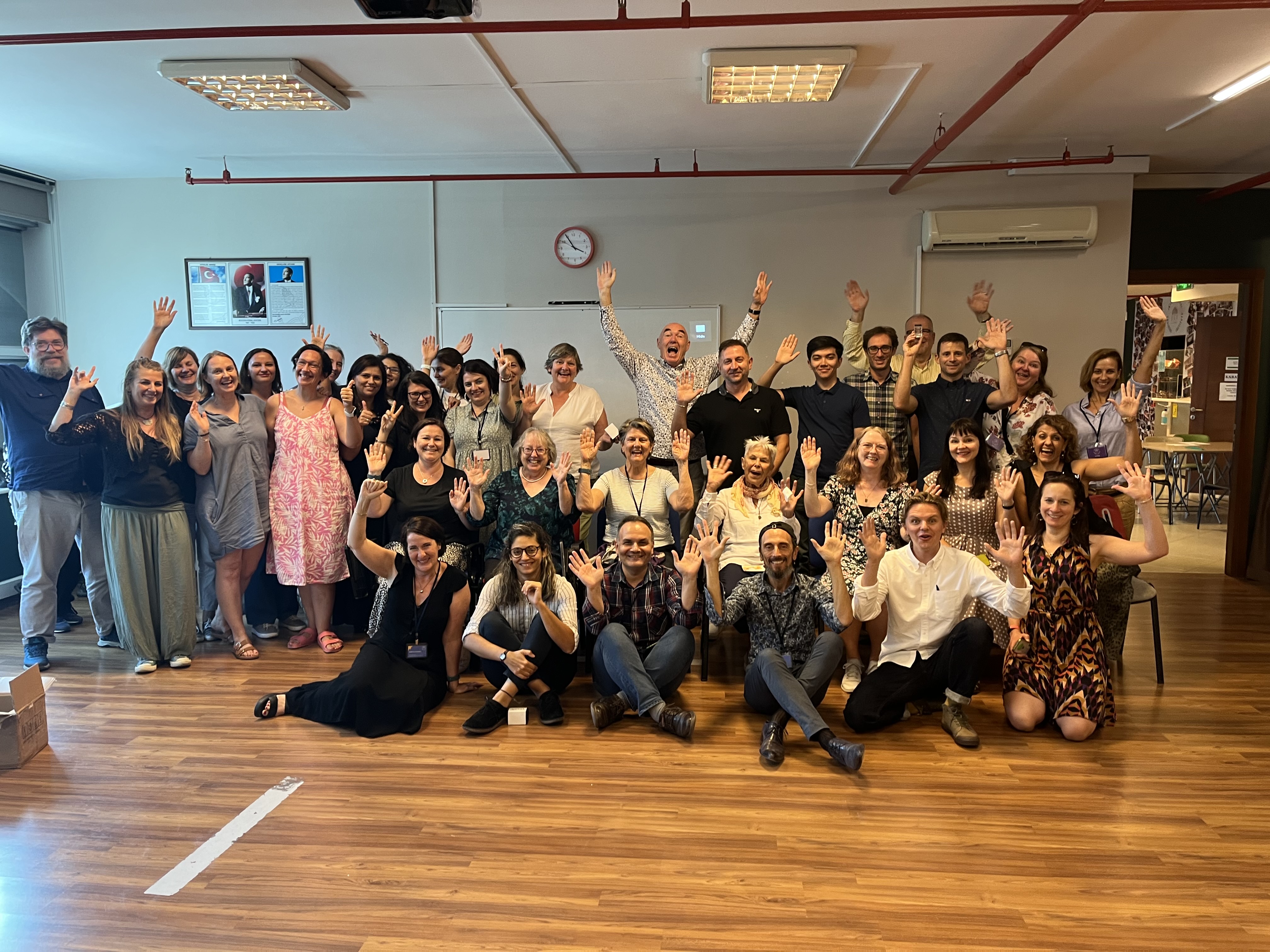
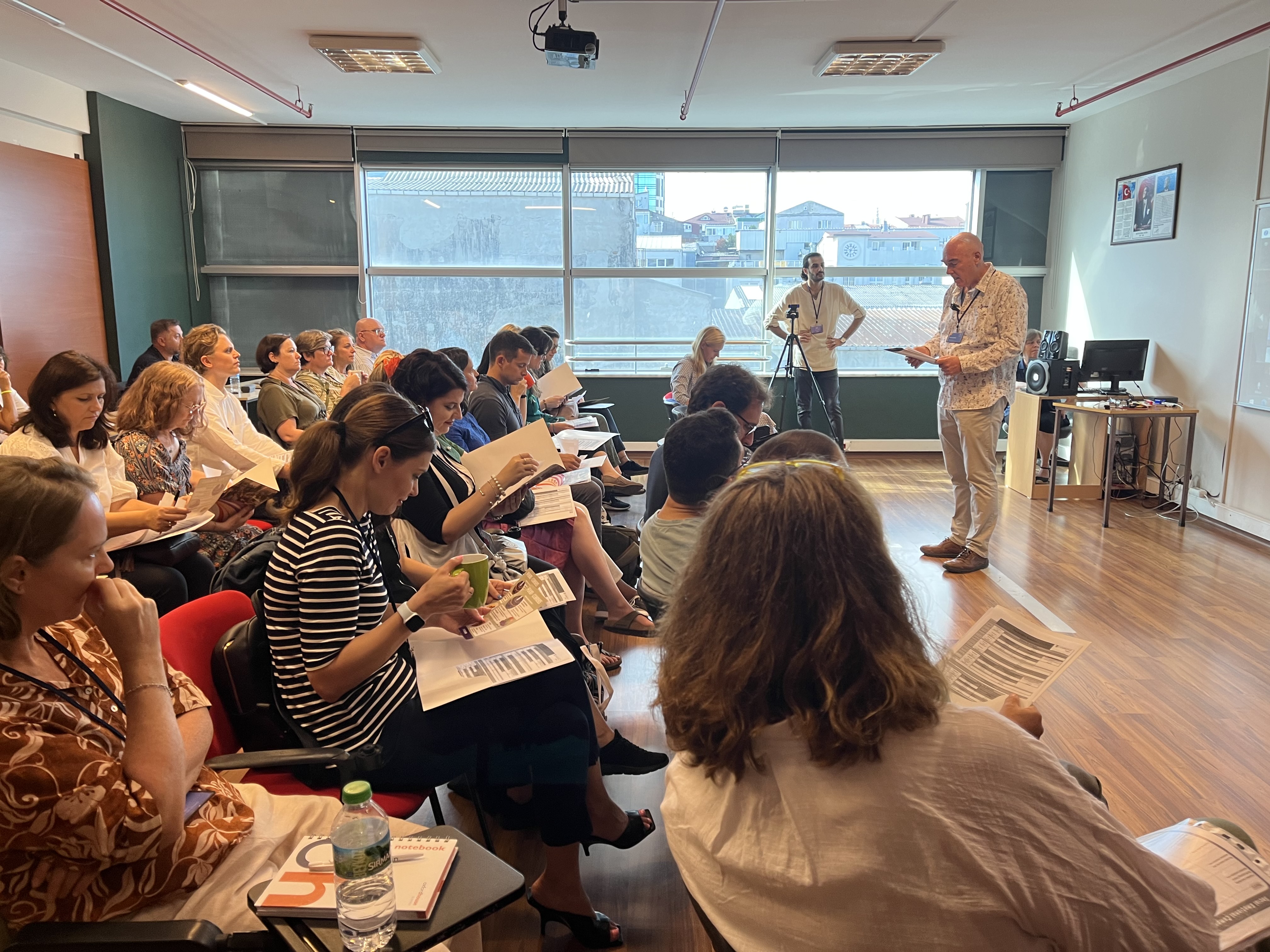
These participatory arts grounded in Paolo Freire’s participatory education model, and Boal’s Forum Theatre, offer a means of expression that facilitates collaborative decision-making processes and fosters dialogue, self-reflection, and community introspection. Drawing inspiration from the principles and rationale of Forum Theatre, I have ventured into the utilization of participatory methodologies in teacher professional development through a series of workshops at our teacher training center in Istanbul. These workshops centre around what I term “Community Forums,” an adaptation of Forum Theatre pioneered by Augusto Boal in 1973, and they aim to unearth authentic teacher experiences thereby stimulating community discourse and problem-solving. Community Forums serve as a means to elucidate participants’ comprehension of their circumstances and offer avenues for devising solutions—effectively providing a framework for both addressing the issues teachers encounter and engaging in reflective dialogue.

If you want to know more, watch the video.
Reflection and action in Forum Theatre
Posted in Uncategorized | Tagged , , , , , , , | Leave a comment

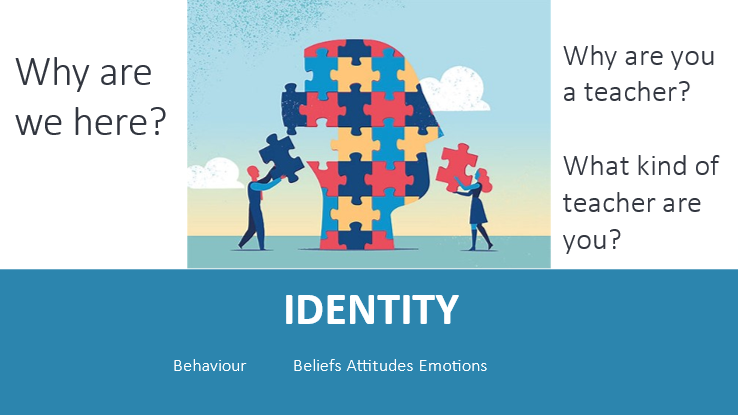
Harnessing Applied Theatre in Teacher Education for Self-Reflection and Identity Awareness

In a celebrated TED talk, Sir Ken Robinson urged us to view teaching as an art, emphasizing the role of teachers in facilitating learning rather than mere knowledge transmission. This perspective raises a crucial question: What makes a great teacher? As a teacher trainer, I’ve noticed that effective lessons often lack a certain ‘spark.’ This elusive element appears to reside in the embodied behaviors and interactions between teachers and learners.

Teacher identity has evolved beyond technical competence to encompass social personae, reflecting roles, relationships, and community affiliations. Identity is a dynamic interplay between personal agency and external influences. To truly enhance teaching practice, we must incorporate identity reflection into teacher development.

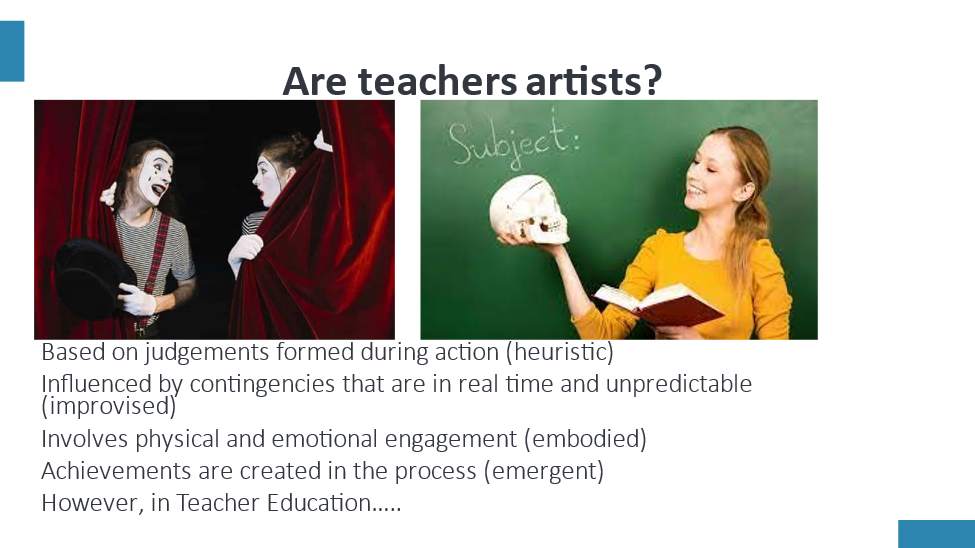
Applied Theatre, notably Augusto Boal’s work, offers valuable insights into teaching as a performative art. Teaching is heuristic, improvised, embodied, and emergent, making it akin to a performance. Wahl’s observation that teachers should engage students emotionally highlights the importance of this aspect.

The idea that learning is rooted in action, as advocated by Rousseau and Locke, echoes in Progressive Education champions like John Dewey and Vygotsky, who emphasized embodied social interaction and play in learning.

While drama in education has a rich history, contemporary research on performative approaches in Teacher Education is limited. Even’s teacher training program, for instance, emphasizes dynamic, co-constructed learning over static knowledge delivery. Smith’s research on teaching English to migrants underscores the teacher’s role in creating a meaningful learning environment. Lutzker highlights the importance of a teacher’s physical attitude in holistic development.

Applied Theatre, specifically ‘Process Drama,’ immerses participants in fictionalized, participant-led experiences for educational purposes. This approach creates a ‘no penalty’ zone, where learners can explore solutions in a dramatized setting. Vygotsky’s theories on learning through experience and emotion are pertinent here.

In educational contexts, there’s immense potential to explore how human experiences and emotions intersect with Teacher Education. Applied Theatre encourages participants to ‘feel’ and express emotions, fostering reflection and awareness. To explore this further, I conducted diagnostic workshops with teachers, using Applied Theatre to stimulate self-reflection on teacher identity and increase awareness of self and others while promoting transformative learning. What happened? I will tell you next week.

Teaching is a creative process
Posted in Teacher Development | Tagged , , , , , , , , | Leave a comment

ITI’s online TKT Preparation course goes viral

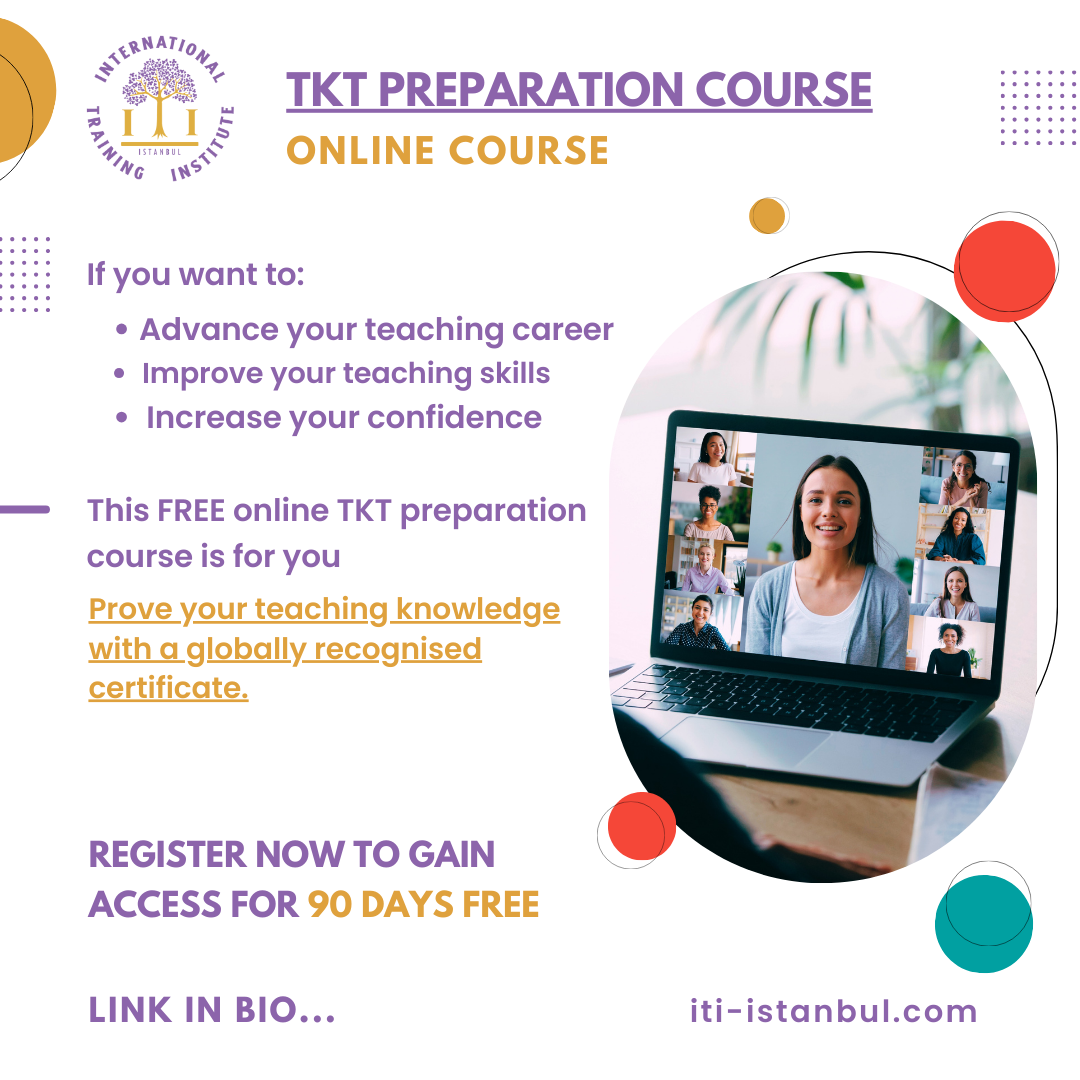
I’m thrilled to share some extraordinary news: our free online Cambridge TKT (Teaching Knowledge Test) preparation course has achieved astounding success!

The response on day one was unprecedented, with a staggering 800 registrations flooding in. It’s a testament to the growing demand for accessible, high-quality teacher training resources. We’re honored to lead this movement.

Our mission at ITI has always been to empower educators worldwide. The TKT is a globally recognized qualification that enhances teaching skills and opens doors for educators. Our free TKT prep course was designed to make this opportunity accessible to everyone, irrespective of financial constraints.

However, with such overwhelming success comes a few challenges. Due to the high demand, our servers are under strain. To ensure a seamless learning experience, we’re considering temporarily closing new registrations. Rest assured, this will be a brief pause, and we’re actively working on enhancing server capacity.

In the coming weeks, we plan to reopen the course, albeit with a limited number of participants, to ensure accessibility for all.

I want to thank everyone who has shown interest in our free TKT prep course. Your dedication to professional development is inspiring.

At ITI, we offer a range of other teacher development courses as well. We’re committed to making quality training accessible to all educators: http://www.iti-istanbul.com

Stay tuned for more updates as we redefine teacher education together.

Teacher Development is its own reward

Posted in Uncategorized | Tagged , , , , , , , , | Leave a comment

Frustrations of Being a Teacher Educator: Part 2

Why do I feel that I am not as effective as I could be, I am getting close but ultimately missing the target as a teacher educator?

Do you ever find yourself wondering if you could be a more effective teacher educator? I recently attended several conferences and training workshops, and something struck me as paradoxical. Many ELT trainers and educators, who champion personalized, learner-centered lessons focusing on communication and language use, often deliver their training sessions in a tutor-centered, content-focused manner. It’s almost as if they’re transmitting knowledge rather than fostering participation and learning. As educators, we must lead by example, showing how to encourage participatory learning, or else teachers may merely pay lip service to the idea of ‘facilitating learning’ while remaining entrenched in the traditional role of a knowledge transmitter.

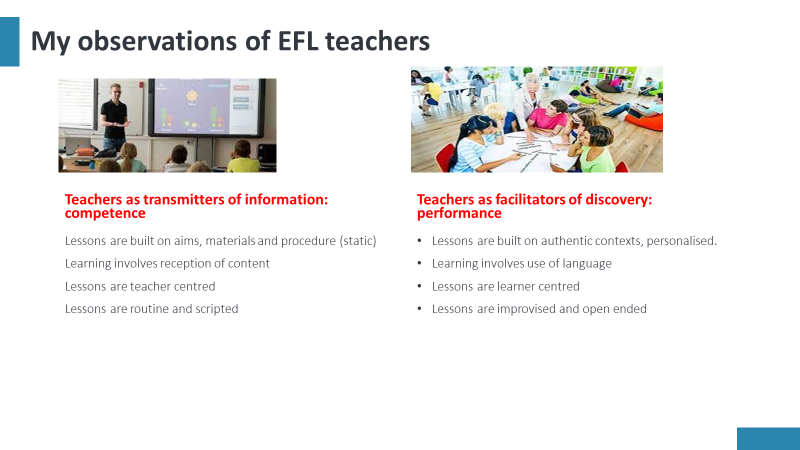
With over four decades of experience as a teacher trainer, I’ve had the privilege of observing countless lessons. What I’ve noticed is that most lessons adhere to what I term the ‘competence’ model of teaching. They are meticulously planned with explicit aims and objectives, with the primary emphasis on delivering and practicing content. Yet, rarely do I come across lessons rooted in what I call the ‘performance’ model of teaching, where the lesson is learner-centered, open-ended, and built upon learner-generated participation and content. Admittedly, the ‘performance’ model is a high-risk approach, demanding strong facilitation skills. Most teachers, in my experience, tend to avoid such risks, often lacking the support needed to develop facilitation skills. My aim isn’t to argue which teaching model is superior; instead, I am drawn to the aspiration of training teachers to be effective facilitators, a goal I share personally. However, despite this aspiration, I too often find myself standing before rows of teachers in workshops, clicking through PowerPoint slides to transmit content. I’ve often wondered if other teacher educators face this same role conflict.

These reflections compelled me to explore questions like: What are facilitation skills, and how can they be cultivated? As Ruitenberg (2007) aptly notes, “Teaching is performative; it unfolds as embodied and enacted responses, in the moment.” In contrast, traditional academic knowledge is usually conveyed through words and numbers, making it disembodied. This propositional knowledge, while valuable, can only take a teacher so far, as true growth requires practice, as emphasized by Nelson (2013).

So, I embarked on a quest to identify the key performative skills that distinguish effective teachers. In Part 3 of this series, I’ll unveil what I’ve discovered


Posted in Teacher Development, Uncategorized | Tagged , , , , , , , , , | Leave a comment

Congratulations to the speakers at CETA 2023

This 8th Cambridge Teaching Awards (CETA) Symposium was held at ITI Istanbul on September 9th and 10th 2023. The CETA Symposium brings together tutors, assessors and moderators from centres worldwide to provide an opportunity to share experiences of delivering the Cambridge English Teaching Awards, primarily DELTA, CELTA, and TKT.

The Symposium provides a forum to share ‘good practice’ among course providers, discuss current issues and problems encountered in course delivery and to learn about new innovations in the field. It also provides a platform to ‘voice’ ideas and consider future directions. This years’ Symposium was particularly important  as we emerge from the pandemic and training courses are being adapted to both online and face to face formats and decisions taken now that will shape the future direction of the Cambridge Teaching Awards.

The CETA Symposium addressed a range of topics as well as the perennial issues such as feedback, observations, TP students, presentations also addressed the challenges of new technology such as AI and Chat GPT, social and emotional competences and modernising the DELTA. We also had a special preview of a documentary film depicting the experiences of the CELTA course from the paticipants’ perspective.

All the sessions were recorded and if you missed the Symposium you can click on the link below to access the session materials and recordings. https://drive.google.com/drive/u/0/folders/1HB214FLEq1RLmdJ860C-lIy0JBprqhXH

Here is a video of the event:

Memories of the CETA Symposium 2023 held at ITI Istanbul 2023
Posted in Teacher Development | Tagged , , , , , , , , , , , | Leave a comment

Frustrations of Being a Teacher Educator: Part 1

Why do I feel that I am not as effective as I could be, I am getting close but ultimately missing the target as a teacher educator?

As a teacher educator of many years, it is not uncommon to be invited to an institution to do a plenary presentation or workshop. A recent occasion was at a well-known chain school in Istanbul where I was invited to present on the topic of ‘Social and Emotional Learning’ to 200 primary and secondary school teachers. As I walked to the conference hall the Head of Department whispered in my ear that the teachers at this school must follow a strict curriculum and she hoped my session would not include many practical activities as it was unlikely, they would fit into the curriculum. Despite this disconcerting advice and reassured that it was far too late to make any changes anyway, I proceeded with my presentation which was built (almost entirely) on practical activities to enhance social and emotional learning in the classroom.

The workshop seemed to go well, the participants (at least the vocal majority) appeared engaged and participated in the activities with enthusiasm. After the workshop I had a familiar dialogue:

Me: Did you enjoy the workshop?

Participant: Oh yes thank you. It was a lot of fun.

Me: Would you use any of these activities in your class?

Participant: (looking quizzical). Err.. no I don’t think so.

Me: Why not?

The responses to this question can vary from: I don’t have enough time, the curriculum is too heavy, there is not enough time, I need to follow the book, I am not experienced enough, my students wouldn’t behave, that’s not my style of teaching, I need more training, it would be chaos, parents would complain and so on. I am left wondering why the teachers are not addressing these issues in their professional development meetings rather than recruiting an external teacher educator to do a workshop on a topic not of their choosing.

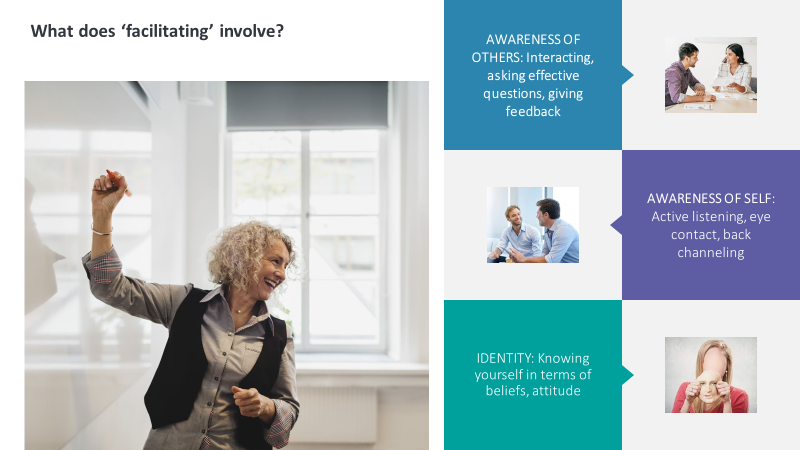
We sorely need a framework and methodology for participant-led, solution-oriented teacher professional development. One solution, I believe, lies in developing facilitation skills for teacher educators. Facilitation is a form of expression which enables shared ownership of decision-making processes and aims to generate dialogue, reflection and community cohesion. Adapting the principles of Applied Theatre, I have explored the development of facilitation skills in a series of workshops for teachers at our training centre in Istanbul.

How I develop facilitation skills and set up ‘Community Forums’ for teacher development will be explained in part 2. However here is a sneak preview video.

Posted in Uncategorized | Tagged , , , , , , | 2 Comments

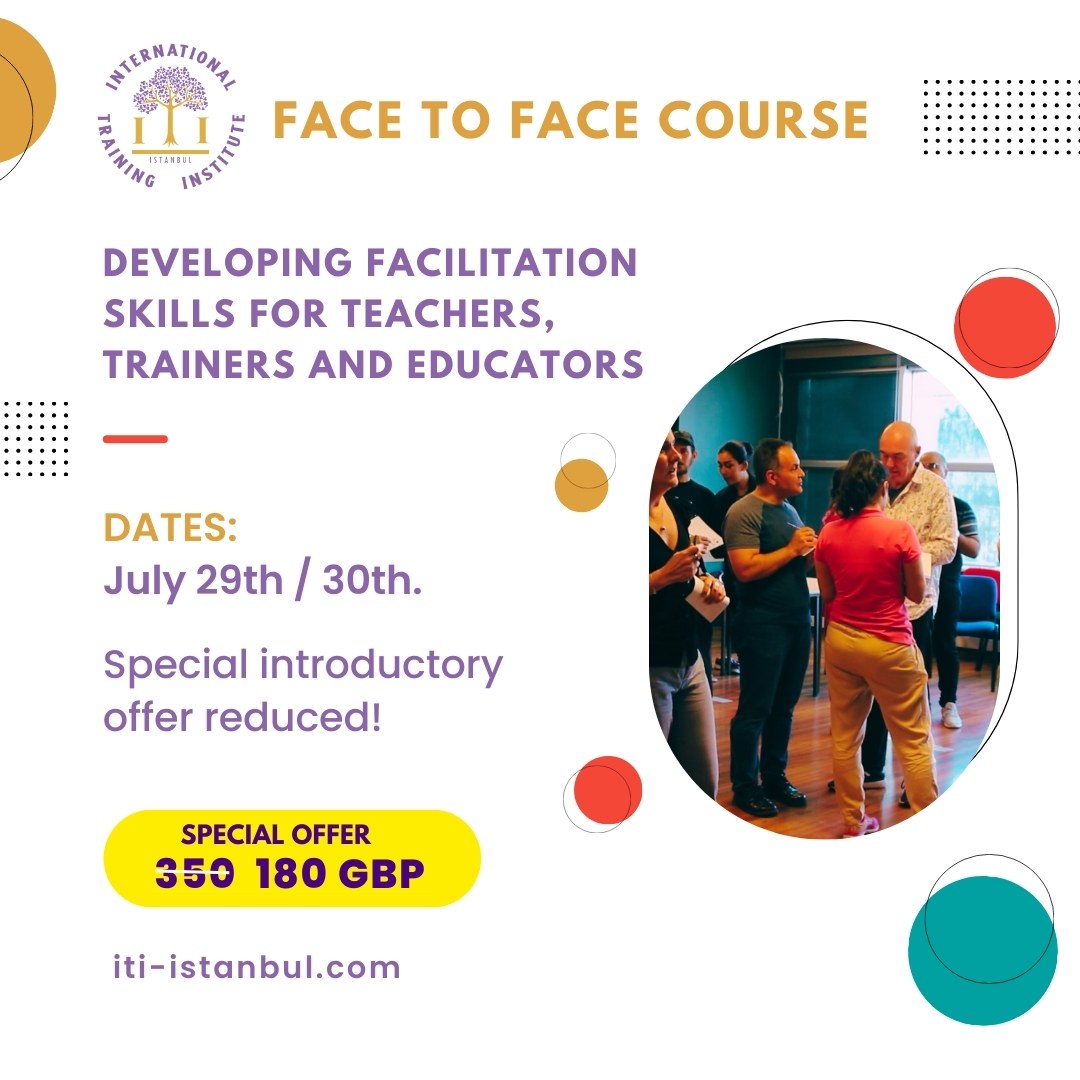
Performative Teaching: Facilitation Skills Masterclass

15 hours of workshops
Date: Saturday 29th July and Sunday 30th July 2023

REGISTER HERE

The weekend masterclass develops facilitation skills and is aimed at anyone who is involved in training, development and educating others.

Facilitation skills are vital in any event that involves creating a safe space for collaboration where people are interacting and discussing ideas to promote change.


The workshops explore the use of participatory approaches to professional development such as team building, gaining participants’ trust, maximizing engagement and fostering collaboration and personal disclosure.

The workshops are based on the premise that facilitation skills requires ‘presence’ and involves managing the physical, mental and emotional engagement of the participants.

The workshops also explore the use of community forums in personal and professional development. The workshops are adapted from techniques used in Forum Theatre devised by the Brazilian dramatist Augusto Boal.

Participants will learn the methodology and practice the techniques so after the programme they can apply these methods in their own contexts. 
This methodology provides an innovative framework for conducting professional development in institutions. It is participant centered and the issues are real concerns and challenges that participants face, while providing a safe space to frame the reflections and discussions. The methodology generates multi-voiced, multi-perspectival dialogue and is focused on finding solutions to real problems and inspiring action and change.

REGISTER NOW

Posted in Teacher Development | Tagged , , , , , , | Leave a comment

Collaborative Research

It hs been great working on collaborative research into Teacher Education in Turkey with the members of ELTER. We have just had yet anpther article published although I must confess my contribution was modest.

https://authors.elsevier.com/c/1hDm8,Gtqv-pv0

If you are interested in joining our collaborative research group – visit the web site: https://www.elterturkey.com/

Posted in Teacher Development | Leave a comment

Teacher Education is on the wrong track

As an ELT teacher and teacher educator, I have seen firsthand the limitations of traditional teacher training practice. Too often, teacher training programs focus on developing teaching competencies, such as procedures, routines, and lesson planning, at the expense of activities that develop performative skills such as building awareness of self, others, and environment (group dynamics, building trust, rapport). This focus on competencies leads to a teacher-centered approach to teaching, where the teacher is seen as the expert who imparts knowledge to the students.

I believe that teacher education should be more heuristic and focus on teacher improvisation, embodied practices, and emergent understandings. This means that teacher training programs should focus on helping teachers develop their own unique teaching styles and approaches, rather than trying to fit them into a mold. It also means that teacher training programs should focus on helping teachers develop their own understanding of teaching and learning, rather than simply providing them with a set of pre-determined methods and techniques.

The current hegemony of learner-centered methodology is a case in point. Most teacher education programs claim to be learner-centered, but in reality, they operate on a trainer-led transmission model of education. This means that teachers are taught how to deliver a set of pre-determined lessons, rather than being given the opportunity to develop their own teaching styles and approaches. As a result, teachers often feel stifled and unable to be creative in their teaching.

I believe that teacher education should be about more than just developing teaching competencies. It should be about helping teachers develop their own unique teaching styles and approaches, and their own understanding of teaching and learning. This can only be achieved through a heuristic approach to teacher education that focuses on teacher improvisation, embodied practices, emergent understandings and activities to encourage reflection on individuals’ identities as teachers.

Here are some specific suggestions for how teacher education can be made more heuristic:

  • Provide opportunities for teachers to reflect on their own teaching and learning through participatory activities.
  • Encourage teachers to experiment with different teaching styles and approaches.
  • Create a supportive environment where teachers feel safe to take risks and experiment.
  • Provide opportunities for teachers to collaborate with other teachers to build trust, collaboration and personal disclosure.
  • Offer professional development opportunities that focus on developing facilitation skills.

I believe that by making teacher education more heuristic, we can help teachers become more creative, innovative, and effective educators.

Posted in Teacher Development | Tagged , , , , | 3 Comments

Community Forums: Participatory Approaches to Professional Development

Find the solutions to your problems with the support of a community of teachers.

The workshops will be Saturday 9.30 – 12.30; 13.30 – 16.30 and

+ Forum Theatre presentation to an invited audience at 17.30 – 20.30.

These series of workshops explore the use of participatory approaches to professional development using techniques based on Forum theatre inspired by the work of Augusto Boal.

The workshops are structured on tried and proven methodology adapted from Applied Theatre and used for training in community settings, care homes, hospitals and many institutions focusing on personal and professional development.

In the first workshop we do activities to raise awareness of our context and brainstorm challenges and problems in our professional lives. In the second workshop these issues are explored and re-enacted in short dramatic scenarios. In the third workshop these challenges are presented to an invited audience to find solutions and alternatives.

The main advantages of this bottom-up approach to professional development are firstly, it is participant centered (the issues are real concerns and challenges of the participants), secondly the dramatic scenarios provide a safe space and frames the reflection and discussion distancing participants in a fictional world where solutions can be explored without repercussions in the real world while still recognizing their real-world relevance. Finally, the methodology generates multi-voiced, multi-perspectival dialogue and is focused on finding solutions to real problems and inspiring action and change.

Video: https://youtu.be/CJnw0gR5TTk

Register now

https://www.iti-istanbul.com/other-training/drama-and-professional-development

Posted in Teacher Development, Uncategorized | Tagged , , | Leave a comment