
AI can not read the room
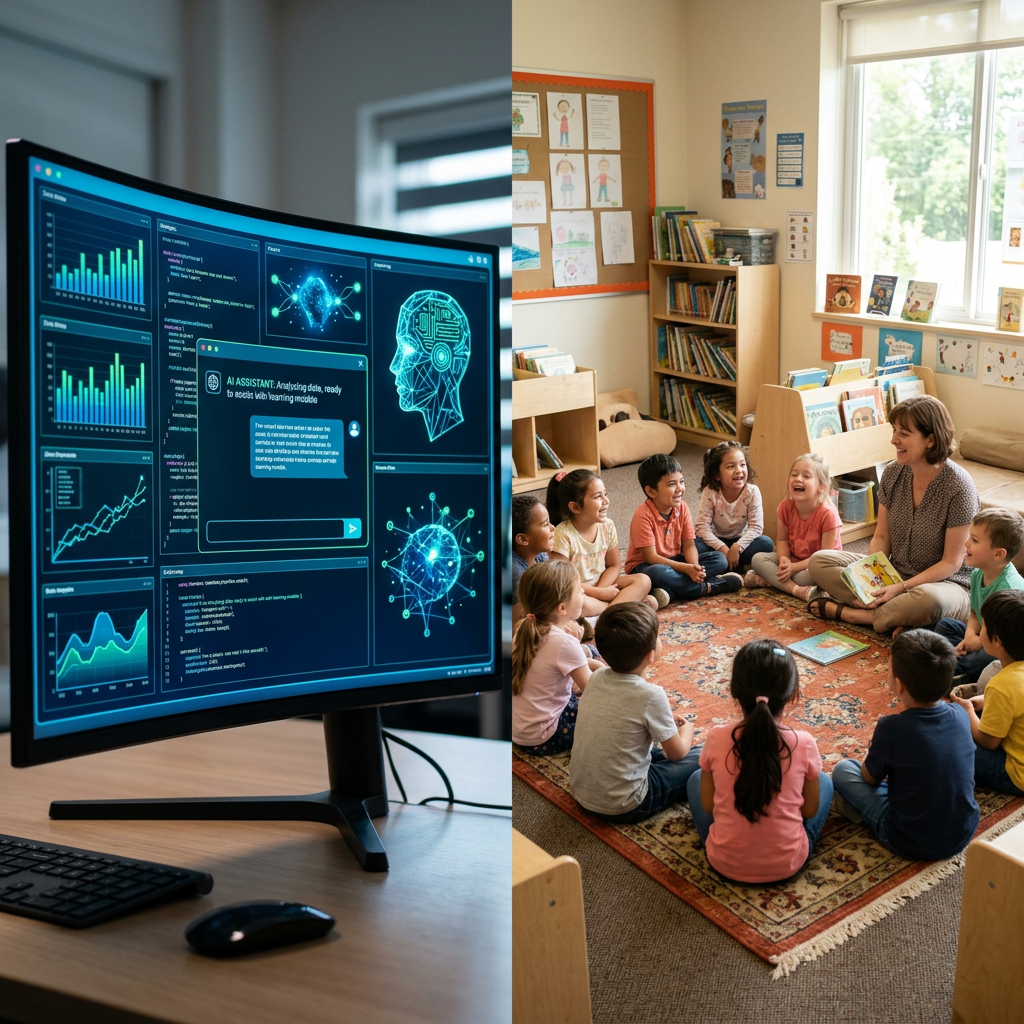
AI can already do many things that used to sit at the centre of teaching.
It can explain grammar.
It can generate reading texts.
It can create discussion questions.
It can design worksheets.
It can correct writing.
It can give examples.
It can suggest lesson plans.
It can produce quizzes, summaries, dialogues, feedback and practice tasks in seconds.
For teachers, this can feel exciting.
It can also feel unsettling.
If AI can explain, correct, generate and personalise, what is left for the teacher?
My answer is this:
Presence.
Not presence as charisma.
Not presence as performance.
Not presence as being loud, entertaining or impressive.
I mean teaching presence as the human capacity to notice, respond, connect, reassure, challenge, include and create the emotional conditions in which learning becomes possible.
In the age of AI, this matters more, not less.
AI can generate content. It cannot fully read the room.
A digital tool can produce a beautifully staged grammar explanation.
But it cannot always know when a learner feels embarrassed.
It cannot always sense when the class has gone quiet because they are thinking, or because they are afraid to be wrong.
It cannot fully recognise the difference between productive struggle and emotional shutdown.
It cannot see the learner who almost speaks, then withdraws.
It cannot notice the small shift in posture after public correction.
It cannot always tell when a joke has reduced tension, or when it has made one learner feel exposed.
Teachers do this work constantly.
Often without naming it.
We read faces.
We notice hesitation.
We hear changes in voice.
We feel when the energy of the room changes.
We know when to pause.
When to move closer.
When to step back.
When to soften.
When to challenge.
When to let silence work.
When to rescue.
When not to rescue.
This is not decoration around the “real” teaching.
This is teaching.
Language learning is deeply human
The need for presence is especially strong in language classrooms.
Language learners are not simply processing information.
They are using a developing linguistic repertoire to express themselves in front of others.
They are speaking with incomplete resources.
They are risking error.
They are risking accent.
They are risking identity.
They may feel less intelligent than they are.
Less fluent than they want to be.
Less adult.
Less funny.
Less precise.
Less themselves.
This makes the language classroom a vulnerable space.
And in vulnerable spaces, the teacher’s presence matters enormously.
A learner does not only need an explanation of the present perfect.
They need to feel safe enough to try using it.
They do not only need vocabulary.
They need to feel that their voice matters.
They do not only need correction.
They need correction that preserves dignity.
They do not only need speaking practice.
They need a room where speaking feels possible.
AI may support the technical side of learning.
But teachers shape the human conditions in which learners dare to participate.
The teacher’s behaviour sends signals
Every teacher action communicates something.
A correction can say:
“You are learning.”
Or:
“You are failing.”
A pause can say:
“You have time to think.”
Or:
“Everyone is watching you struggle.”
A question can say:
“Your thinking matters.”
Or:
“I am testing you publicly.”
A task can say:
“You have agency here.”
Or:
“Follow the instructions and comply.”
A teacher’s response to error can say:
“This is safe.”
Or:
“Be careful.”
These signals shape participation.
They shape confidence.
They shape risk-taking.
They shape how learners see themselves.
That is why teaching presence is not simply about being physically or digitally “there”.
It is about how we show up.
How we listen.
How we respond.
How we use silence.
How we handle error.
How we distribute attention.
How we make learners feel seen.
How we create space for agency.
What AI makes more visible
The rise of AI may force us to ask a question we should have been asking all along:
What is distinctively human about teaching?
If the answer is only “explaining content”, then teachers are in trouble.
If the answer is only “providing practice”, then teachers are in trouble.
If the answer is only “correcting language”, then teachers are in trouble.
But teaching has never only been those things.
Teaching is also relational.
Embodied.
Responsive.
Ethical.
Improvisational.
Emotional.
A teacher works with the unpredictable life of the room.
A teacher senses when learners need clarity and when they need courage.
A teacher knows that the same correction can help one learner and humiliate another.
A teacher understands that participation is not only a methodological aim, but an emotional risk.
A teacher can turn a moment of error into trust.
A teacher can make a learner feel capable before they fully are.
That is not easily automated.
Presence can be developed
The danger is that we talk about presence as if it is a gift.
Some teachers “have it”.
Others do not.
I do not believe that.
Presence is not magic.
It is not personality.
It is not extroversion.
It is a professional capacity.
Teachers can learn to become more aware of what their behaviour communicates.
They can learn to notice when the room is moving towards safety or threat.
They can learn to recognise who is being seen and who is disappearing.
They can learn to create space for learner agency.
They can learn to correct in ways that protect dignity.
They can learn to use silence more skilfully.
They can learn to adjust pace, tone, gaze, space and response.
They can rehearse difficult moments before they happen.
They can reflect not only on what they taught, but on how their teaching was experienced.
This is what I call meta-performative awareness:
the teacher’s ability to notice, interpret and adjust the signals their behaviour may be sending to learners.
In the age of AI, this may become one of the most important skills in teacher education.
The future is not less human
There is a lot of talk about how AI will change education.
It will.
It already is.
But perhaps the most important question is not:
What can AI do?
The more important question may be:
What must teachers now do more consciously?
If AI can help with explanation, materials, practice and feedback, then teachers may have more space to focus on what only humans can do well:
Build trust.
Read the room.
Notice vulnerability.
Invite participation.
Protect dignity.
Respond ethically.
Create belonging.
Support identity.
Make learning feel possible.
The future of teaching should not be less human.
It should be more human.
But that will not happen automatically.
Teacher education needs to take presence seriously.
Not as charisma.
Not as performance.
Not as vague “rapport”.
But as a developable professional skill.
Because learners may use AI for practice.
They may use AI for explanations.
They may use AI for correction.
But they will still need teachers who can create classrooms where they feel safe enough to speak, recognised enough to contribute, and agentive enough to become more than they thought they could be.
That is why teaching presence matters more in the age of AI.
If these questions interest you, I’d love to invite you to join the free Performative ELT community — a space for teachers, teacher educators and trainers interested in presence, rapport, embodied learning, drama, facilitation skills and the performative dimensions of teaching.
Join here:
https://performativeelt.com/free-community-6779
Discover more from Teaching Artistry
Subscribe to get the latest posts sent to your email.

