
Towards a Performative Framework for ELT
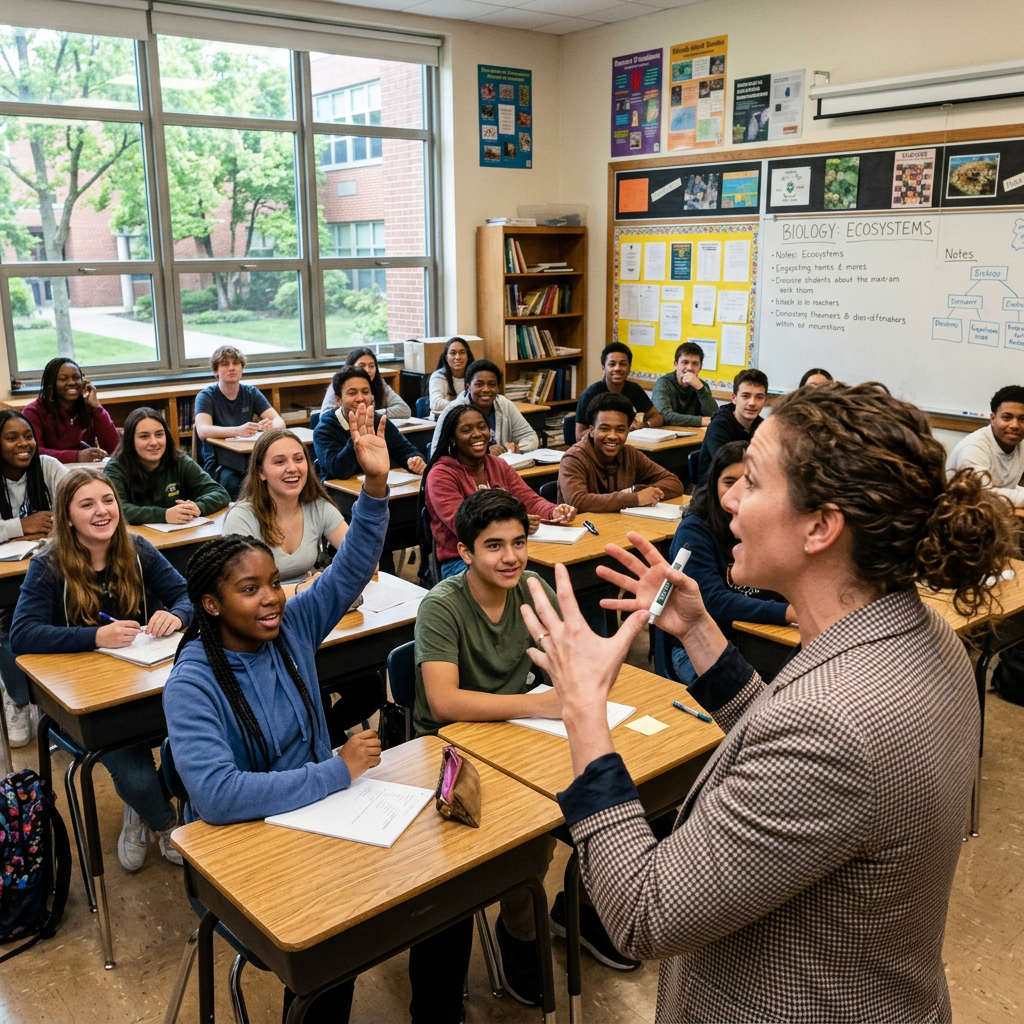
If we can assess rapport, presence and engagement, we should also be able to help teachers develop them.
This may sound obvious. But in teacher education, these qualities are often easier to recognise than to teach.
We know when a teacher creates a positive atmosphere.
We know when learners feel safe enough to participate.
We know when a class feels alive, focused and responsive.
We also know when something is missing.
But when we try to describe what is happening, our language often becomes vague.
“She needs to build more rapport.”
“He needs to be more present.”
“They need to engage the learners more.”
These comments may be true, but they do not always show teachers a way forward. They name the outcome, but not the skills behind it.
This is why I believe ELT needs a more explicit performative framework.
Not to replace methodology. Not to turn teaching into acting. Not to reduce classroom presence to a formula.
But to help us understand how teachers shape the lived experience of learning through body, voice, timing, attention, judgement and response.
Presence cannot be reduced to a checklist
The first danger is to turn performative skills into another tick-box list.
Use more eye contact.
Move around the room.
Smile more.
Pause after questions.
Vary your voice.
These may all be useful suggestions in the right context, but they are not universal rules.
A smile can reassure one learner and feel dismissive to another.
Moving closer can communicate support, or it can feel intrusive.
Silence can create thinking space, or it can increase anxiety.
A lively voice can energise a group, or it can overwhelm them.
Performative skills are not simply behaviours.
They are context-sensitive choices.
The skill lies in reading the room, judging the moment and understanding how an action may be interpreted by learners.
So a performative framework should not ask, “Did the teacher use eye contact?”
It should ask:
What did the teacher’s eye contact do in that moment?
Did it invite participation?
Did it increase pressure?
Did it recognise a learner?
Did it expose them?
This is the shift we need.
From behaviour to meaning.
From technique to interpretation.
From performance to pedagogy.
Four principles of a performative framework
A performative framework for ELT could begin with four principles.
1. Teaching is embodied action
Teaching does not happen only through lesson plans, tasks and materials.
It happens through bodies in space.
The teacher’s voice, posture, gesture, facial expression, movement, pacing and use of silence all contribute to the learning experience.
A teacher can give clear instructions, but sound rushed.
A teacher can ask a thoughtful question, but allow no thinking time.
A teacher can design a communicative task, but stand in a way that makes learners feel watched rather than trusted.
The body is not separate from the lesson.
It is one of the ways the lesson is communicated.
This is particularly important in language teaching, where learners are often being asked to take social and emotional risks. Speaking in another language can feel exposing. The teacher’s embodied presence can either make that risk feel manageable or intensify it.
2. Teaching is interpretive action
Teachers do not simply act.
Learners interpret.
A teacher may intend to be efficient, but learners may feel rushed.
A teacher may intend to be relaxed, but learners may feel unsupported.
A teacher may intend to correct helpfully, but a learner may experience public failure.
A teacher may intend to give autonomy, but learners may feel abandoned.
This does not mean teachers are responsible for every possible interpretation. Classrooms are complex, and learners bring different histories, expectations and sensitivities.
But it does mean that teacher education needs to help teachers ask a deeper question:
What might my action have signalled?
This question takes us beyond procedure.
It invites teachers to consider the emotional and relational meanings created by their classroom behaviour.
3. Teaching is identity-relevant action
Teachers do not only influence what learners know.
They also influence how learners experience themselves as learners.
A classroom interaction may leave a learner thinking:
I can do this.
My voice matters.
It is safe to try.
The teacher sees me.
I belong here.
Or it may leave them thinking:
I am not good at this.
I should stay quiet.
Mistakes are dangerous.
My contribution does not matter.
This room is not for me.
These identity messages are not always dramatic. They are often small, repeated and cumulative.
The way a teacher responds to hesitation.
The way an answer is acknowledged.
The way an error is handled.
The way quieter learners are invited in.
The way confident learners are contained without being shut down.
Over time, these moments shape participation, confidence and learner identity.
This is why performative skills matter. They are not simply about making lessons more engaging. They are about the learner’s experience of agency, safety, recognition and possibility.
4. Teaching is rehearseable practice
If performative skills are part of professional competence, they should be practised.
This is perhaps the most important principle.
We cannot keep telling teachers to “be more confident”, “build rapport” or “create a better atmosphere” if we do not provide ways to develop these capacities.
Presence can be explored.
Voice can be developed.
Timing can be rehearsed.
Silence can be practised.
Responses to learner error can be tested.
Difficult classroom moments can be replayed.
This does not mean teachers become artificial or scripted.
It means they expand their range.
Actors rehearse not so they can become fake, but so they can become more available, responsive and intentional in the moment. Teachers can benefit from the same kind of embodied preparation.
Implications for observation and feedback
A performative framework would change how we observe lessons.
Instead of only asking whether the teacher established rapport, we might look at the specific moments where rapport was created, strengthened or weakened.
For example:
How did the teacher greet learners?
How were learner contributions acknowledged?
What happened when someone hesitated?
How were errors received?
Who was invited into the interaction?
Who remained outside it?
How did the teacher’s positioning affect participation?
How did the teacher’s tone influence the emotional climate?
When did intervention support learning, and when did it close something down?
This would make feedback more precise.
Instead of saying:
“You need to involve the learners more.”
We might say:
“When learners gave short answers, you moved on quickly. Try holding the moment a little longer: pause, show interest, and invite the learner or a peer to expand. This may help contributions feel more valued.”
Instead of saying:
“You need better presence.”
We might say:
“Your instructions were clear, but your pace and movement made the room feel slightly hurried. Try giving the instruction, pausing, checking visually that learners are with you, and then setting the task.”
This kind of feedback gives teachers something they can actually work with.
It turns presence into practice.
Rehearsing the human dimension of teaching
If performative skills are developable, teacher education needs spaces where they can be rehearsed safely.
This could include:
Micro-teaching, where teachers practise short classroom moments such as setting up a task, responding to an error or inviting quieter learners into discussion.
Role-play, where teachers explore difficult moments from different perspectives: teacher, learner, observer.
Video analysis, where teachers watch themselves not only for procedure, but for voice, gesture, pace, positioning, silence and response.
Drama-based techniques, where teachers experiment with status, energy, physical presence, listening, improvisation and relational awareness.
Peer observation, where colleagues focus on specific performative questions: How was risk managed? How was participation invited? How did the teacher use space? What signals were learners receiving?
The point is not to create a single ideal teaching persona.
The point is to help teachers become more aware, flexible and intentional.
A quiet teacher does not need to become loud.
An energetic teacher does not need to become restrained.
An introverted teacher does not need to become theatrical.
But all teachers can expand their choices.
Why this matters in the age of AI
This issue feels even more urgent now.
AI can generate lesson plans.
AI can produce explanations.
AI can design activities.
AI can suggest feedback.
AI can create worksheets, quizzes and texts in seconds.
As these tools become more powerful, it may be tempting to define teaching increasingly in terms of content, efficiency and design.
But the more technology can do, the more important it becomes to understand what remains distinctively human about teaching.
Learners do not only need information.
They need recognition.
They need trust.
They need challenge that does not become threat.
They need correction that does not become humiliation.
They need space to try, fail, think, speak and grow.
AI may support the work of teaching.
But it cannot fully replace the human experience of being held in a learning relationship.
This is why performative skills matter. They help us understand the teacher’s human contribution not as vague charisma, but as professional craft.
A final thought
Presence is not magic.
Rapport is not chemistry.
Engagement is not only task design.
These are part of the craft of teaching — and craft can be developed.
If we want teacher education to take the human dimension of teaching seriously, we need to move beyond vague labels. We need to name the skills. We need to observe them carefully. We need to rehearse them. We need to reflect on the meanings they create for learners.
A performative framework does not give us all the answers.
But it does give us a better set of questions.
How is teaching being embodied?
How is it being interpreted?
How is it shaping learner identity?
How can it be practised more intentionally?
Because teaching is not only what happens when a plan is delivered.
It is what happens when that plan meets the living, breathing, emotionally complex reality of the classroom.
Discover more from Teaching Artistry
Subscribe to get the latest posts sent to your email.

