Drilling doesn’t help!
Before We Repeat, We Need to Notice
Pronunciation teaching often follows a familiar pattern: the teacher models a sound, learners listen, and then they repeat.
But what if learners are not actually hearing the distinction we want them to reproduce?
That was the central idea in Nodira Madina’s workshop on teaching pronunciation. Her focus was on helping learners notice what is different before asking them to repeat it.
From hearing to noticing
Nodira asked participants to listen to contrasting sounds and pay attention to how they were produced.
Where was the tongue?
Was the airflow continuous?
Was there a blockage followed by a sudden release?
Did the sound resemble a hiss?
The important point was that learners were not simply given an explanation. They were encouraged to listen, compare and work out the differences for themselves.
This matters because learners may hear English sounds through the sound system of their first language. A distinction that seems obvious to the teacher may not yet be obvious to the learner.
That means repetition alone may not be enough.
The body is part of pronunciation
Pronunciation is physical.
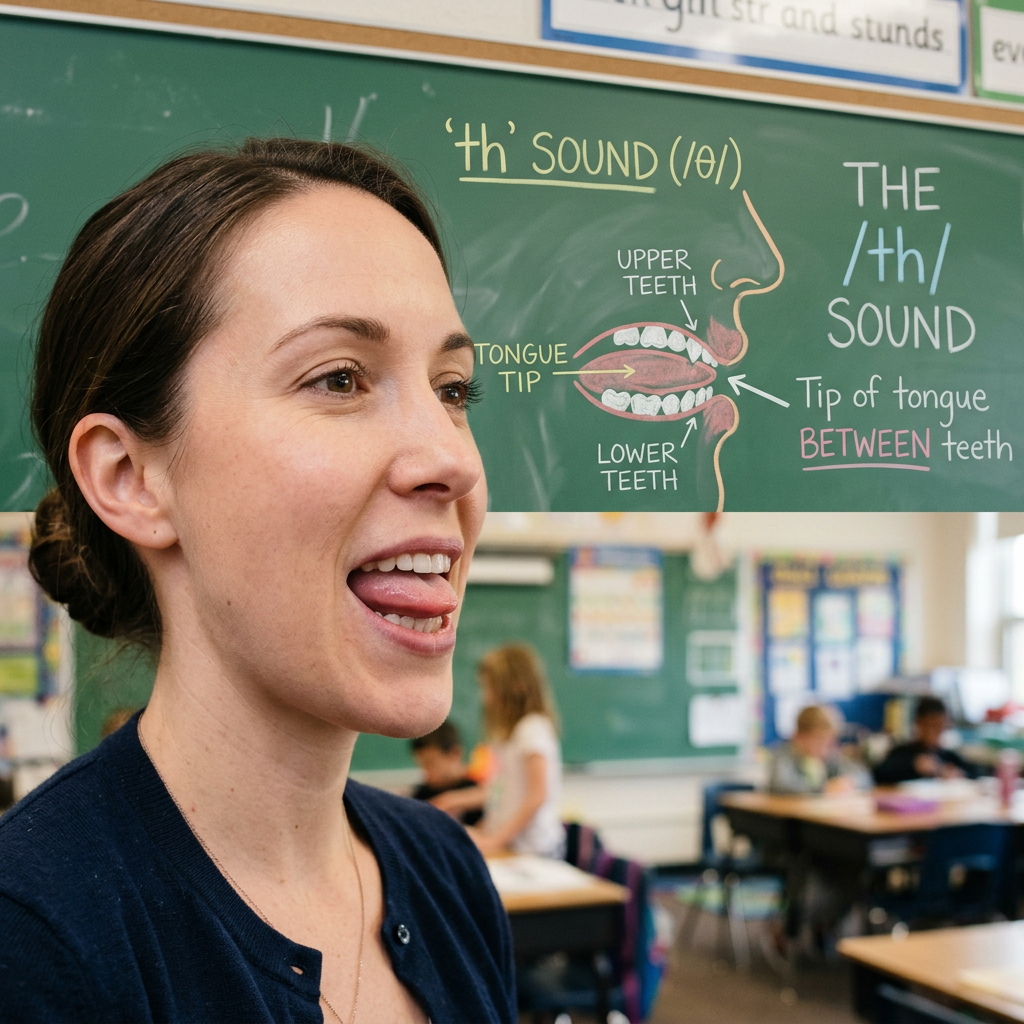
The tongue moves, the lips change position, airflow changes, and sometimes learners benefit from being able to see or feel what is happening.
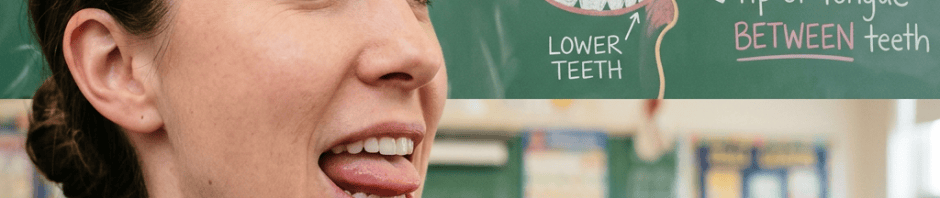
One participant described holding a piece of paper in front of the mouth so learners could see the effect of airflow. Others discussed tongue and teeth position for different sounds.
These simple physical cues can make pronunciation much more concrete.
Notice, then practise
A useful question arose about drilling. Is asking learners to repeat after the teacher still worthwhile?
Nodira’s answer was that drilling can help, but it may be more effective after learners have noticed the difference.
A useful sequence might therefore be:
notice and compare the sounds;
explore how they are physically produced;
practise them in words and phrases;
then move towards freer use.
The aim is not simply to get learners to repeat more. It is to help them hear and feel the distinction they are trying to produce.
Listening to the learner
The workshop also highlighted the value of asking why a pronunciation difficulty is happening.
Instead of simply deciding that a learner is producing a sound incorrectly, the teacher can ask:
What is the learner hearing?
What are they trying to produce?
How might their first language be influencing what they perceive?
What distinction have they not yet noticed?
This moves pronunciation teaching away from correction alone and towards diagnosis.
This is where Nodira’s workshop connects strongly with Teaching Artistry.
Good teaching is not simply about giving a clearer explanation or providing more repetition. It is about paying close attention to what learners are actually perceiving and finding ways to make learning more visible, audible and physical.
The teacher becomes a designer of attention.
Sometimes progress does not begin with saying something differently.
It begins with hearing it differently.
Discover more from Teaching Artistry
Subscribe to get the latest posts sent to your email.


This article has answered so many questions I used to have while teaching pronunciation and made me think on dealing with it differently. Thank you Tom.