Get your copy
https://performativeelt.com/roadmap

https://performativeelt.com/roadmap
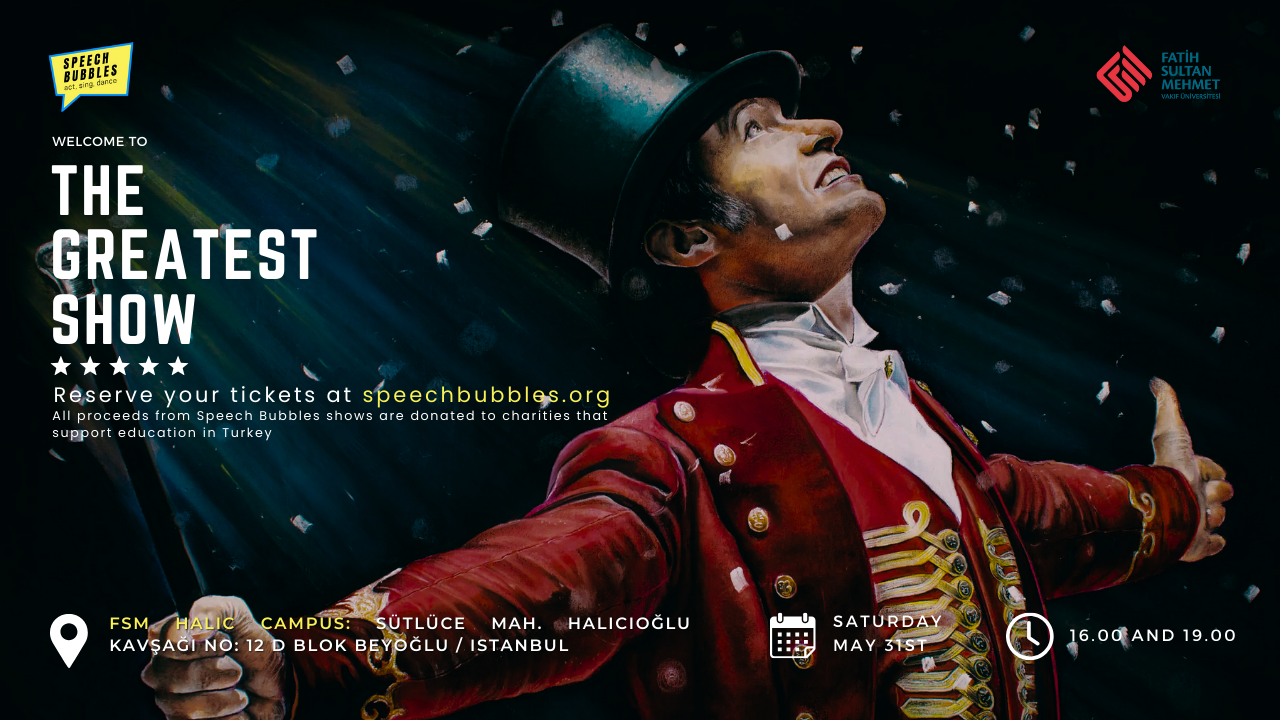
“A million dreams are keeping us awake!” Speech Bubbles invites you to join us for an evening of pure theatrical delight with “The Greatest Show,” featuring the soaring anthems of The Greatest Showman. Feel the energy, witness the talent, and be part of something truly special on Saturday, May 31st. Book your seats today! #LiveTheatre #MusicalTheatre #SpeechBubbles
In an era dominated by technology and social media, education often leans heavily on screens, digital content, and online interactions. While these advancements offer incredible opportunities, they can sometimes overshadow the essential human elements of teaching—connection, presence, and engagement. As educators, we must recognize the value of embodied, performative education, which integrates the physical, mental, and emotional components of learning. The classroom is more than a space for knowledge transfer; it is a stage where dynamic rapport, positive energy, and, most importantly, fun, play a crucial role in fostering deep and meaningful learning experiences.
This is where Teaching Artistry for Educators comes in—a brand-new, innovative online course designed to transform the way we teach by embracing the artistry of education.
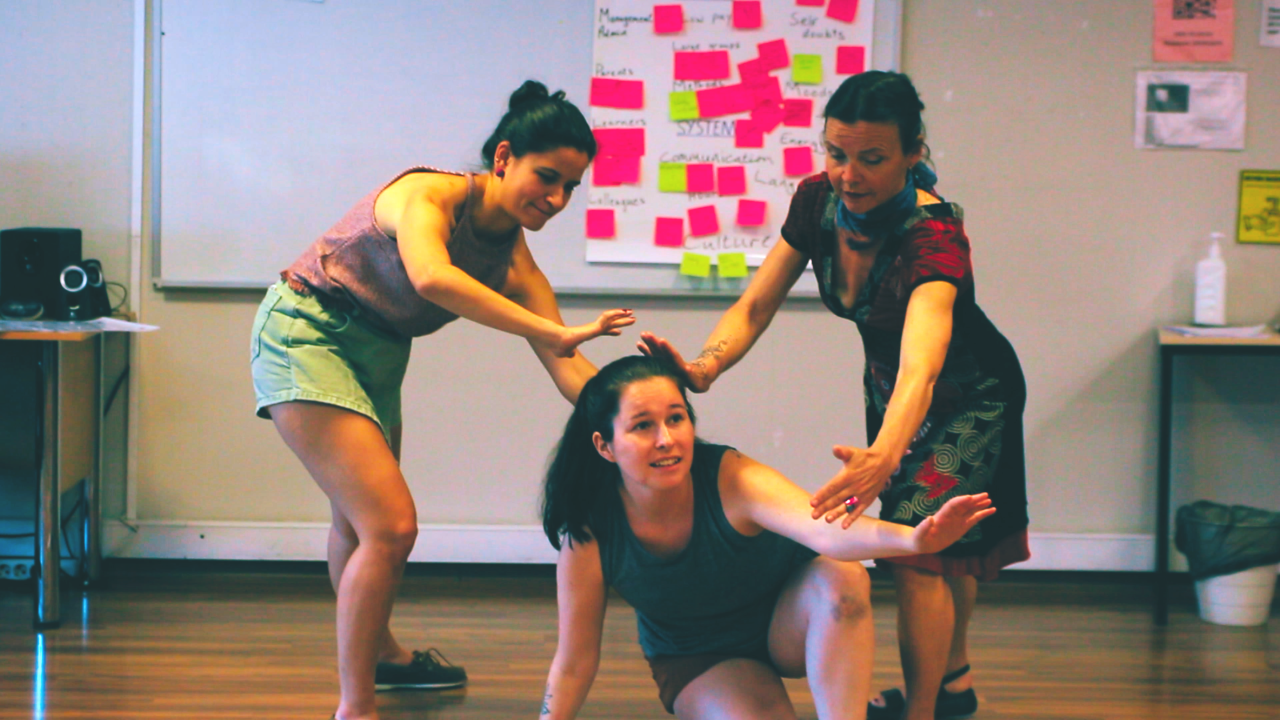
At its core, teaching is a performance. It requires presence, adaptability, and an ability to captivate and inspire learners. Teaching artistry is not about putting on a show but about creating an environment where students feel seen, heard, and fully engaged. When we use our voice, body, and emotions effectively, we enrich the learning experience, making lessons more interactive, memorable, and impactful.
The part-time online course Teaching Artistry for Educators, starting on 7th April 2025, is designed to equip teachers with the skills they need to elevate their classroom practice. By integrating principles from theatre, storytelling, and Social and Emotional Learning (SEL), this course offers a holistic approach to teaching that fosters both educator and student growth.
Education should be vibrant, immersive, and engaging. If you believe that teaching is more than just delivering content—that it’s about presence, interaction, and fostering a love of learning—then Teaching Artistry for Educators is for you.
Spaces are limited, so secure your place today and take the next step in transforming your teaching practice!
Visit our website to enroll and become a Teaching Artist. Let’s bring joy, connection, and artistry back into education.
Drama workshops for learners.
As a leading provider of English Language Teacher training, International Training Institute (ITI) is dedicated to empowering educators and enhancing teaching practices through innovative drama workshops for both teachers and learners.
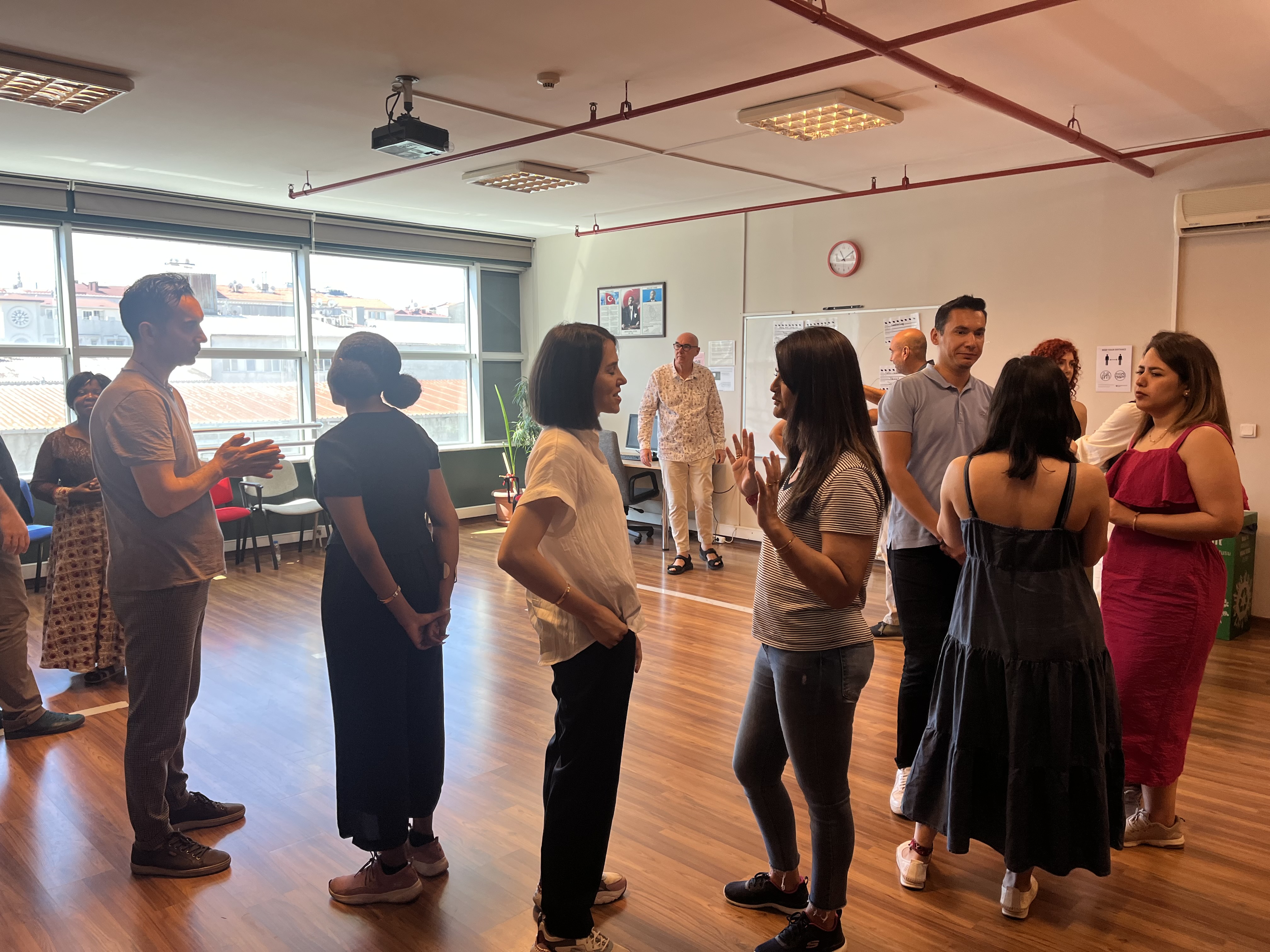
Led by Dr. Tom Godfrey, our CEO and authority on the use of drama in education, ITI offers a range of transformative drama-based workshops designed to meet the diverse needs of educational establishments. Our workshops are tailored to provide practical strategies, foster collaboration, and promote motivated and engaged participants.
The workshops are minimum 90 minutes and up to one day in length for 12 – 24 participants. The only requirement is a large empty space for participants to move around freely.
Featured Workshops:
Book Your Workshop Today:
To learn more about our workshops and discuss how ITI Istanbul can support teacher professional development at your institution, please contact us at [seden@iti-istanbul.com]. We would be delighted to collaborate with you to create impactful and sustainable professional development programs.
Thank you for considering ITI Istanbul as your partner in education. We look forward to the opportunity to work together to elevate teaching practices and empower educators and learners within your institution.
Best regards,
Seden Nurlu
Managing Director
ITI – Teacher Training Centre www.iti-istanbul.com
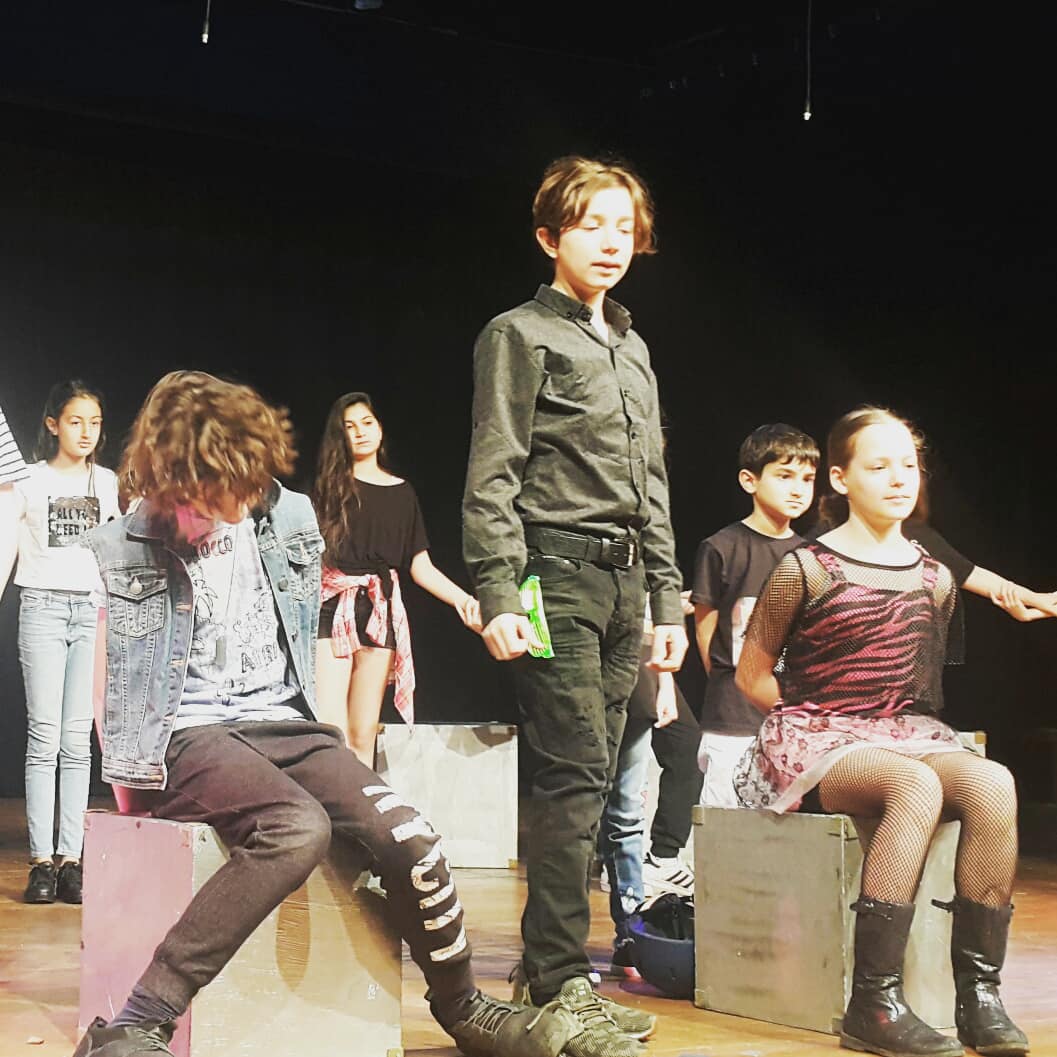
Testimonials from recent workshops held at MBA schools. Istanbul.
“Very informative and interactive sessions have helped us to engage our students in a different way.”
“It was very interactive. I couldn’t understand how the time passed.” 😊
“All the sessions are so beneficial and also they are fun while learning.”
“His expertise and passion left me with a deeper appreciation for the role of creativity in education and new ideas to implement in my own teaching journey.”
“Thanks to Mr. Godfrey, I had lots of fun and I have a broader horizon now regarding teaching.”
“It was a beneficial 3-session event for me. I have seen nice implementations of what is showed to is on screen. Gaining practical knowledge of it will make the most of it and way better compared to see theoretical explanations only.”
“It was an amazing event! Everything was so well-organized, and the atmosphere was incredible. Kudos to everyone involved for making it such a memorable experience!”
“As a teacher, taking a drama course has helped me see how powerful it can be for student engagement and creativity.”
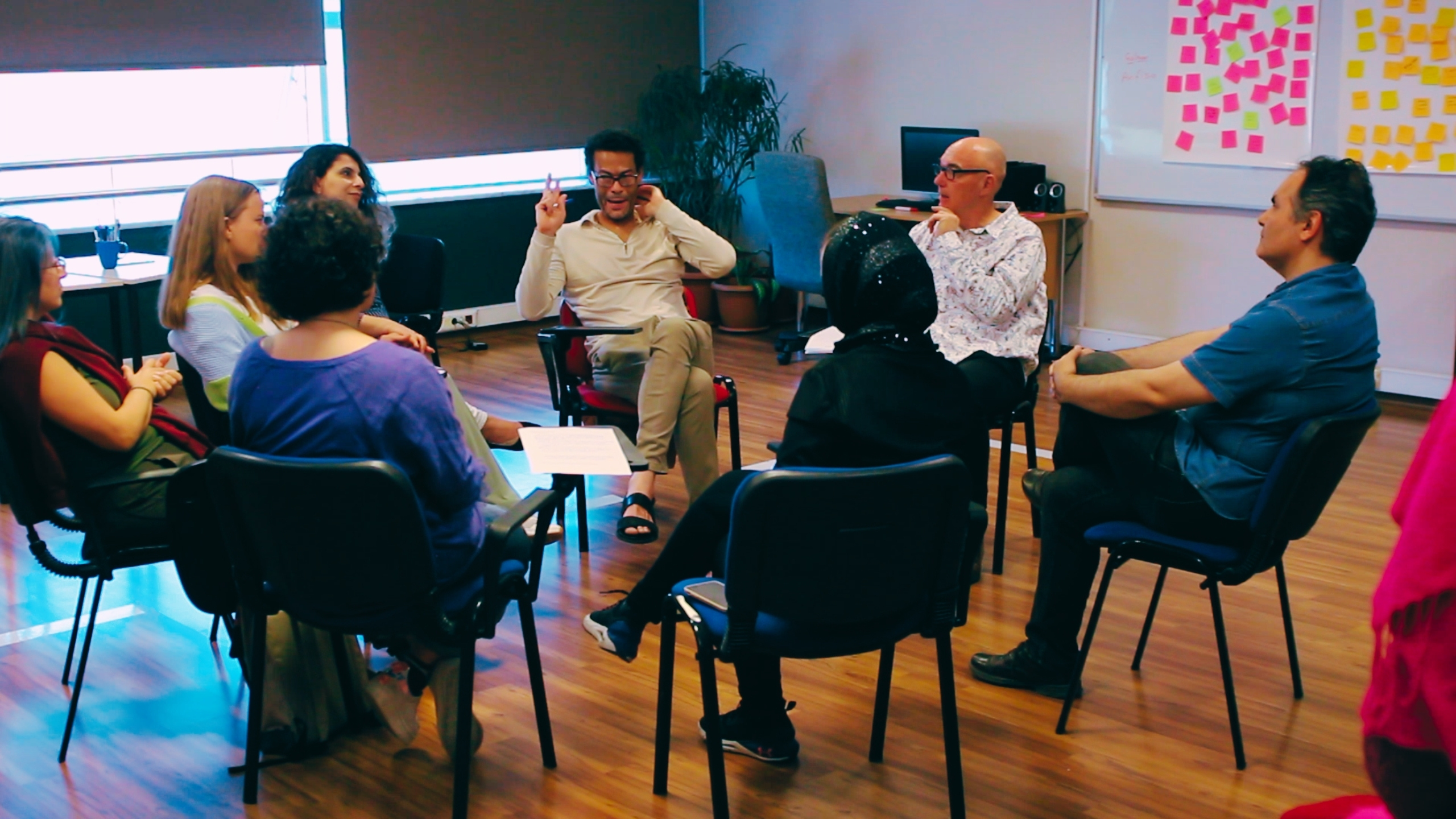
In my Teaching Artistry online course, I invited participants to reflect on a critical question: How easy is it for teachers to talk about problems they face at work? This discussion brought forward a rich variety of perspectives and experiences, highlighting both the challenges and opportunities in fostering a supportive environment for educators. Do teacher professional development programmes actually encourage personal disclosure? Do they really address the issues of teachers or are they just papering over the cracks?
Shila Ghazizadeh shared: “Teachers face many challenges, especially inexperienced ones, and it’s not always clear who to turn to for support. Sometimes, it feels risky to admit you’re struggling without losing face in the department.”
This sentiment resonated with several participants, who noted that while some professional development programs exist, they often don’t address the real, pressing needs of teachers.
Matin Akbarzadeh emphasized the importance of creating collaborative spaces: “Encouraging teachers to share insights during meetings is crucial. Informal spaces like the teachers’ room also play a role in fostering collaboration.”
However, not all participants felt their work environments supported open communication. Tugce painted a challenging picture: “Dealing with work issues can be tough. Management seems stuck in its ways, and talking about problems isn’t encouraged. Gossip in the teachers’ room makes it even harder to open up. Professional development often feels like box-ticking rather than meaningful growth.”
Despite these challenges, Tugce found solace in the classroom: “My classroom is my sanctuary. When I’m teaching, I focus entirely on my students, even though many creative ideas from CELTA training are restricted by the school’s regulations.”
Some participants described more positive experiences. Barbara Shchuka shared her organization’s proactive approach: “We’re encouraged to discuss issues with management as soon as they appear. New teachers have mentors available 24/7, and we hold monthly one-on-ones to address challenges. Regular workshops are based on the most common questions and needs.”
Similarly, Kadir Özsoy noted: “Our professional development program helps teachers take control of their learning. Weekly meetings provide opportunities to discuss problems, and there’s a collaborative atmosphere. But some teachers seem to lack motivation to engage fully.”
Other participants highlighted barriers that prevent teachers from seeking support. Oksana Yeshyorkina Baylan observed: “While issues are often discussed at staff meetings, action rarely follows. Teachers are left to deal with problems alone.”
Hassan Mirmonsef added: “Collaboration is less frequent than competition. However, I value the contributions of a few open-minded colleagues and trainers who have supported me.”
A recurring theme was the importance of workplace culture. As Yaprak Yilmaz Gardner Harlley noted: “It’s essential for teachers to feel listened to. Without genuine interest and action, they may hesitate to share real problems next time.”
These reflections highlight the complexities of teacher support systems. What about your context? Are teachers in your organization encouraged to discuss challenges? Who do you turn to for support? How can professional development programs better address real needs?
Join the conversation and share your thoughts in the comments below. Let’s work together to create environments where teachers feel supported and empowered to thrive.
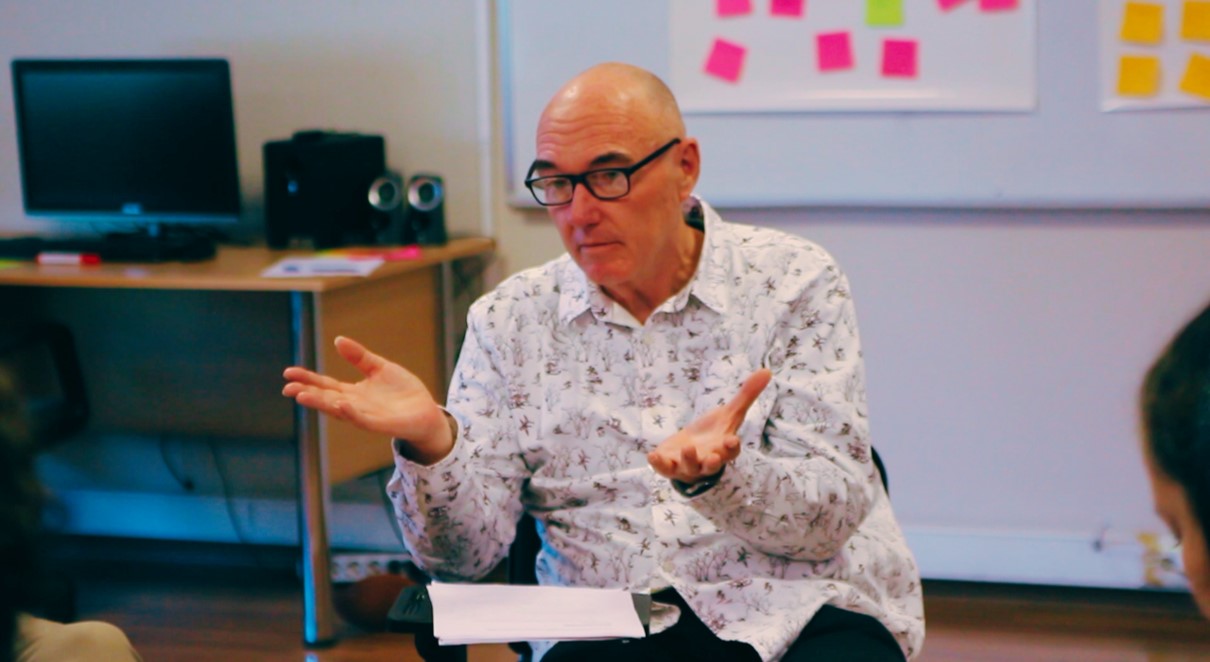
Are you the teacher you were born to be or is your performance restrained by context?
In my Teaching Artistry online course, we recently explored the concept of performative pedagogy and posed the provocative question: Do we teach the way we do because of who we are, or does our performance in the classroom shape who we become? Drawing inspiration from Judith Butler’s theory of performativity, the discussion explored how identity and behavior intertwine, particularly in the teaching profession.
The participants offered rich, diverse perspectives on the role of performativity in teaching, shedding light on both consensus and disagreement.
Several participants emphasized that our actions in the classroom are an extension of who we are. As Barbara succinctly put it:
“People perform according to their values and beliefs. The more aware you are of these, the more conscious your actions become. It’s vital to ask, ‘Why am I acting like this?’”
Kadir echoed this view, likening behavior to a mirror:
“Our actions reflect our inner selves to the world, but behavior is not static—it evolves as we grow and adapt to new contexts.”
Others highlighted the influence of societal norms and cultural values on performativity. Norah argued:
“Culture shapes our attitudes, values, and beliefs, which construct our identity. Gender, for instance, is not natural or stable but a performance regulated by society and family.”
However, there was some pushback against this perspective. Nada expressed a nuanced view:
“There is a static part of identity—our biological makeup—which I believe cannot be ignored. While social and performative identity are fluid, there are elements of who we are that remain constant.”
The idea of teachers as adaptable performers sparked an engaging debate. Galina shared:
“Teachers constantly wear different hats—mentor, critic, friend, authority figure. These roles are performative acts shaped by context, yet they also shape our identity over time.”
Oksana, however, questioned whether this adaptability dilutes authenticity:
“Performing based on societal frameworks can lead us to compromise on our true selves. It’s a balance—staying authentic while adapting to different teaching scenarios.”
A recurring theme was the agency teachers have in shaping their identities. Tugce noted:
“Performativity shows that identity isn’t fixed; it’s something we actively create through our actions and interactions. Our behavior shapes who we are.”
Yet, some participants like Amna warned of external constraints:
“Our social roles and cultural values often draw boundaries we can’t cross. While we have agency, societal limits on freedom affect how we perform and express ourselves.”
The session highlighted both shared understanding and contrasting viewpoints, opening the floor for further dialogue:
By engaging with these questions, educators can reflect on their practice and the dynamic interplay between who they are and how they teach. As a teacher are you the best version of yourself?
I’d love to hear your thoughts—how does your identity influence your teaching, and how does your performance in the classroom shape your sense of self?
#PerformativePedagogy #TeachingIdentity #ReflectiveTeaching #DramaInEducation #TeacherDevelopment #CulturalIdentity #TeachingArtistry
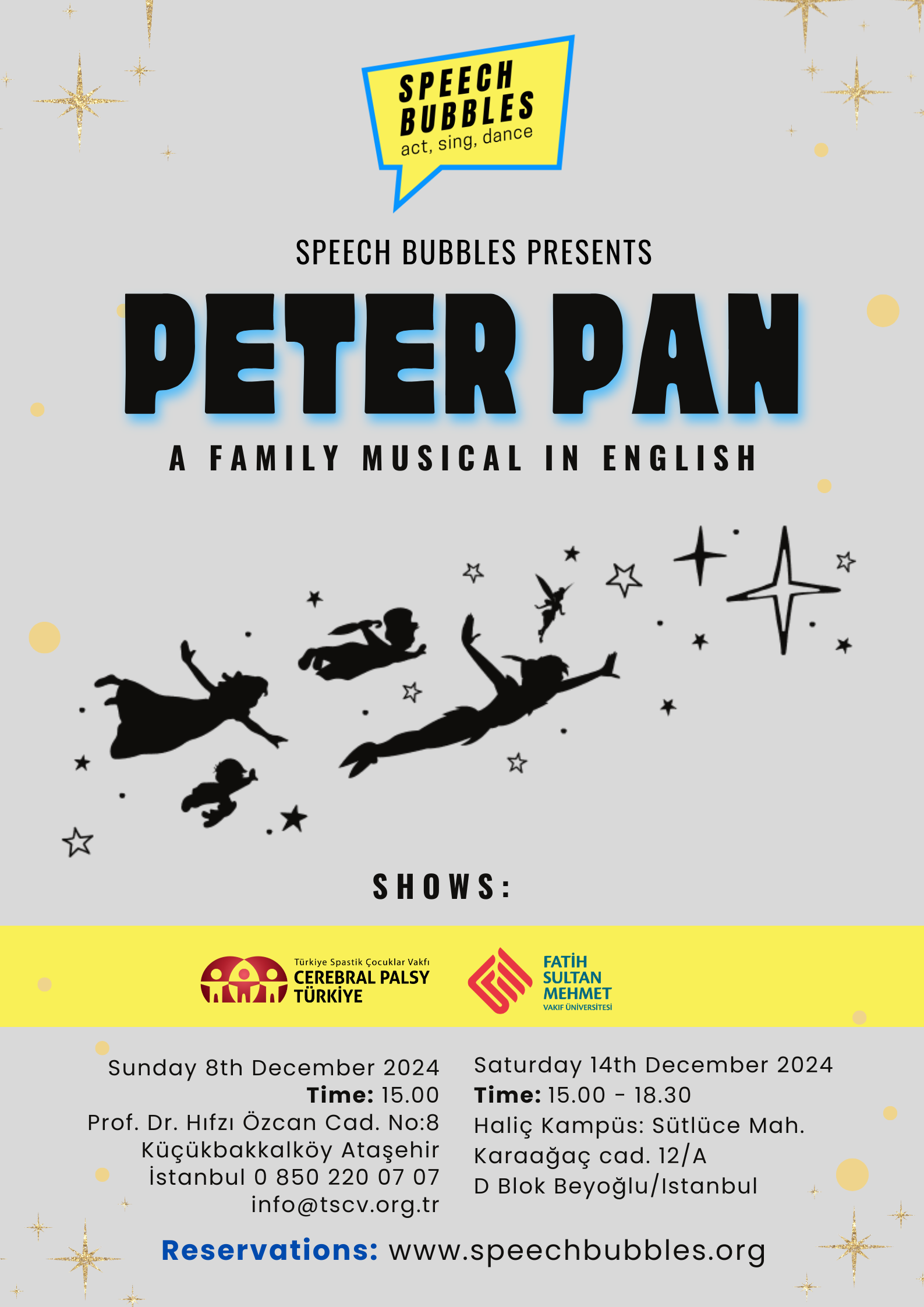
We are delighted to invite children, students, staff, and families to experience the magic of
Peter Pan brought to life by the Speech Bubbles theatre group, a cherished institution
in Istanbul for over 30 years. This December, join us for a heartwarming, laughter-filled
adventure in the format of a traditional British Christmas pantomime, complete with
captivating dances, delightful songs, and lots of audience participation!
There are three performances to choose from:
Sunday, 8th December at 15.00 Türkiye Spastik Çocuklar Vakfı, Ataşehir
Saturday, 14th December at 15.00 and 18.30 Fatih Sultan Mehmet University,
Haliç Campus.
Our shows are performed entirely in English, making them perfect for your international
and bilingual community. This year, all proceeds will be donated to Cerebral Palsy
Türkiye, supporting education and children in need.
This is a wonderful opportunity for your students and their families to enjoy an
unforgettable cultural experience while contributing to a meaningful cause. Tickets are
selling quickly, so don’t miss out!
We would be happy to provide further details or assist with group bookings. Feel free to
reach out to us at http://www.speechbubbles.org or phone Yaprak: 0 533 403 49 30We look forward to welcoming your school community to Peter Pan!
Warm regards,
Tom Godfrey
Speech Bubbles Theatre
https://doi.org/10.33178/scenario.18.1.9
This paper reports on diagnostic workshops conducted at a teacher training centre in Istanbul focusing on how Applied Theatre methods can support English Language Teacher Education in the areas of self-awareness and self-reflection. The workshops provided 12 participant English Language teachers experience of Applied Theatre methods and techniques to elicit feedback on their pedagogic value and efficacy in teaching. Through dialogue and reflection, participants identified the performative and meta-performative skills they valued from the workshops. While Applied Theatre methods have a proven track record in many contexts, they are rarely utilized in teacher development programmes. Feedback from the workshops revealed that Applied Theatre methods, notably Forum Theatre, provide embodied, participant-led, solution-oriented, multiple voiced opportunities for reflection and dialogue on critical incidents teachers’ face. In addition, participants highlighted performative skills pertaining to developing awareness of self, others and setting that are disregarded in current competence-based teacher education programmes. Participants also uncovered meta-performative skills reflecting on why teachers act in the way that they do. The workshops provide an initial template to create teacher development programmes incorporating Forum Theatre and other Applied Theatre techniques.
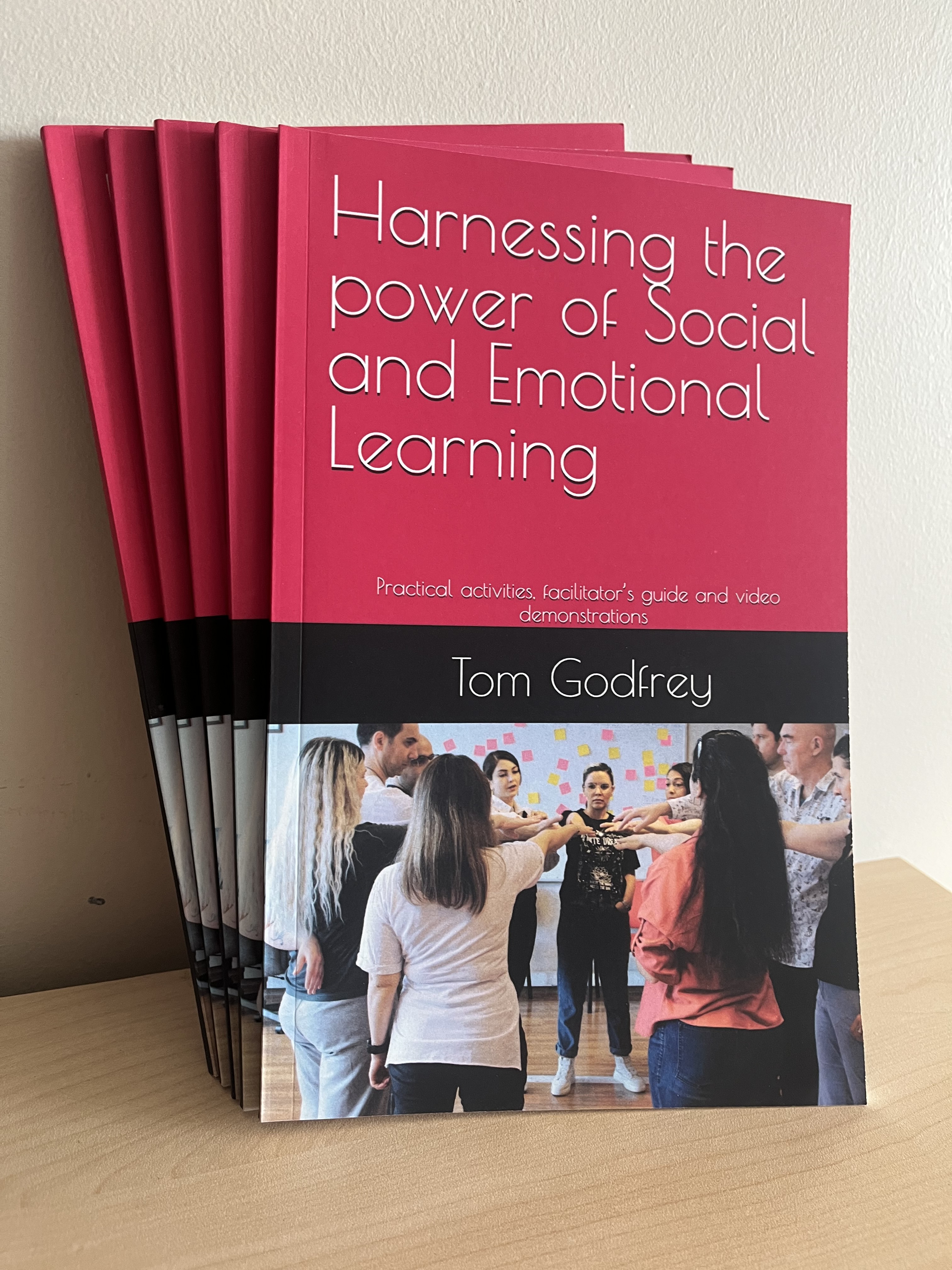
I hope this message finds you well! I’m excited to share some news with you. My book, Harnessing the Power of Social and Emotional Learning, based on the Teaching Artistry workshops in the summer and online courses, is published by Amazon: https://www.amazon.com/dp/B0DG35CC9F
Join the growing community of educators and artists who are revolutionizing the classroom with the power of Teaching Artistry and SEL. This book is your guide to creating an engaging, empathetic, and creative educational environment where every student can thrive.

 Teaching Artistry