Enhance Your Facilitation Skills with Engaging Activities

Facilitation involves three key elements: self-awareness, awareness of others, and understanding one’s identity in terms of beliefs and attitudes. To cultivate these skills, I employ an array of activities in my Facilitation Skills workshops aimed at fostering self-discovery and developing interpersonal connections within groups.

Columbian hypnosis

One activity to develop awareness of self and others is the Columbian hypnosis.

Procedure

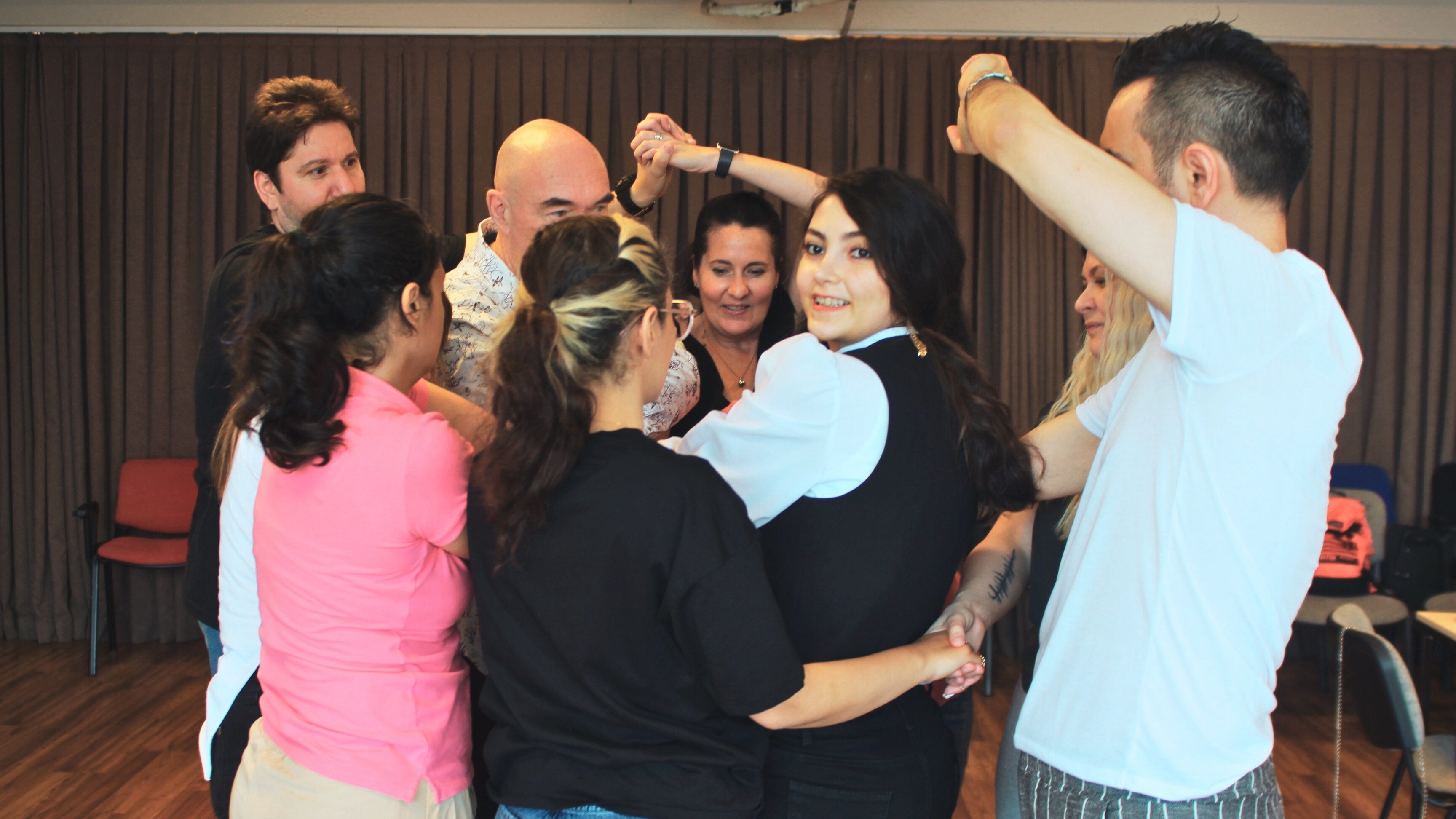
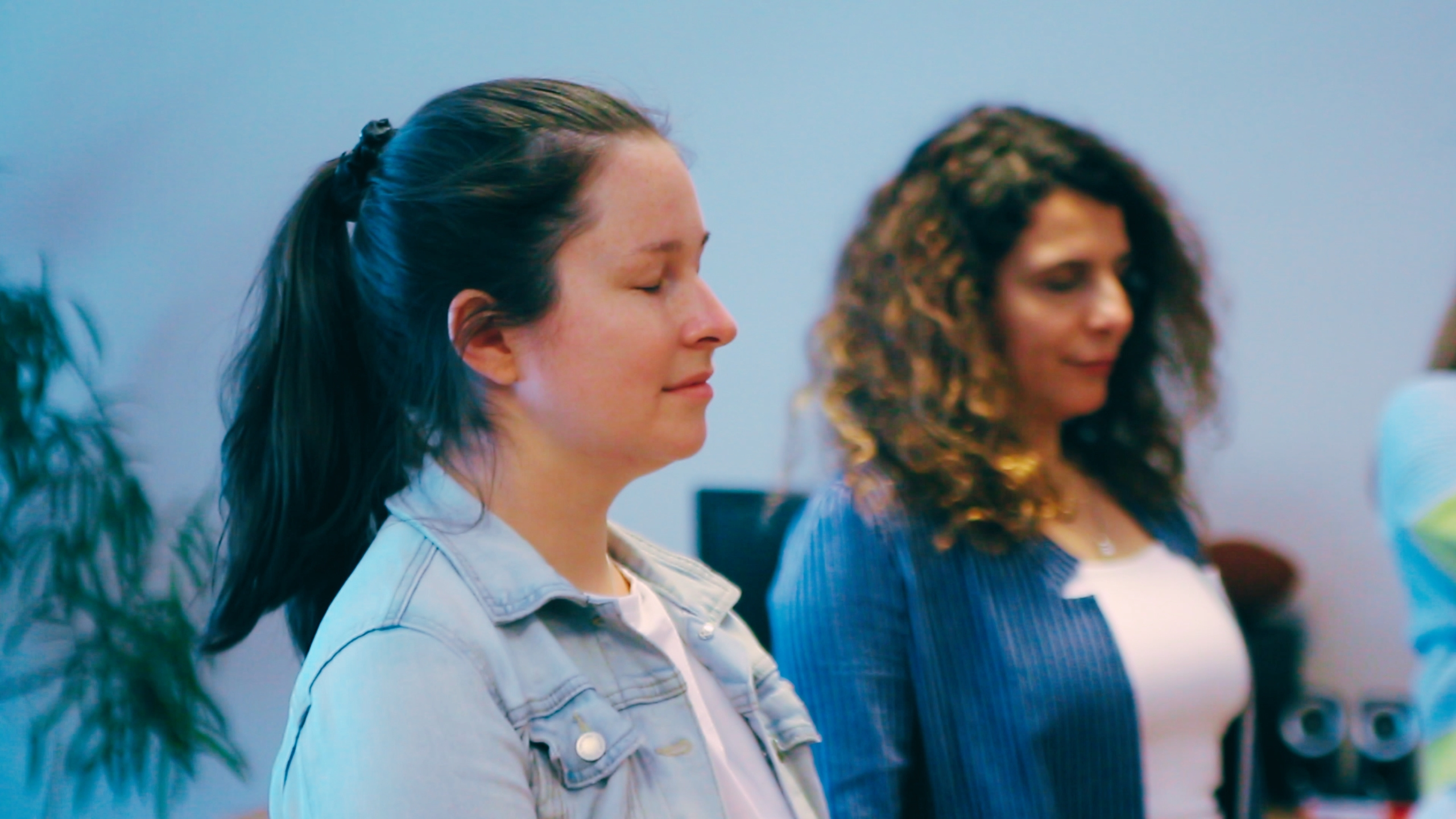
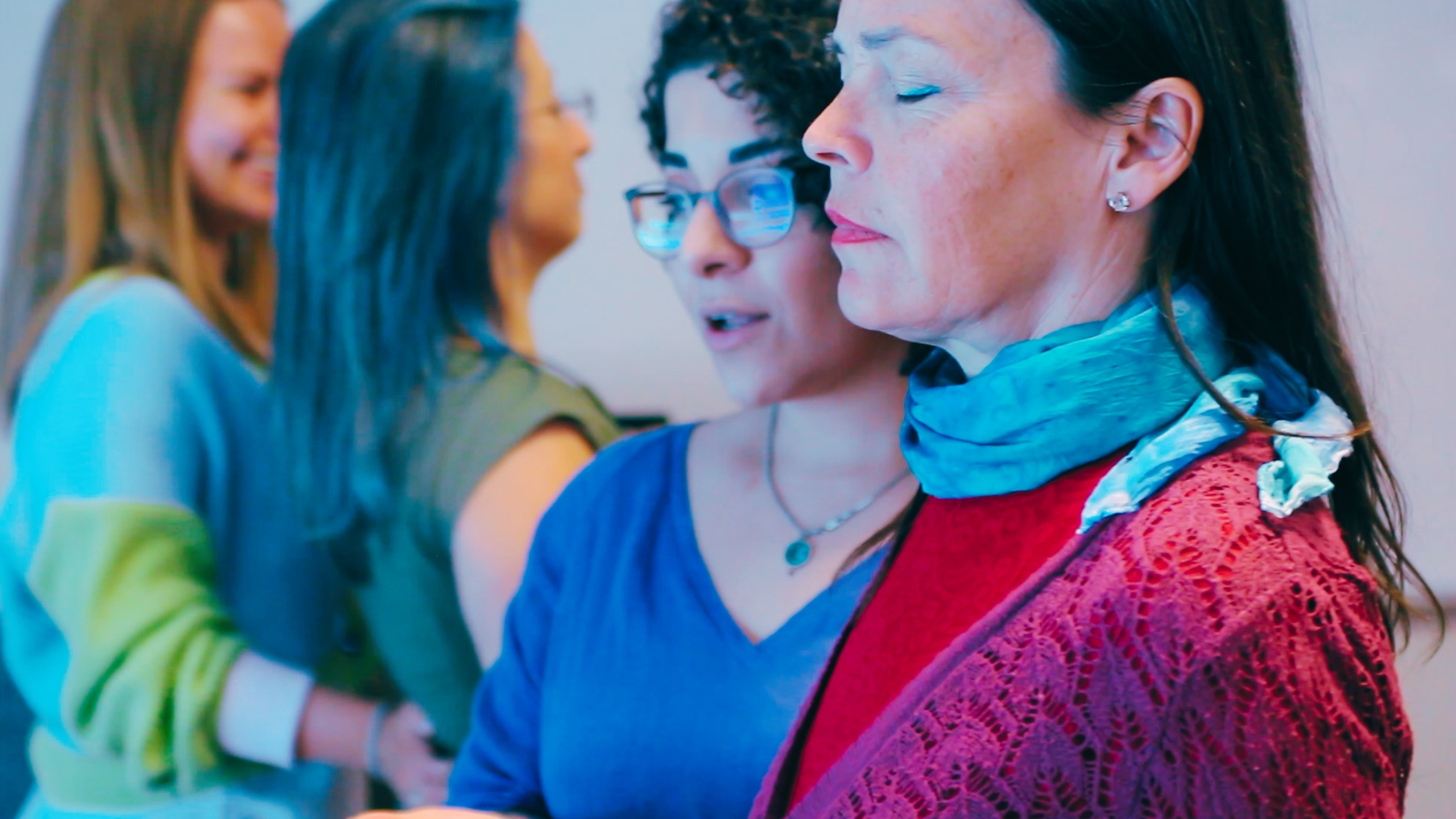
One participant (hypnotiser) holds her hand palm forward, fingers upright, anything between 20 and 40 centimetres away from the face of another, who is then as if hypnotised and must keep his face constantly the same distance from the hand of the hypnotiser, hairline level with her fingertips, chin more or less level with the base of her palm. Wherever the hypnotiser moves their hand the hypnotiser’s face must follow. See e demonstration in this video:                

Columbian Hypnosis

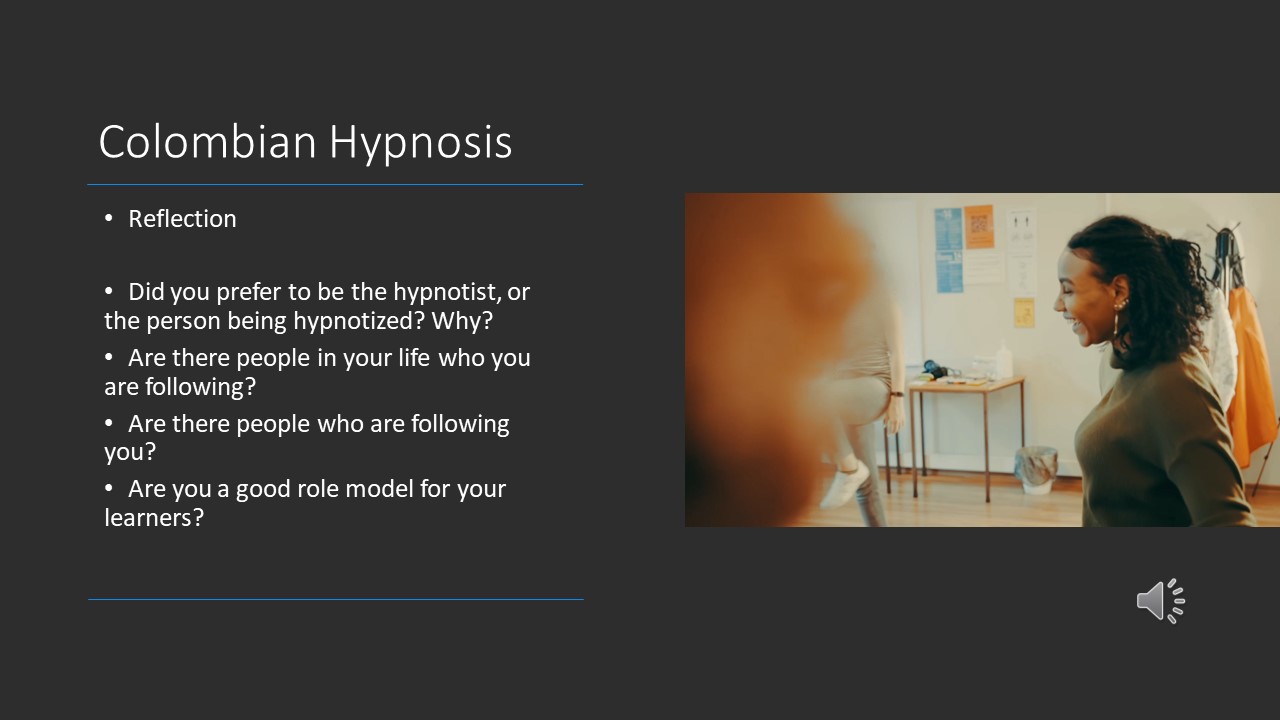
The reflection after this activity can include the following question prompts:

Participants’ Evaluation

This activity, designed to explore leadership and trust, sparked interest among several participants. One admired the focus on awareness and leadership, while another found the reflective prompts particularly valuable. However, some participants felt it might be challenging to incorporate into a language class, though they acknowledged its power for deeper self-exploration and group connection.

Interactive Activities

Other interactive activities I use are aimed at stimulating group cohesion, enhancing communication, and prompting reflection:

Cat and Mouse Tag

  • Cat and Mouse Tag: An energizing game fostering group coherence and communication. It triggers reflection on being chased or chasing in one’s life.

Participants’ Evaluation

This high-energy game was a favorite for its ability to engage learners through movement. Tugce Ugras found that it combined physical activity with language use, allowing students to learn vocabulary in real-time situations like running and tagging. However, she acknowledged the need to ensure inclusivity and prevent some students from feeling left out. Matin Akbarzadeh highlighted its potential to raise energy levels and strengthen interpersonal connections within groups. He appreciated the reflections it could inspire, including discussions about life’s metaphorical chases.

  • Map on the Floor

An activity fostering self-disclosure, building rapport, and trust within a group by sharing personal information.

Procedure

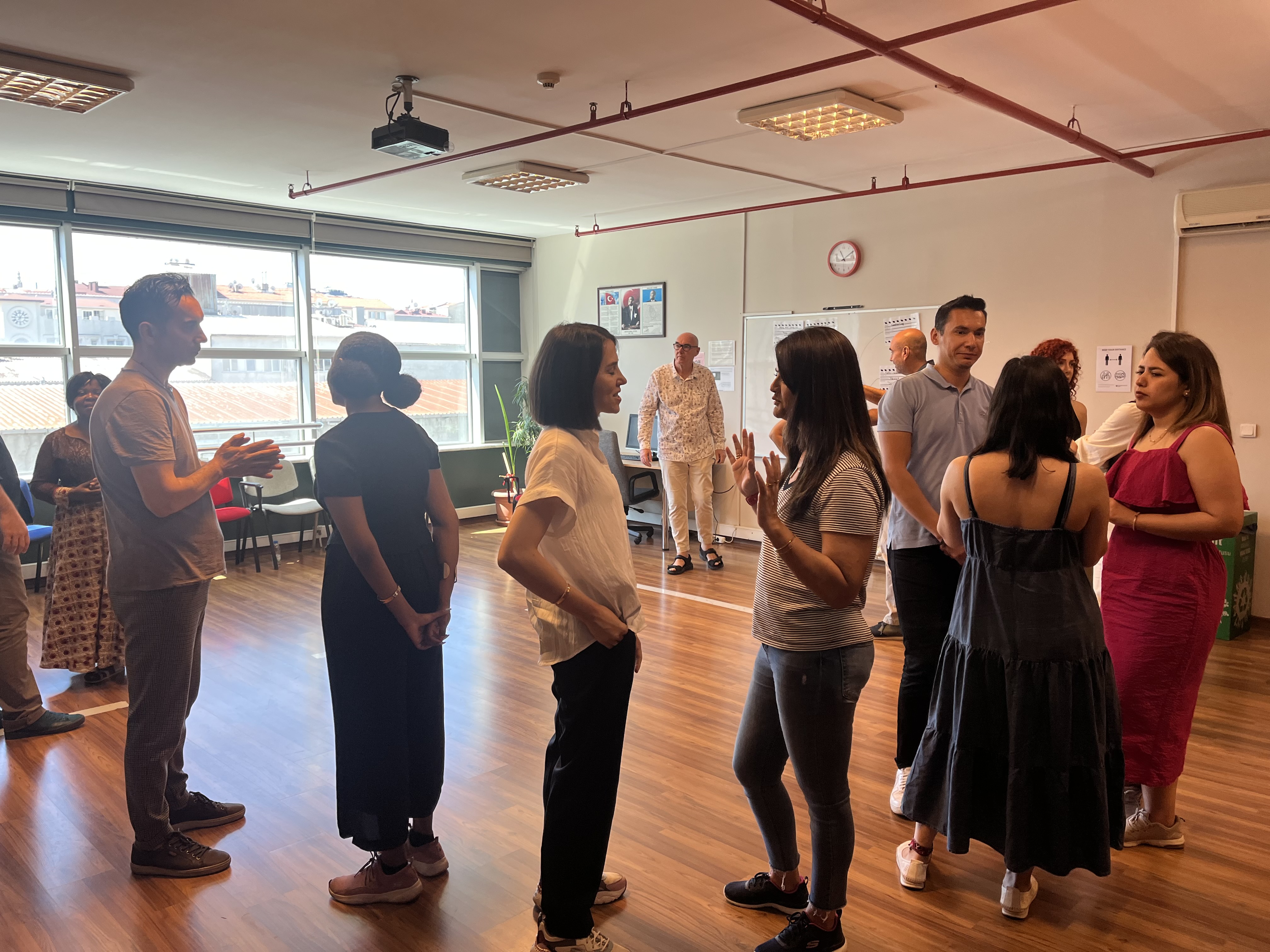
The facilitator asks people to imagine there is a large world map on the floor and identifies where he is standing on the map and what is north, south, east west. The facilitator asks participants to stand in their birth place (or favourite place) and talk to the people near them.

Reflection questions can include:

• How do you feel about your birth place?

• Where do you feel most at home?

• Where does your family come from?

• How has where you were born influenced your life journey?

Participants’ Evaluation

The most popular activity by far, Map on the Floor, was praised for fostering self-disclosure, group dynamics, and rapport-building. One participant noted that it serves as an effective language learning tool, as students use the target language naturally while sharing personal stories. Another participant (teaching online) appreciated the activity’s flexibility and suggested adapting it to virtual whiteboards and breakout rooms, encouraging her students to explore roles outside their cultural norms. Many participants valued the activity for its versatility and its ability to elicit personal engagement, though some expressed concerns about introverted students feeling uncomfortable.

  • Wink Game and Everyone Who…:

Activities enhancing eye contact, concentration, and group movement, encouraging active participation and reflection on group dynamics.

Procedure

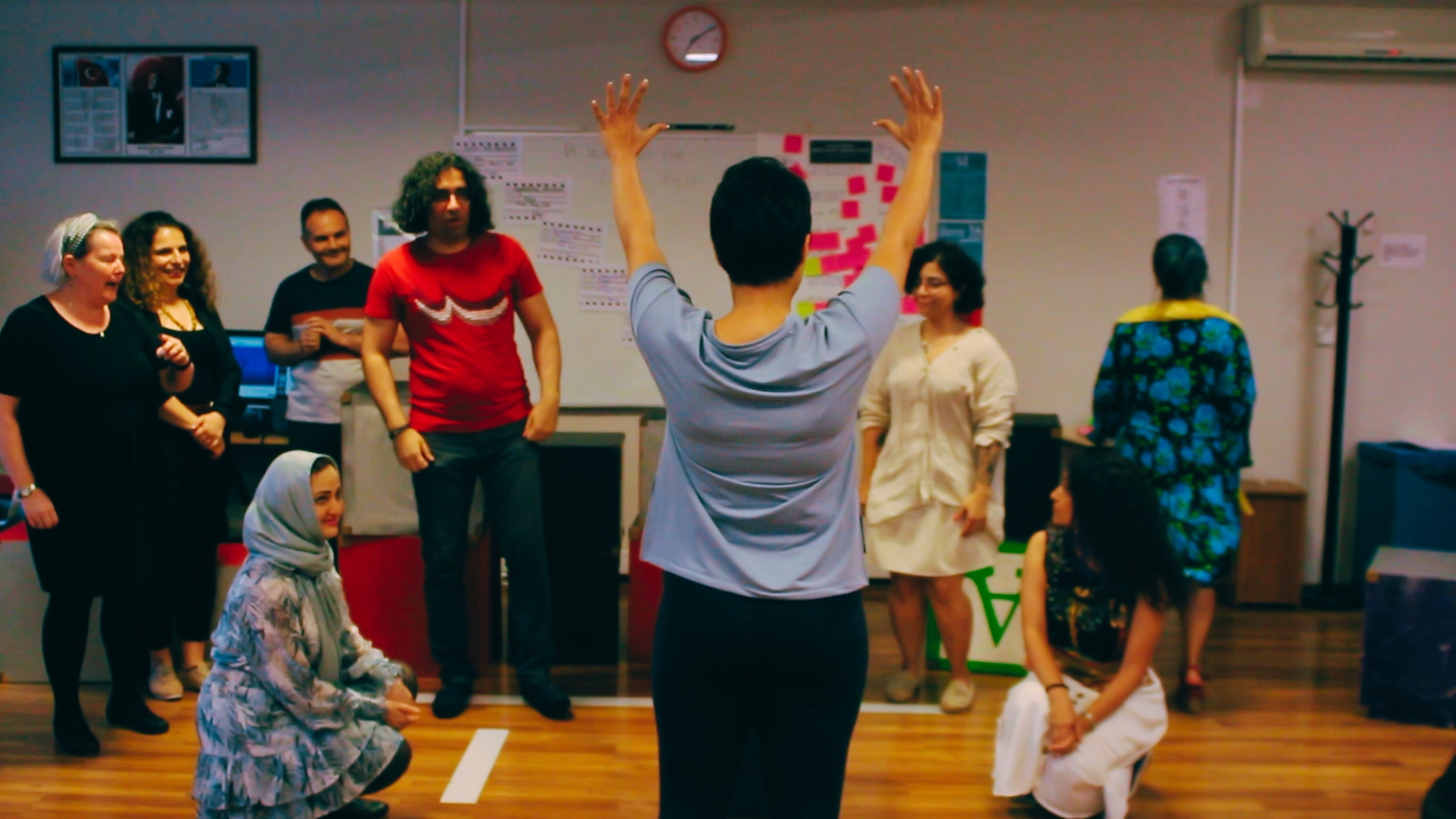
Everyone stands (or sits) in a circle with one participant in the middle. Participants in the circle choose someone and wink at them. The wink is a signal to change places. They need to change places quickly so that the person in the middle does not take their place. Reflection on this activity can include questions such as: How did you feel in the middle? Who was in the middle most often? Why? Were you active or passive in the game? Who did you wink at?

Everyone who….change places.

An extension to the wink game but this time the person in the middle gives an instruction to invite people to change places by using a semi-fixed structure such as:  ‘Anyone who is wearing a watch change places’ or ‘move if you like tea’ or ‘anyone who can play the piano – move!’ When participants are moving around, the person in the middle has to find an empty spot so someone else will be in the middle to give a new instruction..

Activity: “I’d like to invite X…..

A further less physical extension is to have an empty space in the circle. The participant who has the empty space on their right, will invite another participant to the empty space giving a reason. They can use phrases like ‘I’d like to invite X to come here, because …’, ‘ can you …’, ‘would you …’ etc.

Participants’ Evaluation

Several participants highlighted the fun and energetic aspects of the Wink Game. One participant appreciated its potential to energize tired learners, especially when sessions get long or grammar-heavy. The physical engagement combined with the focus required to spot the “wink” injects an element of playfulness into the classroom. Another participant found it to be an exciting physical activity, although she pointed out it could get stressfulmfor the pareson in the middle due to the fast-paced nature of the game.

Exploration and Invitation

In the face-to-face workshops in July, we explore facilitation skills in teaching contexts, experiment with drama activities transferable to classrooms, and delve into the essence of being an ELT teacher. You can explore more insights on facilitation skills and drama in ELT through articles, lesson plans, and videos on my blog and YouTube channel.

Your Path to Growth

I invite you to join us on this enlightening journey of self-discovery and professional development. Embrace the transformative power of embodied pedagogy and immerse yourself in the realm of performative skills to elevate your teaching prowess.

As one of the participants from last year’s workshop attested:

Testimonial on the workshops

Let’s embark together on this transformative expedition of self-discovery and pedagogical growth!
Register here:

Posted in Teacher Development | Tagged , , , , , , , | 1 Comment

Embodied Pedagogy: Performative Teacher Development

Reflecting through Action

Carl Jung, the renowned psychologist stated that “we are what we do, not what we say we do”. This insight is particularly apt in teacher development where many teachers can ‘talk’ a great lesson but struggle to deliver one. One potent method to heighten awareness of our sense of self-identity involves reflecting on our behaviors in specific situations and activities. In my teacher development workshops, participants engage in various physical and imaginative activities, followed by reflections on their behaviour. This performative approach allows individuals to explore why they behave in certain ways, thereby elevating their understanding of their identity.

Metaphorical Transformations

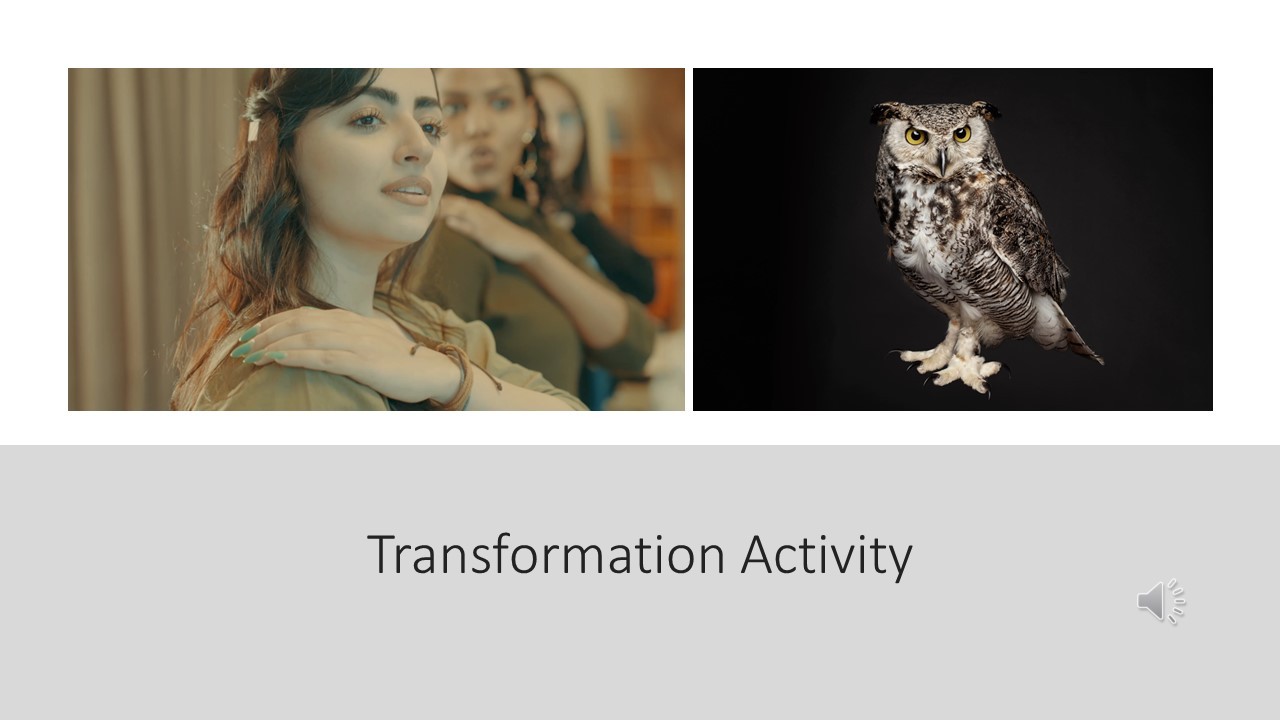
This activity I call a transformation activity. When I say this to teachers, they assume it is something to do with grammar (transforming active to passive sentences for example). This isn’t about grammar; it’s an imaginative exercise borrowed from Alan Maley’s work on vocal activities. Imagine transforming yourself into an animal. By embodying this transformation, we aim to stimulate teacher creativity and imagination as well as build focus, concentration and a group rapport.

Procedure.

The facilitator explains to participants that they are going to transform themselves into an animal. A bird that comes out at night, has large eyes, can turn its head right around and is very wise. Elicit: an owl. Tell them this activity is dangerous and if they do not concentrate there are dangers of not transforming properly. Explain that the transformation to an owl is relatively straight forward but the problems occur transforming back again. Demonstrate how to do the transformation. There are a few simple actions and sounds that need to be completed as illustrated in the video.

Reflection.

The interesting part is in the reflection stage. Ask participants how they felt doing the activity. They can discuss this in pairs or small groups. Many will say they felt uncomfortable, strange, resistant. Explain that young children do this kind of imaginary transformation all the time and very naturally when they play. Transforming into a soldier, a train driver, a monster without concern or from a princess to a witch to a frog etc. How is it that what comes so easily and naturally to children feels strange, uncomfortable and slightly weird to adults. This can often develop into an indepth discussion about how the norms of society forces people’s behaviour to conform. Explain that the power of drama is that it provides a way to unblock our imagination and develop the child within.

Evaluation.

Participants in their evaluations of this activity reflected on how it taps into teacher creativity and imagination. They emphasized the need for teachers to be performers in their classrooms, using role-play and acting to create an engaging environment. This activity encourages teachers to overcome fears of looking “ridiculous” and instead embrace the performative nature of teaching.

The Quest for Performative Skills

While cognitive skills are widely acknowledged, the significance of performative skills remains undervalued in education. Raising awareness through embodied activities that explore self, others, and context fosters meta-performative skills—enlightening educators about the performative behaviours influencing their teaching identity.

Exploration and Invitation

In the face-to-face workshops in July, we explore facilitation skills in teaching contexts, experiment with drama activities transferable to classrooms, and delve into the essence of being an ELT teacher. You can explore more insights on facilitation skills and drama in ELT through articles, lesson plans, and videos on my blog and YouTube channel.

Your Path to Growth

I invite you to join us on this enlightening journey of self-discovery and professional development. Embrace the transformative power of embodied pedagogy and immerse yourself in the realm of performative skills to elevate your teaching prowess.

As one of the participants from last year’s workshop attested:

Posted in Teacher Development | Tagged , , , , , , , , , , , , , , , | Leave a comment

The Power of Role Models: Reflecting on Identity.

In the journey of becoming an effective teacher, self-reflection is key. Who we are, who we aspire to be, and the influences that shape us are integral to our teaching identity. One profound way to engage in this reflection is by examining the role models who have impacted our lives. In my Teacher Artistry online course and workshops, participants are encouraged to reflect on the people who have shaped them. Here’s a summary of their reflections.

1. The Legacy of Family Influences

For many, the most influential role models come from within the family. One participant, Nada, spoke of her father, a teacher and public speaker, whose encouragement of open discussions and critical thinking significantly shaped her own teaching style. Similarly, Matin shared how his mother’s extraordinary patience and dedication not only influenced his upbringing but also guided his educational journey, underscoring the value of persistence and self-sacrifice.

2. The Impact of Pioneering Figures

Some role models stand out for their groundbreaking achievements and unwavering passion. Tugce reflected on her grandmother, the first female internal diseases doctor in Izmir, whose intellect, work ethic, and empathy left an indelible mark. Tugce’s grandmother’s ability to balance a demanding career with a loving, disciplined approach to life serves as a powerful example of how personal and professional lives can harmoniously intertwine.

3. Teachers Who Inspire Beyond the Classroom

Many participants found their role models in their own teachers. Shila’s mother, a source of unconditional support and guidance, profoundly influenced her life decisions. Another participant shared the story of a university English professor whose dynamic and passionate teaching style transformed a difficult academic journey into one of success and inspiration. These stories highlight how teachers can inspire not just through their knowledge, but through their character and dedication.

4. The Influence of Colleagues and Mentors

Role models aren’t always distant figures; they can be colleagues who inspire through their everyday actions. A participant described how a mentor from a CELTA course profoundly influenced their teaching philosophy, demonstrating the importance of enjoying the learning process. Another participant, inspired by a university lecturer’s passion and dedication, now strives to instill the same enthusiasm in their students.

The Call to Reflect and Act

These reflections remind us of the profound impact role models can have on our teaching journey. As educators, it’s crucial to make time for self-reflection, to identify those who have shaped us, and to consider how we, in turn, can be role models for our students.

In an era where external pressures often push teachers towards a mere transmission of information, we must resist the urge to conform. Instead, let’s embrace the rich, multifaceted identities that make us who we are. We owe it to ourselves, and to the future generations we teach, to nurture a teaching practice that is reflective, passionate, and true to our unique selves.

Teaching Artistry online course information

Posted in Teacher Development | Tagged , , , , , , , , , | Leave a comment

Exploring Teacher Identity: A Call for Reflective Practice and Change

Teaching Artistry Workshop at ITI 2023

On my Teacher Artistry online course reflecting on our identity as teachers is the cornerstone of all the teacher development activities. Only by understanding ourselves can we create the kind of transformative educational experiences that our students deserve.

In the world of education, understanding who we are as teachers is not just an exercise in self-reflection; it’s a crucial step in understanding our beliefs, values, and behavior in the classroom. Teacher development programs often focus on pedagogy, curriculum, and classroom management, but how often do they encourage us to ask, “What kind of teacher am I?”

When I posed this question to participants in my Teaching Artistry course, the responses were a powerful reminder that teacher identity is multifaceted, influenced by personal beliefs, institutional norms, and the broader educational system. The responses highlighted three key areas that demand attention if we are to foster meaningful teacher development and, ultimately, more effective teaching.

1. The Need for Reflective Practice in Teacher Development

Many teachers see themselves as facilitators of discovery, striving to create engaging, learner-centered environments where students can explore and construct knowledge. One participant shared, “I prioritize creating immersive learning experiences where learners actively engage and discover knowledge for themselves.” This desire to facilitate rather than dictate suggests that our professional development needs to create more space for teachers to explore and define their identities. Reflective practice—thinking deeply about our teaching methods, values, and the impact we have on students—should be a central component of any teacher development program. Without it, we risk losing sight of what makes our teaching unique and effective.

2. The Pressure to Conform

Despite the best intentions, many teachers feel the pressure to conform to a more traditional, information-transmission model. The demands of standardized testing, curriculum constraints, and institutional expectations can push even the most innovative educators towards a pragmatic, content-focused approach. One teacher reflected, “While I aim to be a facilitator of discovery, in some of my classes, being the transmitter of information can be difficult to avoid.” This reality is a stark reminder that external forces often shape our teaching practices more than our ideals. Teacher development programs must acknowledge these pressures and equip educators with strategies to resist them or at least to balance them with more creative, student-centered approaches.

3. A Call for Change

If we are serious about preparing teachers to be facilitators of discovery, we need to rethink how we approach teacher development. It’s not enough to train teachers in methods and content; we must also empower them to define and refine their identities, resist external pressures, and create classrooms where discovery and curiosity are at the forefront. As one teacher aptly put it, “A good teacher needs to play the right role depending on the topic… I strive to be physically active in class, teach from the heart, and develop academically.” This balanced approach should be the norm, not the exception.

Conclusion: Towards a New Vision of Teacher Development

To truly empower teachers, we must make reflective practice a priority, recognize and address the pressures that push teachers towards a transmitter role, and advocate for a shift in how we think about teacher identity. By doing so, we can create a new generation of educators who are not just skilled in content delivery, but who also see themselves as facilitators of discovery, capable of nurturing curiosity and creativity in every student.

Let’s make teacher identity the cornerstone of teacher development. Only then can we create the kind of transformative educational experiences that both teachers and students deserve.

Teaching Artistry online course click here to register

Posted in Teacher Development | Tagged , , , , , , , , , | Leave a comment

Harnessing the power of SEL

Social and Emotional Learning (SEL), as outlined by CASEL (Collaborative for Social and Emotional Learning), encompasses five core competencies that revolve around self-identity and interpersonal connections. These competencies contribute significantly to fostering a conducive environment and nurturing relationships within a classroom setting.

1. Self-awareness

Self-awareness involves understanding our emotions, thoughts, and identities in various situations. A robust self-identity acts as a shield against adverse experiences and fosters improved academic, social, and emotional outcomes. Encouraging introspection allows individuals to navigate their emotions effectively and consider personal growth opportunities. While the majority of teachers would agree with these sentiments, most teachers lack tools and activities to implement the growth and development of self awareness both in themselves and in their learners. My aim is to to provide a compendium of such activities that I have accumulated over 40 years of teaching learners and training teachers.

Activity: Blind Trust 

Participants pair up, with one person blindfolded (the “blind”) and the other as the guide. The blindfolded individual relies on their other senses while the guide assists, fostering trust and enhancing sensory perception. Reflections often focus on coping mechanisms we exploit when facing difficulties, resisting temptation, and managing intrusive thoughts, providing significant learning opportunities through self-reflections and self-disclosure.

Blind Trust activity

2. Self-management

Beyond recognizing emotions, self-management involves effectively handling them. It revolves around converting self-awareness into actions that benefit oneself and others. Encouraging young minds to devise plans, work towards goals, and exercise control during challenging moments fosters a sense of agency and purpose.

Activity: Wall Crash In this activity, participants run towards a wall, trusting that their colleagues will shout “stop” before any collision occurs. The body language and purposefulness of each participant’s run indicate their perceived control of the situation, leading to reflections on risk-taking tendencies and strategies for managing risks.

Wall Crash activity

3. Social awareness

Social awareness revolves around empathy and understanding others’ perspectives. It cultivates compassion and acceptance, essential for fostering inclusive and respectful environments. Learning from diverse experiences enhances a sense of belonging and promotes overall well-being.

Activities: ‘3 People Walking’ and ‘Find Your Sound’ In ‘3 People Walking,’ participants move as a group, with the leader calling out for one person to walk until another change is signaled. ‘Find Your Sound’ involves partners creating sounds and trying to locate each other in a dispersed circle, promoting cohesion and awareness of others.

4. Relationship management

Relationship skills encompass various interactions leading to meaningful connections. Effective communication, collaboration, and problem-solving contribute to positive relationships. Encouraging these skills prepares individuals for interactions within various contexts, from classrooms to professional environments.

Activity: Zombie In this team-oriented activity, participants prevent a designated ‘zombie’ from sitting by occupying an empty chair, stimulating discussions on effective communication, leadership, and problem-solving within groups.

5. Responsible decision-making

Responsible decision-making involves thoughtful consideration of consequences and impacts on others. It encourages critical thinking, curiosity, and open-mindedness, essential for informed decision-making.

Activity: The Knot Participants stand in a circle, joining hands to create a knot without releasing any hands. The aim is to untie the knot cooperatively, fostering discussions on perseverance, cooperation, and effective teamwork.

Fostering a Supportive Learning Environment

Creating a safe, inclusive, and welcoming learning environment is pivotal for effective education. Teachers play a vital role in cultivating empathy and support among learners, fostering positive social relations through participatory activities. Embracing a shift from social control to engagement amplifies holistic education, acknowledging learners’ emotional, social, and mental needs alongside academic content.

In essence, cultivating stronger relationships in the classroom empowers teachers to excel in their roles while enhancing students’ learning experiences.

Posted in Teacher Development | Tagged , , , , , , , , , | Leave a comment

What is an ‘engaged learner’?

I suspect all educators agree that if a learner is not ‘engaged’ then learning is unlikely to occur. However what do we mean by an ‘engaged’ learner? Engagement cannot be switched on and off; it requires building over time. Engagement is a spectrum ranging from passive presence at one end to complete absorption in learning at the other. True engagement spans the physical, mental, emotional, and social needs of learners. As educators, our task is to nurture holistic engagement.

On our Teaching Artistry course, we considered what it actually means to be an ‘engaged learner’ and how can educators foster this engagement. Here are the key themes and insights from the participants:

  1. Clear Goals and Interest: An engaged learner understands their purpose in the classroom and has clear goals. This individual is genuinely interested in the topic, which fuels their engagement and participation. As Ilesbek Ashuraliev noted, an engaged learner and teacher are “fully aware why they are in the classroom, they have clear goals and most importantly, they are genuinely interested in the topic of the lesson.”
  2. Active Participation: Engaged learners actively participate in class activities, ask questions, and seek additional information. They demonstrate curiosity and eagerness to understand the subject matter deeply. Sha Moheb described an engaged learner as someone who “actively participates and shows a strong interest in the learning process… contributes actively in class, asks questions, seeks additional information, and applies their knowledge to real-world situations.”
  3. Emotional and Mental Investment: Engagement goes beyond mere participation. It involves emotional and mental investment in the learning process, where learners find the material significant and relevant to their personal or professional growth. Kadir Özsoy highlighted that an engaged learner “emotionally invests in the educational process with a genuine belief in its significance and relevance to their personal or professional development.”
  4. Ongoing Interaction and Reflection: Engaged learners maintain continuous interaction with the subject matter and their peers. They reflect on what they have learned and apply this knowledge in real-world situations. Oksana Yeshyorkina Baylan mentioned that an engaged learner “not only pays attention, participates in activities, and completes exercises during a lesson, but also applies gained knowledge and uses the language after the lesson.”
  5. Positive Attitude and Motivation: A positive attitude towards learning and high internal motivation are crucial. Engaged learners inspire others, take initiative, and exhibit a persistent drive to explore and understand. Yaprak Yilmaz Gardner Harlley shared that an engaged student is “curious, open to learning, asking questions, seeking answers, and not satisfied until they reach the knowledge.”
  6. Practical Application and Perspective Change: They not only absorb theoretical knowledge but also apply it practically, gaining new perspectives and insights after each learning experience. Pelin Karagöz emphasized that an engaged learner “puts the theory into practice and gains a new perspective after each class.”
  7. Teacher’s Role in Engagement: An engaged teacher is equally important. They plan meticulously, conduct thorough research, and create a stimulating learning environment. They actively monitor and provide feedback, reflecting on the effectiveness of their teaching. Nada Kataw stated that an engaged teacher “does a lot of research and study about the topic before the class… monitors actively and provides individual feedback, then reflects on how the lesson went after the lesson.”

In summary, an engaged learner is characterized by their active and enthusiastic participation, emotional and mental investment, continuous interaction and reflection, positive attitude, and practical application of knowledge. Both learners and teachers play crucial roles in fostering an environment that promotes engagement.

By understanding and nurturing these qualities, educators can enhance the learning experience, making it more meaningful and impactful. If you want to find out about practical activities that can be incorporated into your lessons register for our Teaching Artistry online course.

Facilitation Skills Workshop at ITI
Posted in Teacher Development | Tagged , , , , , , , , , , , | Leave a comment

Social Control versus Social Engagement: Down with the Curriculum King!

Isn’t it time to rethink our approach to education? For too long, teachers have been tethered to rigid curricula and content-heavy syllabi, prioritizing control over genuine learning. We must break free from these constraints and embrace a more flexible, learner-centered approach that addresses the true needs and interests of our learners.

Our educational system needs a revolution. Flexibility and adaptation in teaching are not just beneficial; they are essential. When we step away from rigid lesson plans and allow room for creativity and responsiveness, we see students more engaged and invested in their learning. Grammar and structure matter, but they should not overshadow the importance of fostering a dynamic and interactive learning environment.

Facilitation Skills Masterclass ITI 2022

We must integrate Social and Emotional Learning (SEL) into our curriculum, creating activities that resonate with our learners and utilizing all available resources to enhance their involvement. A learner-centered approach that recognizes diverse needs and promotes critical thinking and practical application is crucial. This approach not only improves outcomes but also builds a positive and stimulating learning environment.

Engagement is key. By focusing on engaging our learners physically, mentally and emotionally, we can reduce the need for strict control and discipline. An engaged classroom is a well-managed classroom, where students are motivated, behavior is better, and essential skills like critical thinking and collaboration flourish. We must strike a balance between maintaining order and fostering creativity and autonomy.

The curriculum should be our guide, not our master. It provides a roadmap, but it is up to us as educators to adapt these guidelines to create vibrant and responsive learning environments. By negotiating the curriculum with our students, we can prevent disengagement and foster a more inclusive and motivating educational experience.

We must balance academic content with Whole Person Learning. Addressing the interests and motivations of our students alongside their academic needs will lead to a more effective and holistic education. This shift in emphasis will require teachers to develop ‘facilitation skills’ to ensure a safe, positive learning environment build on trust and mutual collaboration encouraging participation and personal disclosure.

Posted in Teacher Development, Uncategorized | Tagged , , , , , , , , , , , , , | Leave a comment

Exploring the Nature of Teaching and Learning: A Collective Reflection

ITI Facilitation Skills Workshop

As teachers in the dynamic world of education, having a clear understanding of the nature of teaching and learning provides the bedrock for our teaching beliefs and behaviour.

Is learning primarily about acquiring knowledge or developing skills?

Is teaching primarily about transmitting knowledge or facilitating learning?

Is learning most effective as a social or individual activity?

 I invited participants on our Teaching Artistry course to share their collective reflections on these key philosophical questions and the insights that emerged are summarized below:

The Nature of Teaching and Learning

  • Engagement and Enjoyment: Learning is seen as a process that is deeply engaging and enjoyable, with an emphasis on active participation and physical activity.
  • Mental and Physical Journey: Learning is both a mental and physical journey, involving not only the acquisition of knowledge but also the development of skills through real-world application.
  • Broad Scope of Learning: Learning is not limited to receiving information but includes learning from mistakes and decisions. Teaching involves showing the path and preparing learners for real-life situations.
  • Holistic Process: Learning encompasses mental and physical activities, engaging both cognitive processes and practical application. Effective teaching stimulates curiosity, critical thinking, and problem-solving.

Teaching: Transmission or Facilitation?

  • Supporting Learning Journeys: Teaching is about supporting students on their learning journeys, providing opportunities for deep engagement through struggle, negotiation, and analysis.
  • Facilitation and Experience: Teaching is viewed as facilitation, leveraging students’ experiences and backgrounds. The teacher creates engaging and safe environments for learners.
  • Creating Knowledge Collaboratively: Teaching involves both transmitting knowledge and facilitating the creation of knowledge collaboratively. Passion, determination, and consistency are key to successful learning.
  • Dynamic Interaction: Teaching involves dynamic processes of interaction, reflection, and adaptation, going beyond mere dissemination of facts to foster deeper learning.

The Social and Individual Dimensions of Learning

  • Social Interaction Enhances Learning: Social interactions play a significant role in enhancing learning, making it more meaningful and engaging. Peer interaction helps in understanding and applying knowledge.
  • Individual and Social Learning: Learning can be both individual and social, depending on the learner’s preference and personality. However, social activities often create longer-lasting and more memorable experiences.
  • Holistic Educational Approach: A holistic educational approach integrates individual and social dimensions, fostering environments that promote critical thinking, inclusivity, and lifelong learning.
  • Interactive and Enjoyable Environments: Creating interactive and enjoyable learning environments is essential for effective teaching and learning. Engagement, both mentally and physically, is crucial for meaningful education.

Concluding Thoughts

The reflections from our Teaching Artistry course participants reveal a rich tapestry of beliefs and principles regarding the nature of teaching and learning. Common themes include the importance of engagement, the balance between mental and physical activities, the dual role of teachers as knowledge transmitters and facilitators, and the significance of social interactions in enhancing learning. Unfortunately, most educational institutions today still hold on to the misguided belief that ‘content is king’ and that the curriculum and assessment are the fundamental guiding principles. Teachers are expected to prioritise social control over social engagement in order to ‘cover’ the syllabus. However these collective insights suggest an alternative philosophy, guiding us towards more effective and meaningful teaching practices.

Posted in Teacher Development | Tagged , , , , , , , , , | Leave a comment

8 Key Reasons to Use Ice Breakers and Getting to Know You Activities

Take deep breaths, check all the materials are ready (again), walk into the first workshop or lesson with a new group. Even after 40 years’ experience, those first few minutes with a new group of participants are always special. A mixture of excitement and tension. How do we both exploit this unique energetic atmosphere and reduce the anxiety and tension.

Experienced educators have an arsenal of “Getting to Know You’ activities, ice breakers, warmers that they use at the beginning of a course, workshop or lesson. I reached out to experienced educators to understand why they use these activities. I am highlighting the key eight reasons they give:

1. Building a Positive Classroom Community

“Ice breakers help establish a sense of community right from the first day. Students feel more comfortable and are more likely to participate actively when they know their peers.”

2. Reducing Anxiety and Nervousness

“Starting a new school year can be stressful for students. Ice breakers reduce this anxiety by creating a fun and relaxed environment. It makes the transition smoother for everyone.”

3. Encouraging Student Interaction

“These activities encourage students to interact with each other, especially those who might not do so naturally. It fosters friendships and peer support, which are crucial for a harmonious classroom.”

4. Discovering Student Interests and Strengths

“Getting to know you activities are a great way for me to learn about my students’ interests, strengths, and even their learning styles. This information helps me tailor my lessons to be more engaging and effective.”

5. Promoting Inclusivity and Respect

“By sharing personal stories and experiences, students learn to appreciate diversity and develop a deeper respect for each other. It sets the tone for an inclusive and respectful classroom culture.”

6. Enhancing Communication Skills

“These activities require students to communicate, listen, and collaborate. It’s a great way to practice these essential skills in a low-pressure setting before diving into academic content.”

7. Creating a Fun and Engaging Learning Environment

“When students are having fun, they’re more likely to be engaged and motivated. Ice breakers and getting to know you activities bring energy and excitement into the classroom, making learning enjoyable.”

8. Establishing Teacher-Student Connections

“It’s not just about students getting to know each other; it’s also about me getting to know my students. Building these connections early on helps me understand and support them better throughout the year.”

Conclusion

Ice breakers and ‘getting to know you’ activities are more than just a way to fill the first few days of school. They play a critical role in building a positive classroom environment, reducing anxiety, promoting inclusivity, and enhancing communication skills. By investing time in these activities, teachers set the stage for a successful and engaging school year.

Posted in Uncategorized | Tagged , , , , , , , , , , , , , , , | Leave a comment

“Presence and Performance”: What do these terms mean for teachers?

Creating a presence online.

It is not easy to ask a question in a large lecture hall in front of a full auditorium to an academician who is recognized as the leader in their field. Professor Erika Fischer-Lichte was receiving the applause after delivering a paper reflecting on ‘Presence’ in performance. Her talk described the semiotic and phenomenal body, and the specificity of space, spheres of presence (including smells, body, voice, tonality and the aesthetics of performance, each component combining to create the transformative potential of ‘theatrical presence’ to transform human experience.

As the applause died down in the Synge Lecture Theatre, Trinity College Dublin, Professor Erika Fischer-Lichte asked if there were any questions. I raised my hand. As a Teacher Educator I was interested in how she perceived teacher presence and how it compared to the theatrical and artistic presence she was describing and by extension, since the COVID pandemic, online presence. The Professor looked at me with some incredulity before replying: ‘It is completely different’.

And that was it. I confess that in her conceptualization the aesthetic ‘presence’ she was describing is no doubt far removed from the mundane Zoom room communication experienced by many teachers today.

However I am not convinced that it is ‘completely different’. A teachers’ presence also has the potential to be transformative. I have observed enough teachers, both face to face and online, to know that ‘presence’ is a powerful force whether portrayed by the actor on stage or the teacher in the zoom room.

Embracing the Online Learning Environment

Studying online is different from studying face-to-face. The learners and facilitator are all ‘present’ (even if only present in a virtual world) but our relationship is mediated by technology – especially on an asynchronous course. Creating a positive learning environment and a dynamic, warm relationship for learning to happen is challenging. There is a need to foster a positive group rapport despite the virtual barriers. Having just launched my new asynchronous online course, I invited the participants to share their strategies for creating a supportive and engaging online ‘presence’.

Facilitation Skills Masterclass

Key Challenges and Solutions

Kadir Özsoy: “One of the disadvantages of studying online is that you might face a technical problem at any time. Moreover, sometimes it takes time to figure out how the course site operates. Being consistent, persistent, and passionate helps. Dedicating one or two hours daily and adhering to timing will eventually pay off.”

Barbara Shchuka: “One of the biggest challenges in online learning platforms is keeping the motivation level high throughout the course. My advice is to share as much as possible in discussion forums to create a sense of community where people can openly express their thoughts, ideas, and concerns.”

Both Kadir and Barbara highlight the technical and motivational challenges of online learning. They suggest consistent engagement and active participation in forums as key strategies to overcome these hurdles.

Respect and Communication

Hassan Mirmonsef: “Respect other students and follow the tutors’ instructions. If the task is to comment on 2 things out of 10 in a forum thread, do 2, not 6 or all. Some peers complete all tasks ahead of everyone, leaving nothing to add for those who study closer to the end of the week. This can be demotivating.”

Gaele Macfarlane: “Forums are an opportunity to learn, share, and comment. Although it’s not likely to establish the same atmosphere as a face-to-face class, I believe the potential of an online platform has room to develop. Group games or interactive tools like video sharing can help peers understand each other.”

Respecting peers’ contributions and adhering to course guidelines ensures a fair and engaging learning environment. Incorporating interactive tools can further enhance the online experience.

Personal Experiences and Tips

Yaprak Yilmaz Gardner Harlley: “I have taught mainly online since 2016 but haven’t been a student in an online course. I imagine self-regulation is key, so I’ve put alerts on my phone. Looking forward to doing another course with Tom, who I did my DELTA with before it was modular!”

Sha Moheb: “I used to be prejudiced against online courses, but after taking one with Tom Godfrey, I found it incredibly beneficial. Staying motivated is a challenge, especially with a busy schedule. Online courses can be quite successful when led by experts.”

Pelin Karagöz: “My previous online course, Train the Trainer with ITI, was great. I understand how to keep my students engaged from a different perspective. My students prefer online learning as long as the sessions are engaging.”

Yaprak, Sha, and Pelin underscore the importance of self-regulation and engagement. They highlight the benefits of online courses, especially when facilitated by experienced educators.

Managing Time and Staying Organized

Maya Rejepova: “Allocate specific time to work on the course material and follow that plan. Note deadlines for tests and assignments, and keep course material tidy and accessible for future reference. Communication with other participants is also crucial.”

Nada Kataw: “Staying organized and adhering to the course schedule tightly is crucial for success. Open communication with instructors and peers, active participation in discussions, and seeking support when needed are important for creating a conducive learning environment.”

Time management and organization are essential for success in online courses. Both Maya and Nada stress the importance of setting a schedule and maintaining open communication.

Conclusion

Online learning offers flexibility and accessibility, allowing educators to enhance their skills from anywhere. While it presents unique challenges, such as technical issues and maintaining motivation, the benefits are significant. Participants recommend staying organized, engaging actively in discussions, respecting peers’ contributions, and leveraging interactive tools to create a positive learning environment. With the right approach, online courses can be a rewarding and enriching experience for all participants.

Posted in Teacher Development | Tagged , , , , , , , , , | Leave a comment